It is an incredibly cloudy time in which we live.
As a young person, the world is laid out in front of you. Its future is in your hands — what will you make of it? You are so full of life, so full of kinetic energy and so ready to make the world your oyster.
Then you open your phone.
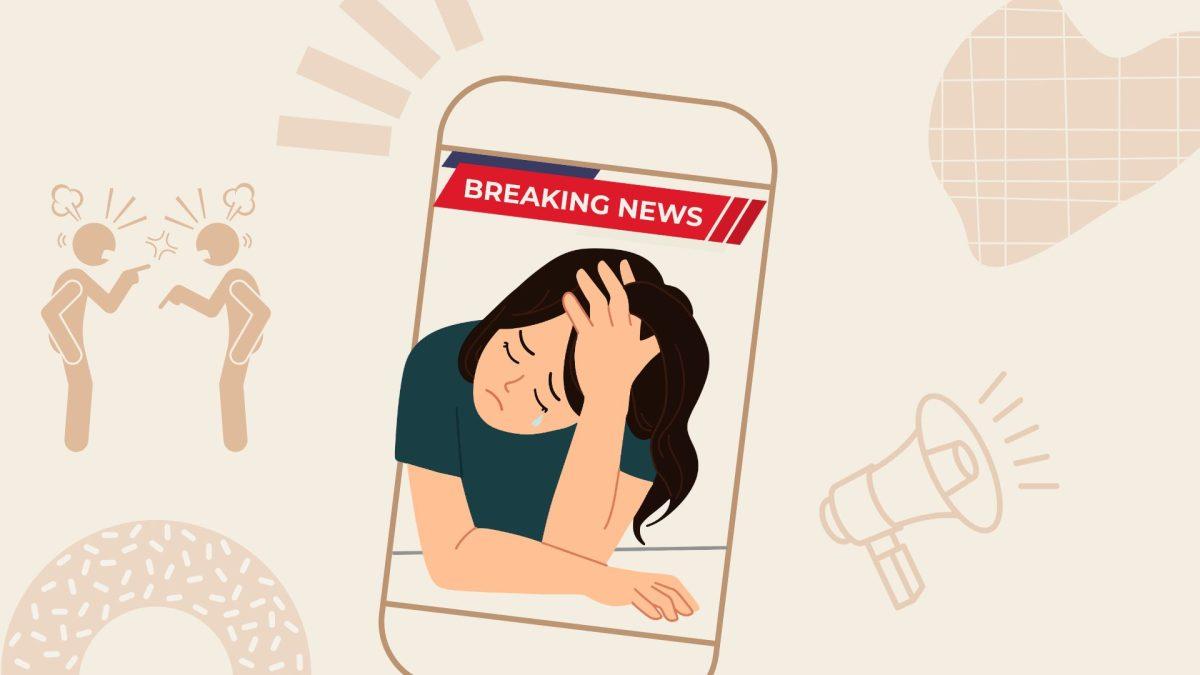
It’s frustrating to constantly be confronted with such a disconnect and to be bombarded with content showing you how much hatred there is in the world, the vitriol and noise coming from every side of an issue. Faced with problems that feel so far away yet affect you so deeply, it’s easy to feel powerless.
In a digital age, there is no way to tune it out. It’s impossible to scroll through Instagram or TikTok without being faced with the heated political state of our country. The introduction of social media into the world of politics has made political conversation accessible and undeniable to every young American. We have a real voice. We have a real opportunity to set the tone.
But hate is contagious. Add to that the prospect of making money into the social media equation and you get a nasty internet culture that idolizes clicks and views, while the real information gets diluted by the sheer amount of content online.
There are tangible effects — the social climate of America is more polarized than ever as its political temperatures continue to rise indefinitely. Pew Research Center reports that party contempt has doubled since 1994. The animosity is reaching a boiling point and manifesting itself in our daily lives.
All real feelings of upset are amplified ten-fold and projected to the world via the phone in your hand. And each person gets a tailored version, one piece of the pie.
For example: the infamous Tik-Tok “for you page” works by analyzing your platform interactions and recommending content that is similar, hopefully eliciting the same interaction. This can sometimes make your feed feel like one big echo chamber. In the context of social media, BBC describes an echo chamber as experiencing opinions primarily identical to yours, reinforcing your beliefs and confirming your bias.
The app’s software is literally designed to keep you from encountering opposing views. How can we possibly come together if our phones are making money off of keeping us apart? They feed us different versions of the news and then profit off of the engagement. It’s impossible to escape.
What’s the point? Is anything being accomplished in the social media machine? While yes, it creates discourse around political topics and provides a new avenue for idea dissemination and self-expression, do the negatives outweigh the positives?
Pew Research Center reports that 64% of Americans think that social media has a negative impact on democracy. Seventy-nine percent said they think social media has made people more politically divided. The fact of the matter is, obsessively using content that is meant to entertain rather than educate in order to inform your political opinions can only lead to more strife and conflict. Social media is a double edged sword.
Remember how I said hate is contagious? It is. It’s more contagious than any other feeling. I mean think about it: it’s so easy to be in a bad mood and just walk through life looking for the negative.
It makes me think, how many more tragedies will happen until one day, we put down our phones, set aside our differences and say, enough is enough?
The places people go to learn, read and debate, are now all suffering and tainted. Places of sanctuary, places where positive change starts — all ravaged by violence and hatred.
A new generation is forthcoming. What will become the norm? Will it become normal for people to have lost friends and family to gun violence? Will it become normal to go to the library and evacuate because there might be a bomb in the building?
We can’t let these things become common occurrences. We can’t raise a generation of kids that thinks this is normal. We all believe the other side is a threat to ours. We all believe the other side is a threat to the nation. But is that way of thinking the biggest threat of all?
I would like to remind anyone reading that passion — whether it be hateful or positive — makes headlines. Divisive behavior makes headlines. Those of us sitting at home, watching the divide widen, don’t make it on TV. But that doesn’t mean we are helpless; it just means we’re quiet.
The time to raise your voice is now. You don’t have to yell, just turn to the person next to you and have a conversation. Hopefully, these tragedies can pull us closer together, pull us off opposing ledges and allow us to meet in the middle.
We are all human. We have that in common.
We are all in it together.
It’s up to you.
Claire Thatcher is a freshman at UT this year studying journalism. She can be reached at [email protected].
Columns and letters of The Daily Beacon are the views of the individual and do not necessarily reflect the views of the Beacon or the Beacon’s editorial staff.