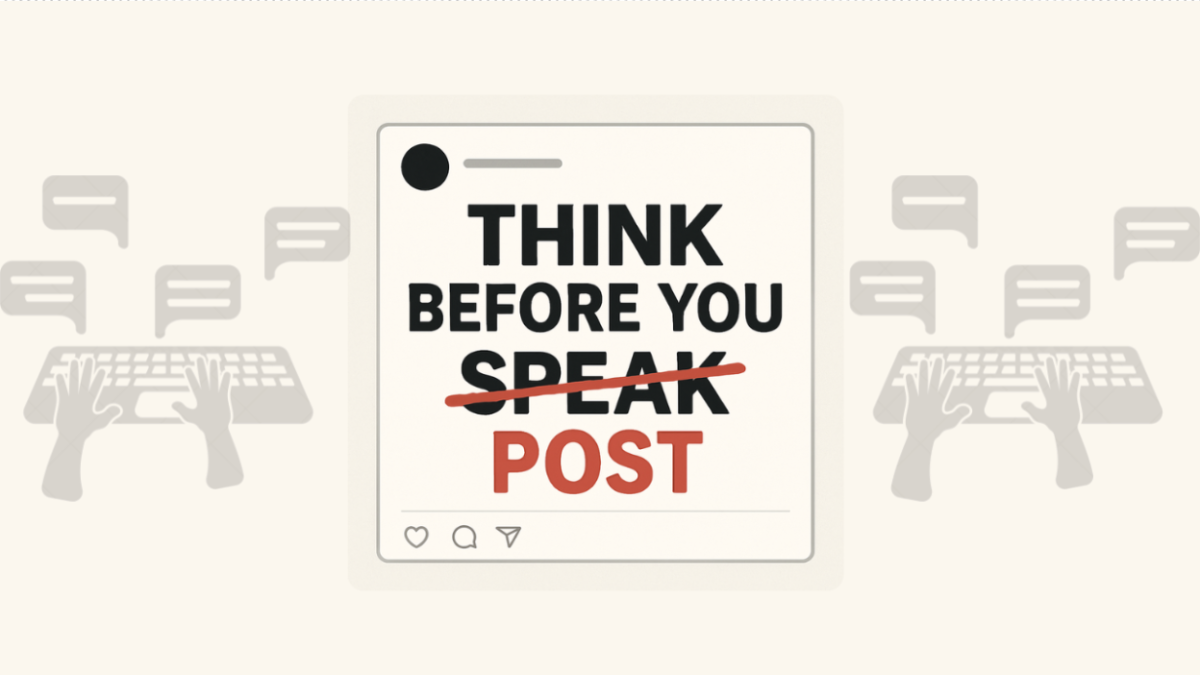
Imagine if people spoke to each other in real life as we do on the internet. I guarantee this would come across as not only harsh but disheartening. I know we have all scrolled through social media lately, and we are all more than aware that it has become a dark place.
The boundaries of social media and online communities are being pushed constantly, with an increase in violent and hateful speech being posted across the boards. People have seemed to forget that our basic morals should still apply when posting and speaking to one another online.
When drafting up your next tweet or crafting a snarky comment, think of it as if you are speaking in public— essentially, that is what you are doing. Just a slightly different format. Now reflect, is this a statement you would make on stage in front of thousands or even millions of people? No, probably not.
We have become far too comfortable online in recent years. America’s digital presence has matured from playful animal videos and harmless memes to the threat of one another because of our opposing political views. It has become apparent, now more than ever, that a stricter background screening process should be implemented within social media platforms before a post is released to the public. Improving the standards and safety regulations within these apps should be our priority. I am taking a stance on limiting aggression online, without infringing on our First Amendment, and so should you.
As of right now, there are automated systems in place, holding the job of screening content for harmful or inappropriate material, including hate speech. Whatever this screening process is, it doesn’t seem to be working. I am not afraid to admit that I indulge in social media daily, which allows me a direct insight into the way that people communicate their feelings online. It can get very aggressive very fast. Users online feel protected by their ability to hide from any sort of blame. On social media platforms, we are given the ability to go by an alias and even use fake photographs, pretending to be someone we are not. This erases all fear of consequences for most of us, giving people the go-ahead to say whatever they want. While we are not trying to rid people of this ability, there should be stricter screening in place to protect the minds of everyone scrolling, especially the younger crowds who have joined us online.
Apps like Instagram and Facebook have “community guidelines.” These utilize a combination of artificial intelligence and human review to screen posts for violent material, language, and hate speech. Although I still see comments and posts on these apps that have managed to bypass these screening methods, gain engagement by their absurdity, and have now reached huge crowds, doing irrevocable damage.
I see a good amount of hate online coming from a place of extremism. People have strong and challenging opinions and want to share them with the world. This should be manageable — however, we hold an undeniable sense of power in our hands when we log on to social media. We can now reach billions of people. Leading me to question if our extremely hateful comments were ever meant to affect this many.
We all read the same news headlines. Attacks, gun violence, hate speech. These real-life tragedies develop from arguments and turmoil online. Time and time again, we are the ones providing the platform that allows so many the opportunity to spread hate and cause violence.
A blessing or a curse? While it could go both ways, we have seen too many examples of the ladder, making it clear that digital violence is now a prominent danger in our lives.
When violent threats are made online, they are continuously seen as empty. Since it is coming from an account labeled by a username, as opposed to someone standing directly in front of you. We should not pretend that this is okay. I believe digital violence is just as qualified to be handled as a matter of safety.
Let’s talk Yik Yak. Ever heard of it? Yik Yak is an app primarily marketed to college students, where users are given the ability to comment on anything and everything anonymously, within their community. When making your account, you link it to your college campus. Users posts on the app are not tied to any sort of username or account; each post is sent from “Anonymous.” Anonymity seems to erase people’s fear of consequences, giving them the power to unleash whatever they feel fit for their post. This leads to people overstepping boundaries, and I have seen it become hateful more times than I can count.
I first heard of the app when starting school here in Knoxville, not knowing what to expect. I was met with a continuous stream of posts labeled “Anonymous” where people discuss things from simple pleasures, such as football tickets, all the way to derogatory comments and scathing critiques of anything and everything people can find an issue with.
While there is some content monitoring on Yik Yak, it is only conducted by the users. Meaning if a post gets reported enough times by the crowd on the app, then it will get taken down. Should those who are creating these aggressive posts double as the monitors of what is considered too far?
Plain and simple, hate speech within social media has become casual. We have pushed our limits too far, in which these false threats and or online aggression have transpired to the real world. When this happens, the scenarios become unpredictable and uncontrollable. A call for change is coming.
Hostile posts, comments, or even a direct message are all more than capable of materializing into our lives. When we see hostility on our screens, we train ourselves to continue scrolling and ultimately forget what we originally saw. The ignorance towards digital violence is causing too many instances of harm. I see a clear solution when I examine this evolving issue, an all-around upgrade when it comes to screening violence and aggression online. Let’s nip the bud at the source, before it is too late.
Isabell Norman is a freshman at UT this year studying journalism. She can be reached at [email protected].
Columns and letters of The Daily Beacon are the views of the individual and do not necessarily reflect the views of the Beacon or the Beacon’s editorial staff.