Darren Aronofsky’s “Caught Stealing” is a visceral, kinetic plunge into the underworld of late 1990s New York City. Adapted from Charlie Huston’s 2004 novel, the first in a cult crime trilogy, Aronofsky’s direction is bold. It channels energetic anarchy, similar to Quentin Tarantino and Guy Ritchie, while still maintaining his signature emotional undercurrents. With striking visual storytelling and relentless pacing, “Caught Stealing” emerges as a brutal, stylish and emotionally charged crime thriller.
Austin Butler plays Hank Thompson, a once protege baseball player, now a lowly bartender. His sports career was taken from him after a brutal and traumatic car crash. He’s a character lost and haunted by his past. After a cat-sitting gone bad, Thompson’s quiet life explodes with criminal chaos.
This is truly Butler’s film — he grabs your attention and never lets it go. Butler imbues Thompson with a disarming charm and quiet vulnerability, seen in his interactions early on, his relationship with Yvonne and his mother, and his interest in baseball, which provides an emotional depth. As everything he has is slowly taken from him, you almost want to look away from his pain but cannot. His transformation to a man willing to take his future into his own hands is believable and brutal to watch.
As the story unfolds over a few harrowing, relentless days, Thompson is stripped of his innocence, forced to confront his trauma and ultimately compelled to fight for his survival. It is beaten, ripped and forced out of him, all while running away from various gangs, corrupt officials and even friends.
Thompson’s descent is mirrored by his struggle with alcoholism, which serves as both a coping mechanism and a symbol of his refusal to confront the past. His drinking and avoidance of responsibility mirror deeper emotional wounds. After a beating, his usual outlets are taken away, leading to a confrontation of the consequences of his actions. No longer able to escape into the bottle or hide behind denial, he must reckon with the damage he’s done to himself and to others.
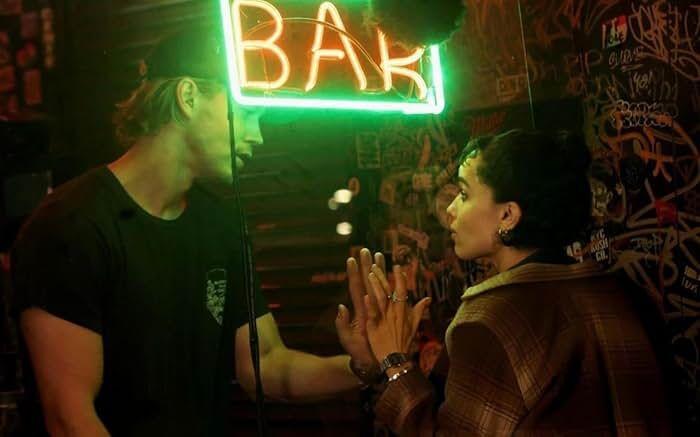
Zoë Kravitz brings warmth and wit to Yvonne, Thompson’s love interest and emotional anchor. Early on, they joke about how he is a small-town boy in this big city and role-play this bad boy persona, a nod to the lengths he has gone to escape his past and foreshadowing his future. He lives next to Russ, played by Matt Smith, a British grunge head sporting a leather jacket covered in spikes with a yellow and red mohawk, and serves as a catalyst of the story. His cat, Bud, is the true catalyst. While both Kravitz and Smith deliver compelling performances, Butler’s portrayal dominates the screen, anchoring the film with emotional depth and raw intensity.
The film is grimy and aggressive with visual language that is rich with symbolism. The opening scene juxtaposed the disgusting and broken tile walls of subways with the rural landscape of a California baseball game, a motif of the collision of innocence and decay. Restless nights filled with dreams of the accident that stole Thompson’s future are slowly revealed with patterns of the accident riddled throughout the film, mirroring shots of the traumatic car accident that recur and haunt both the character and the viewer.
Grungy music is heard throughout the film, setting the backdrop of the late ‘90s. The streets are crowded, noisy and unpredictable, filled with lowlifes, addicts and eccentric locals. Thompson’s apartment is small, cluttered and dimly lit — a reflection of his stagnant life before everything spirals. The film leans into nostalgia with the apparent use of rotary phones, cassette tapes and analog grime that give a tactile throwback feel.
Its utilization of violence may put off some viewers, but it is necessary for the gritty mystery that unfolds. It’s a visceral film. The sound of every hit and punch is amplified. You hear the pain as fists hit and bones break. It’s a non-stop battle and Thompson’s weapon of choice is, of course, a baseball bat, a symbol of reclaiming his lost identity.
The film is an exploration of how past actions — especially those left unexamined — can stunt personal growth and lead to self-destruction, as well as how a refusal to face our mistakes can influence our lives and how quickly they can spiral out of control. The story plays with how far someone will go when pushed and how survival can awaken instincts we didn’t know we had.
Thompson’s journey is a tragic odyssey, a reluctant hero clawing his way out of chaos. His transformation is brutal, believable and deeply affecting. The narrative suggests that redemption is possible but only through confrontation, pain and the willingness to reclaim one’s future.
“Caught Stealing” is a relentless, emotionally resonant crime thriller that marks a high point for both Butler and Aronofsky. It is an unforgiving film that refuses to look away from suffering yet finds meaning in the struggle. With its unflinching violence, rich thematic depth, and electrifying performances, it stands as one of the year’s most compelling cinematic achievements— a homerun of storytelling and style.