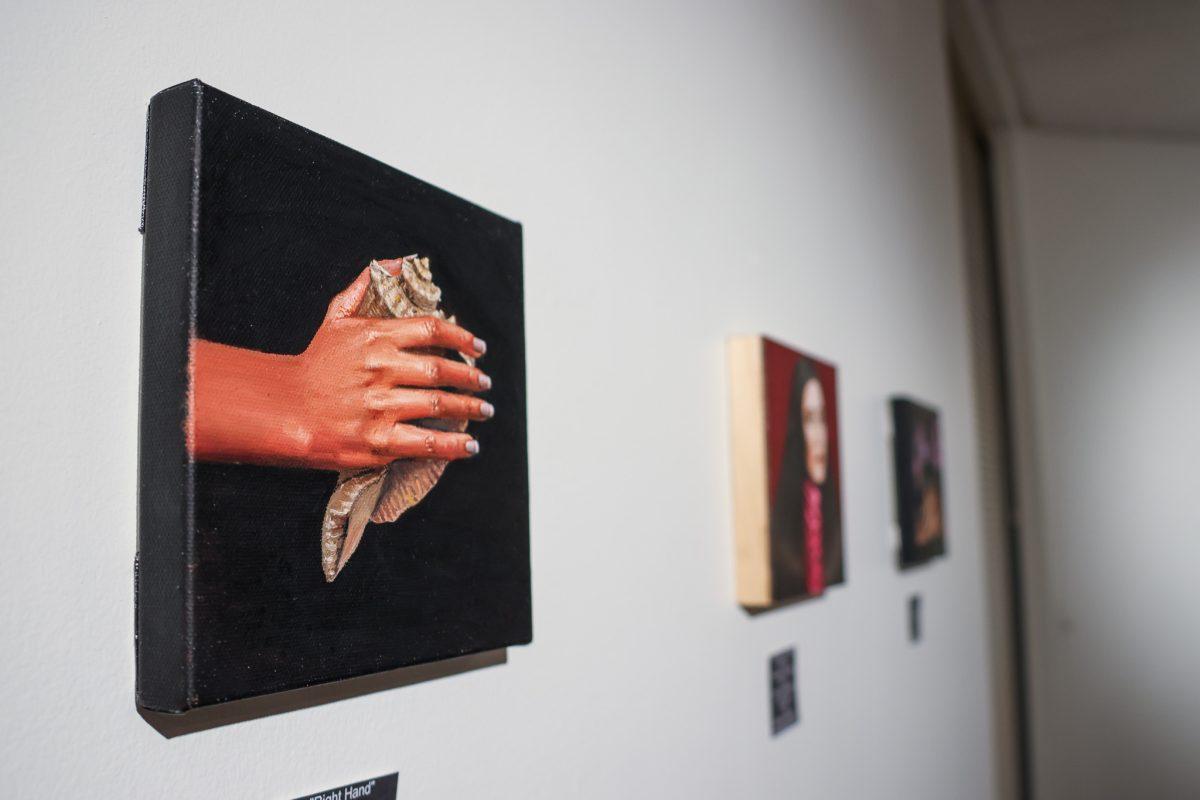
The Frieson Black Cultural Center unveiled a brand new exhibit featuring works from artist couple Richard Mabula and Viktoriia Berger on Wednesday, Nov. 5. “Ethnogenesis” showcases their diverse cultural backgrounds, mixing together Russian and South African culture. Featured in the exhibit are paintings by Berger as well as works of photography and sculpture by Mabula.
Mabula hails from South Africa with a Christian and Shamanic background. Berger, on the other hand, hails from Russia with a Slavic Orthodox Christian and Tartar Muslim background. Their children are third-culture kids, born in China.
Both Mabula and Berger’s art incorporates aspects of magical realism. In her artist statement, Berger says she wants to focus on creating a “hyper-realistic image of something unimaginable.”
In her art, she wants to emphasize the connection between cultures. As she says in her artist statement, “cultures are usually shared, and know no boundaries.”
Mabula, through his art, wants to leave a legacy for his children that reminds them of the beauty of their cultures. He wants his children to be able to look at not just what has been done to the people of South Africa, such as apartheid and colonialism but also to the rich history that comes before that.
“The whole premise of the exhibition is centered around the kind of historical narrative we want to give the kids,” Mabula said. “Our history for the most part is framed in terms of colonialism so I’m looking at the time before that. If you’re going to be inspired to do something and feel empowered to do something, you have to be able to look back to some extent at the people who look like you who achieved great things.”
He wants his children to be connected to his culture as well and to feel empowered by it.
“There’s a lot of pain in some of these conversations around our history,” Mabula said. “I also want them to see all the beautiful parts of African culture as well, like the dresses we design, the dances, the music. It’s important to know what has been done to you but it is also important to know what you have done. It restores autonomy.”
Three students who attended the opening reception of the exhibit left feeling inspired.
Anna Babcock, a senior art major with a minor in psychology, was particularly enamored with the way Mabula and Berger incorporated lighting into their works. She was also very impressed by the way Berger depicted patterns like fur or sequins, which look so realistic in her paintings that you would be forgiven for mistaking them for a photo.
“I don’t pay as much attention to those small details and would like to incorporate that into my own artwork,” Babcock said.
Ava Sabatini, a junior biology major with a minor in anthropology, was also inspired by the lighting in Mabula’s photography work.
“I took a photography class last semester and you can tell how much attention to detail he put into the poses, lighting and outfits,” Sabatini said. “After seeing this exhibit, I would love to incorporate more portraits into my work.”
Savannah Vaughn, a senior marketing major with a minor in studio art, was inspired by the colors in the artworks, as well as the way both artists incorporated magical realism into their work.
“I liked the photography aspect of Richard’s work and am obsessed with his wife’s work,” Vaughn said. “The coloring is beautiful. I like the use of realism that ties these fantastical things to the real world. I also like how the works pull together different cultures.”
The exhibit also includes a chess board with bronze chess pieces molded by Mabula himself. It’s not just for display, either; Mabula encourages anyone who stops by to make a move on the board and start an ongoing, community-wide chess match. He also encourages anyone who does make a move on the board to snap a photo and tag him on social media so he can see.
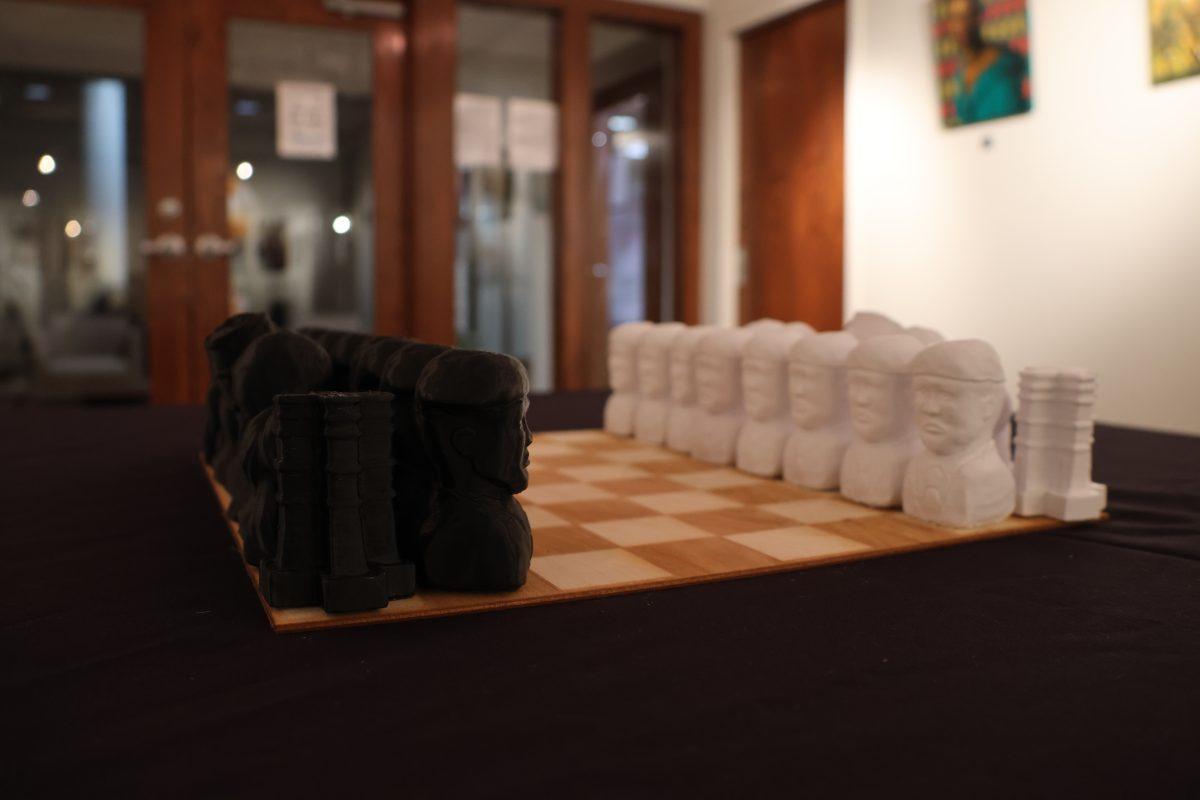
A wooden chess board complete with chess pieces moulded by Richard Mabula. Monday, Nov. 10, 2025.
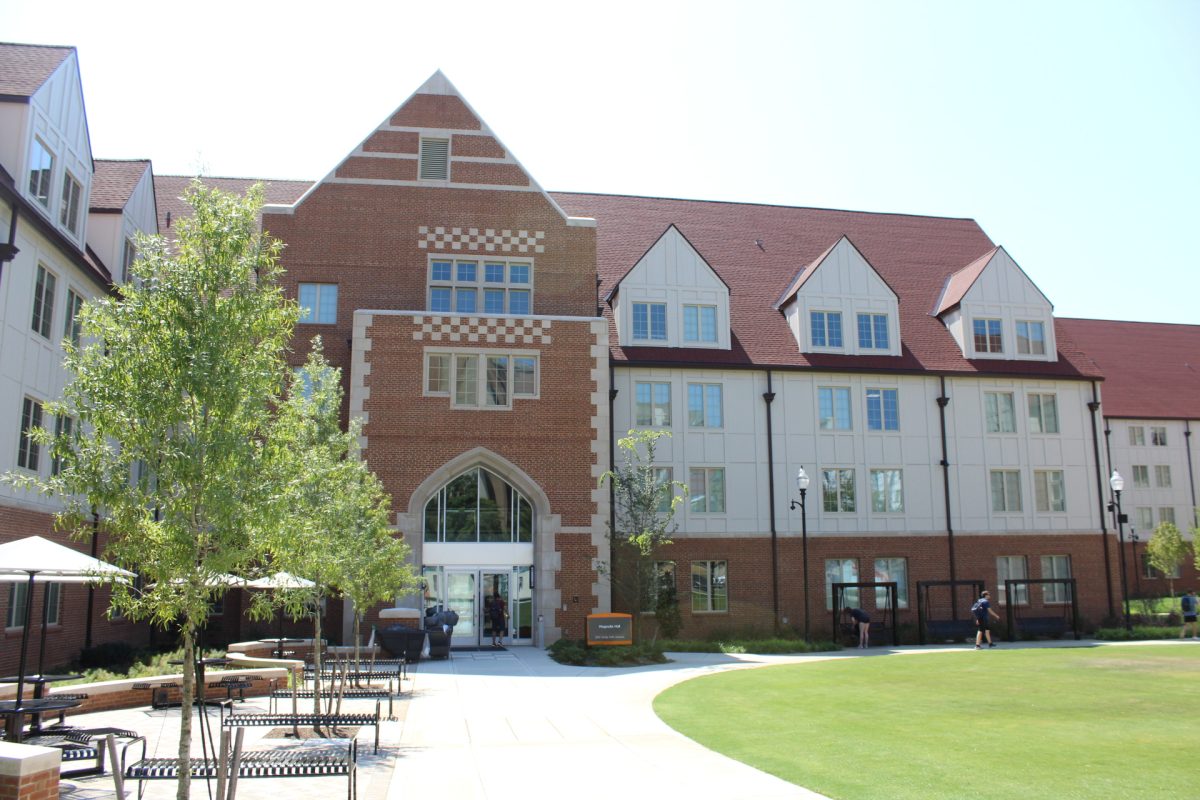
The exhibit will be open until Dec. 31 and is located in the Frieson Black Cultural Center. The exhibit can be browsed at any time during the Center’s regular hours.