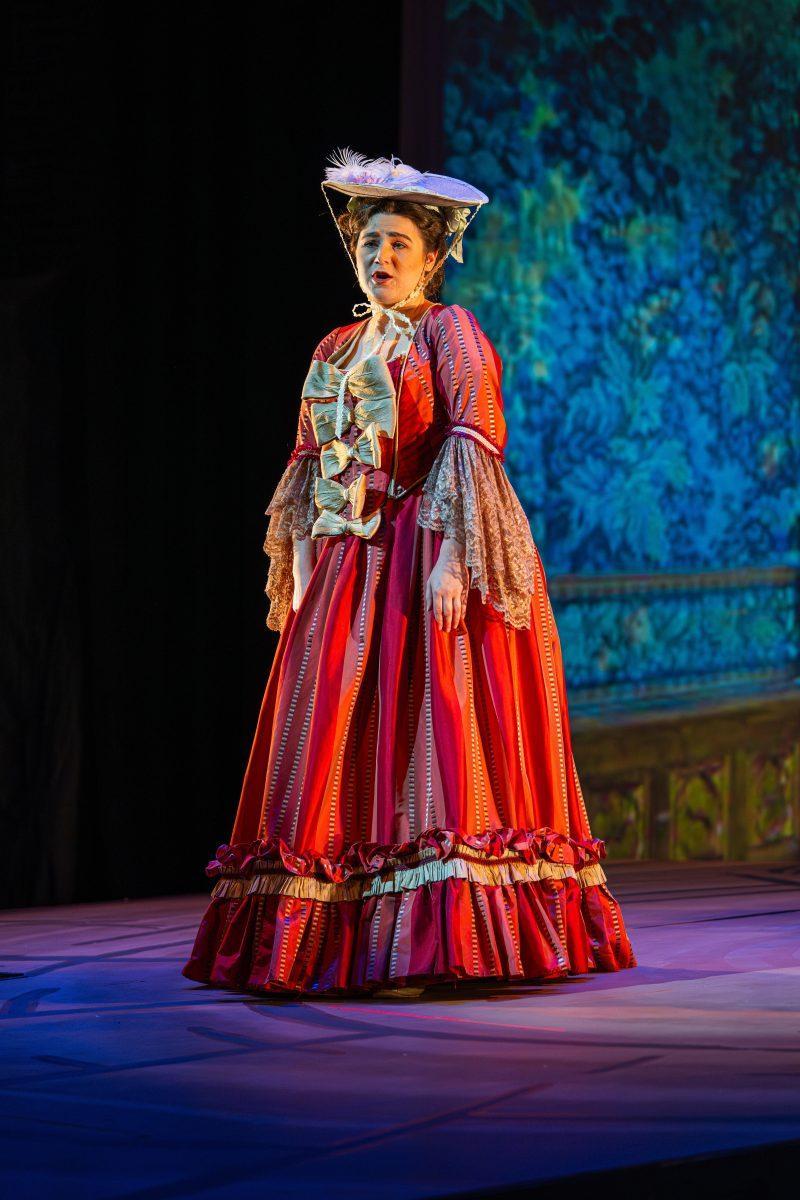
Blanche de la Force in the regal red dress of a French aristocrat. Monday, May 5, 2025.
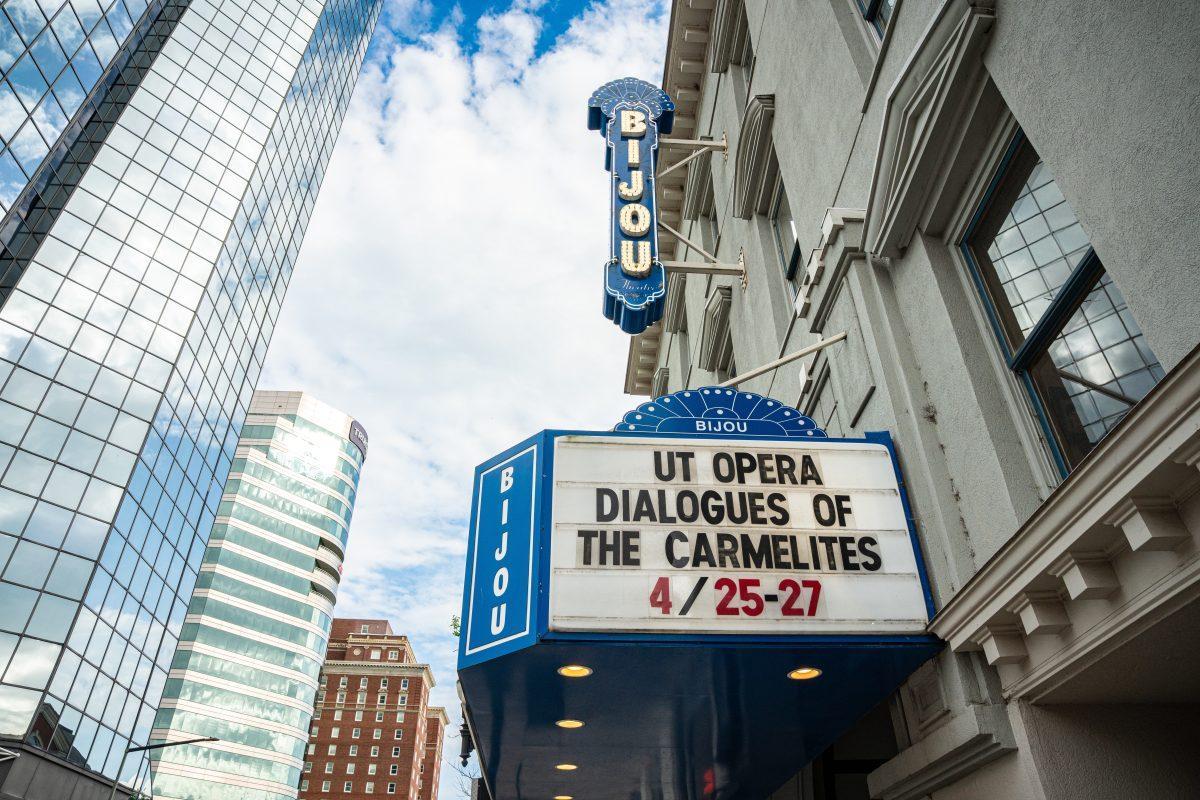
Last weekend, the University of Tennessee Opera, courtesy of the Natalie Haslam School of Music, performed “Dialogues of the Carmelites” at the historic Bijou Theatre. It featured the talent of UT students, professors and guests as they recalled a tale of religious persecution during the French Revolution’s Reign of Terror. This would mark the first opera I’ve ever seen and it was certainly a fun experience.
The opera is based on the screenplay “Dialogues des Carmélites” by Georges Bernanos, which draws inspiration from the novella “Die Letzte am Schafott,” The Song at the Scaffold, by Gertrud von Le Fort. The opera is a fictionalized dramatization of the true story of the Martyrs of Compiègne, 16 nuns who were executed on July 17, 1794. Their imprisonment and execution came about as a result of their refusal to comply with the Civil Constitution of the Clergy, a 1790 law in France that banned religious orders. The Reign of Terror would end just days after their execution, on July 28, 1794.
The story of “Dialogues of the Carmelites” follows Blanche, a fearful French noblewoman who renounces her normal life to become a nun, believing the pious and quiet life would free her from fear. Through this decision, she becomes caught up in the turmoil of the Reign of Terror, which becomes the ultimate test of her courage. The opera consisted of three acts, with a 10-minute intermission in between each act.
Though the entire opera was sung in French, English supertitles were provided. I will admit, I chose a poor seating option, as the screen with the supertitles was a little high and I would have to continuously alternate between looking up at the screen and looking forward at the stage. If you were to go see this opera in a similar theatre, I would recommend sitting higher in the auditorium.
The vocals in this opera were great. I was stunned at the vocal range of the actors on stage. Some moments, however, felt a bit anticlimactic. The music and vocals would sound like it was building up to some grand climax and then they would just stop and go back to normal. Highlights were the protagonist Blanche de la Force, played by Nicole Dayton, Molly Garrett and Vivian Hurst, Madame de Croissy, the prioress of the monastery, played by Meghan Krish and Jenna Moynihan, Chevalier de la Force, played by Jackson Guthrie and Kurt Lannetti, Mother Marie of the Incarnation, played by Staley Clark, Falynn Davis, and Deepti Kumar and Sister Constance, played by Allie Thompson and Lindsay Dove.
The opera did a great job at conveying the tension of the Reign of Terror as the nuns of Carmel find their monastery besieged by violent revolutionaries, forced into hiding for their beliefs and devotion. The actresses did an amazing job portraying the nuns’ distress, especially in the scene where they are informed of their death sentence.
My favorite scene of the entire show must be the ending, where the nuns are all executed. In historical records, it is said that the nuns did not stop chanting ‘Veni Creator Spiritus’ — a traditional Latin hymn — even as the guillotine came down on them. The opera’s depiction of this is chilling, having all 16 nuns chanting at the same time while the sudden sound of the guillotine echoes through the room.
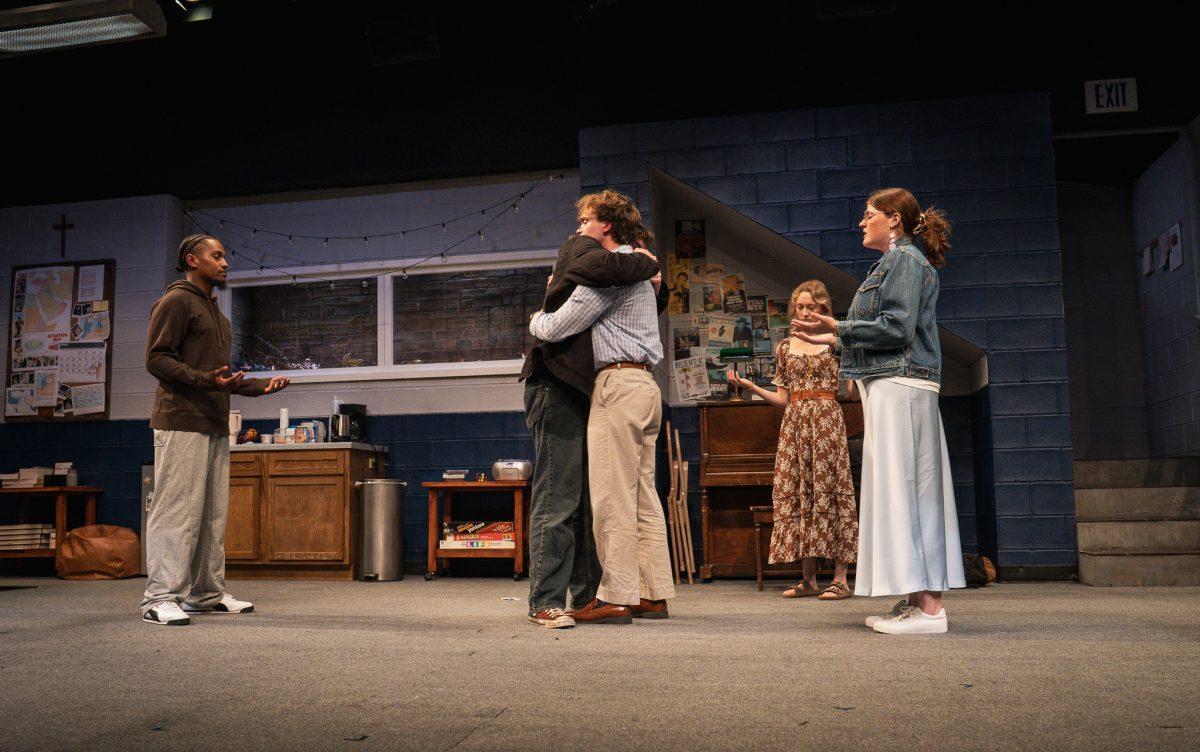
The sets for this musical were simple, but effective. They consisted of just one or two set pieces with an overlay on the background of the current setting, whether that be Blanche’s home, the monastery or the streets of France. I felt immersed in 1700s France even with the minimal set design.
The costumes did not disappoint either. At the beginning of the play, Blanche is adorned with a gorgeous red dress, the stunning image of a 1700s French aristocrat. The nuns are all adorned in habits and later, when they must go into hiding, their plainclothes look fitting with the time period.
Overall, the play was very enjoyable and made me want to go see more operas. It had a two and a half hour runtime but felt so short as I was invested in every moment. I am very excited to see what future projects the UT Opera will work on and I am grateful to the School of Music for making opera more accessible to students.