As the leaves turn to reveal the start of another fall season on Rocky Top, the Tennessee Champion Tree Program continues its year-round effort to celebrate the imperative roles trees play in the ecosystem, enhance their appreciation and encourage their protection.
With the program’s “Party for the Planet” festival coming up this November, a deeper look into the values and objectives of the group help give insight into what can be expected.
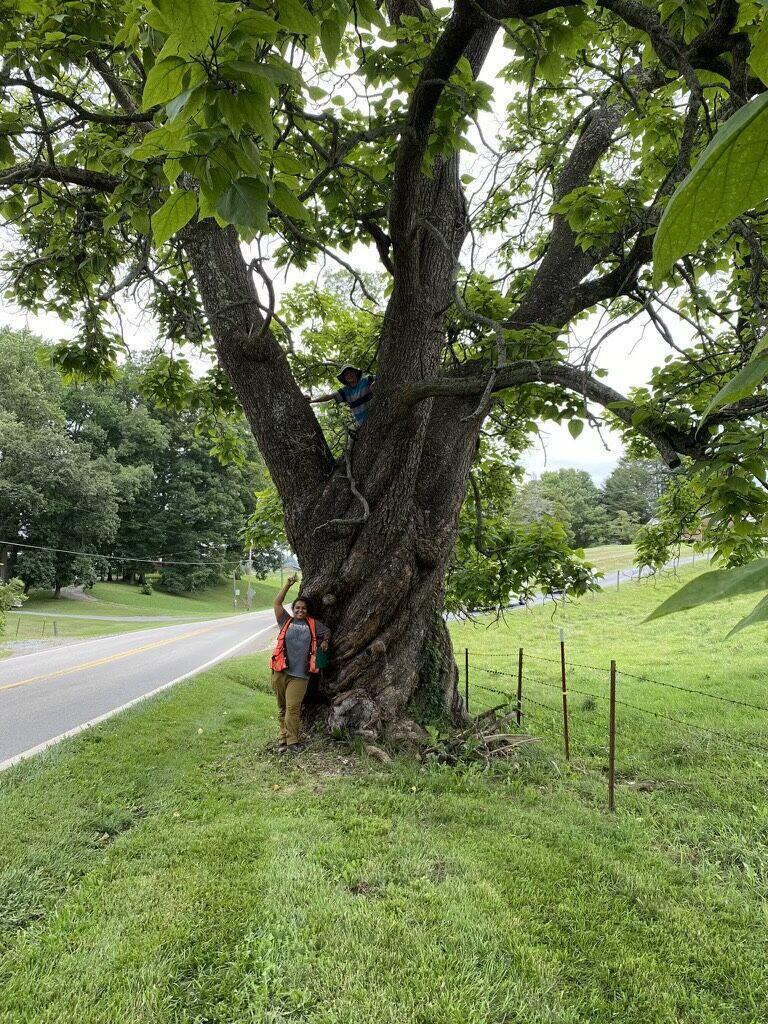
The campus organization, operated today through the University of Tennessee’s Department of Forestry, Wildlife and Fisheries, has documented and featured hundreds of the state’s largest native trees discovered since the 1970s. The National Champion Tree Registry began cataloging the biggest trees found across the country in the 1940s, when Tennessee later adopted its own state-wide version of the program.
The Tennessee Champion Tree Program is an internship opportunity offered to students pursuing all degrees and courses of study interested in engaging with the local community and environment.
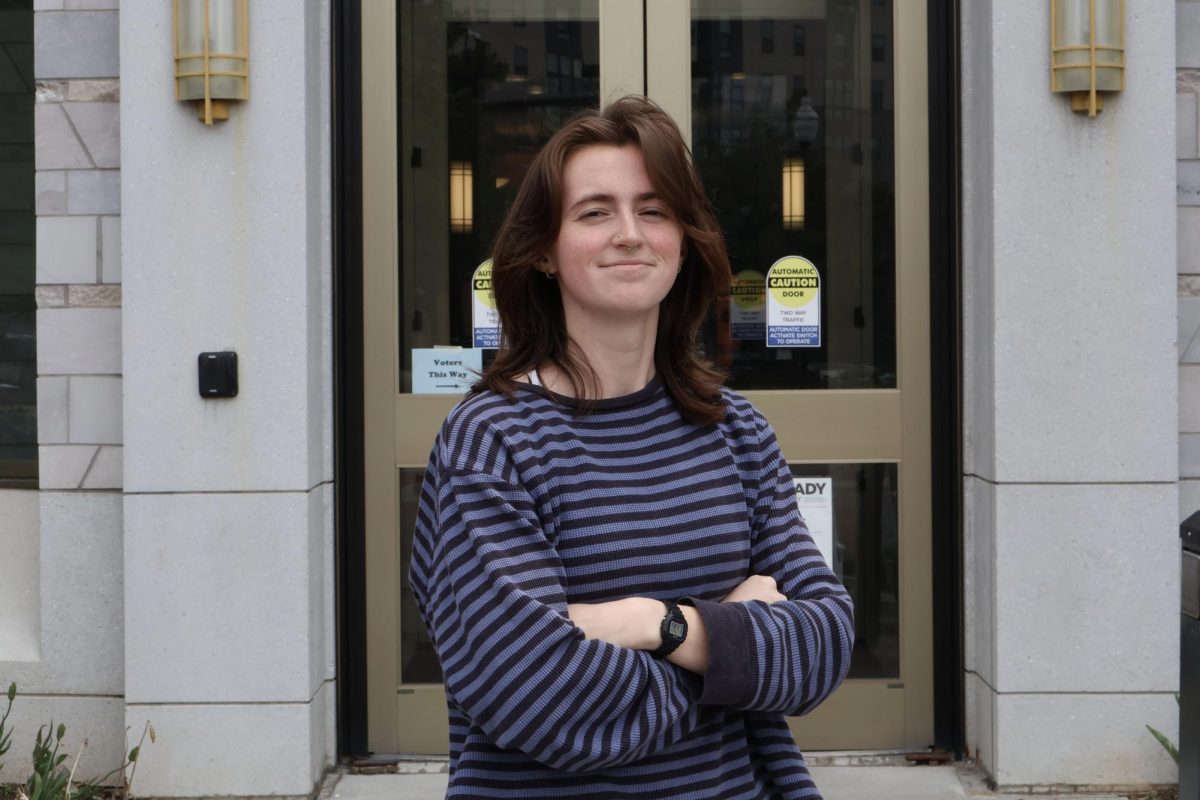
Jaq Payne, a second-year masters student studying urban forestry, began the internship in 2021 and is the current student director of the program. They elaborated on the purpose behind such data collection and discussed how the organization’s intentions extend greater than to just call attention to large trees.
“The reason that this is important is because our big trees are doing so many things for the environment. We call them ecosystem services. They are helping mitigate stormwater….helps with air quality….and carbon sequestration,” Payne said.
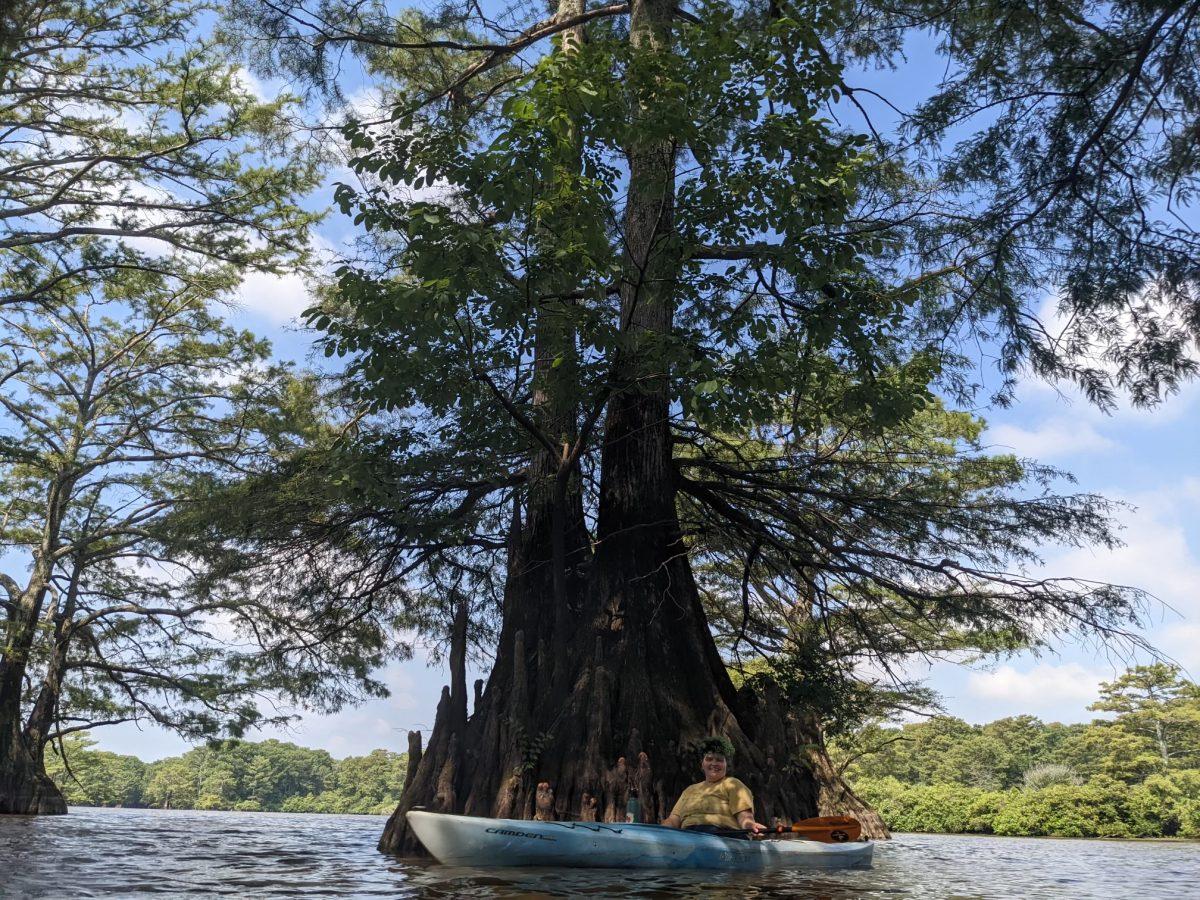
Student director Jaq Payne and Kayla Stuart kayaking out to measure the bald cypress nomination.
Recognizing the essential functions of trees is imperative in the group’s ability to communicate why their protection and health is vital.
“We are very focused on the preservation of mature trees in our environment,” Payne said.
The program works to inform the public about the value of community and urban forests while fostering an active and inclusive competition for anyone to get involved with.
People of all ages and backgrounds are encouraged to submit potential champion-tree nominations on the programs website: championtree.tennessee.edu. Trees from all over the state are qualified to enter as last year alone, the organization received over 100 submissions from all across Tennessee. The portal for new nominations is currently closed but will reopen this coming January.
“We take three measurements for each tree. We measure the height, the crown spread, and circumference,” Payne said.
A point system is then used to translate the measurements into a total that is compared to the current, reigning champion-tree of its specific species. It should be noted that an awarded tree is not necessarily recorded as the widest or tallest tree; rather, the three qualities measured equate to the greatest sum of points.
Kayla Stuart, the programs data and nominations manager and a senior in the urban forestry program, was a member of the team that traveled all across Tennessee this past summer, collecting the actual measurements of each tree submitted. While detailing their recent experiences, Stuart highlights how classifying trees by their species results in a diverse collection of trees named as champions.
“The only parameters on a champion tree is that it has to be bigger than the already champion tree,” Stuart said.
This criteria allows for an assortment of trees ranging in size, perimeter, and branching the ability to be recognized.
“A champion comes down to the numbers but they’re all special and different sizes,” Stuart said.
Coming up next month, the Tennessee Champion Tree Program is hosting an event dedicated to stimulating community involvement and education concerning effective techniques for reducing environmental harm. The assemblage of festivities, titled “Party for the Planet,”will include a lineup of various environmentalist speakers, live music, food, vendors and artists.
The program is teaming up with Green Heron Compost Services, an organization based in Knox County that works to reduce hazardous waste and recycle organic materials to produce beneficial compost.
“We are helping our food vendors get some compostable trays and stuff to use, so we’re thinking about all of the accessories that go with providing food to the public and how we can minimize waste there,” Payne said.
The event will take place on Sunday, November 6th from 1-6 p.m. Located at The Boocherie, a kombucha bar just minutes from campus, the event is free and open to the public.
“For me, I would be really, really happy if people walked away from this festival with an understanding of the environmental that’s currently happening in Knoxville, feeling connected to the organizations that are currently doing this work that need help…..and even having a better understanding of compost and thinking about the waste we create a little bit more,” Payne said.
In an effort to encourage friendly competition and public participation in local environmental initiatives, the Tennessee Champion Tree Program offers an array of ways to get started.
The email listed on their website is available to contact the internship program for more information.
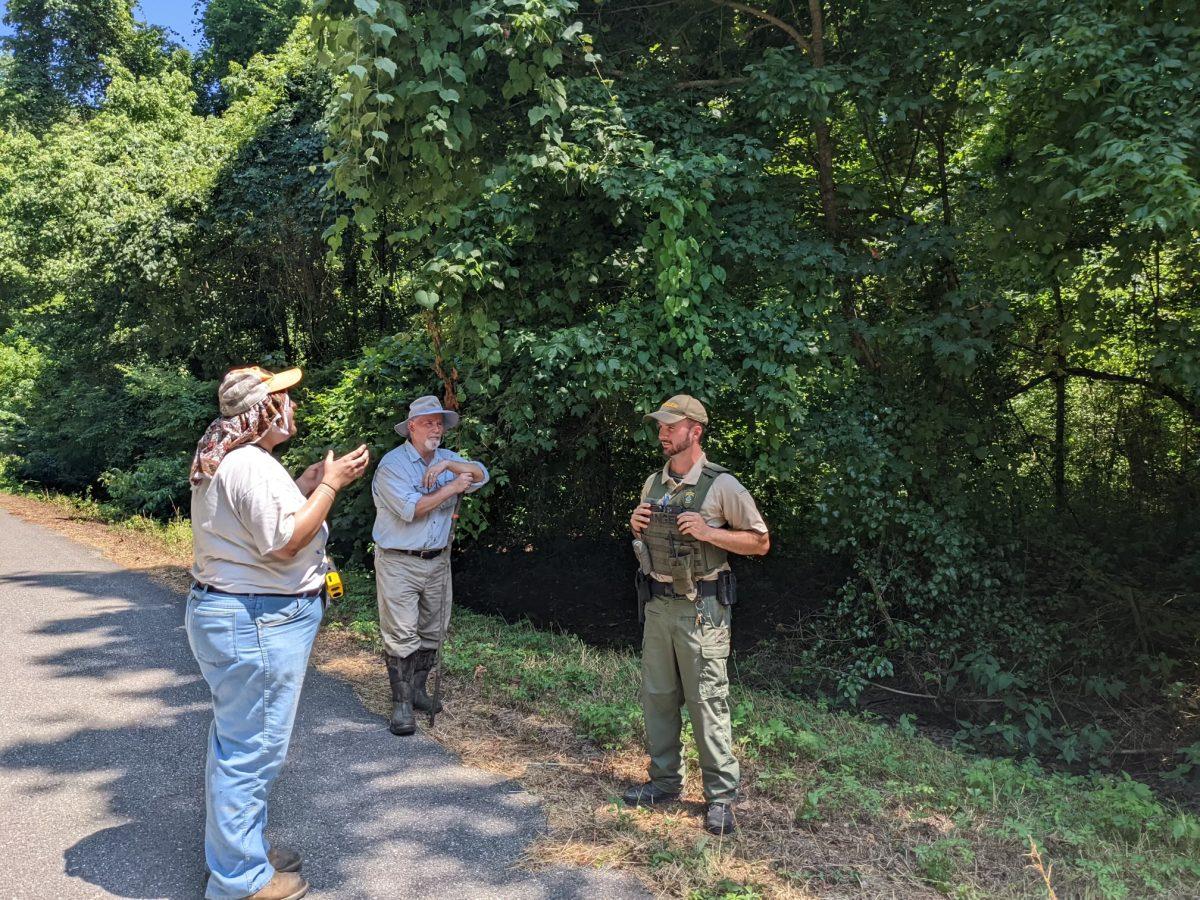
Jaq Payne speaking with a park ranger about the bald cypress nominations.