Jennifer Evans delivered a lecture on Wednesday called “What Does It Mean to Queer History?” Sponsored by UT’s History Department, the talk detailed Evans’ research on queer culture in post-war Germany.
Evans is a historian and a professor at Carleton University. She is currently working on a book which will focus on the queer experience in Germany after World War II through the lens of queer art.
Evans has researched the LGBTQ+ history of the Holocaust, examining the nazi persecution of gays and lesbians. Her first book, published in 2011, is called “Life among the Ruins: Cityscape and Sexuality in Cold War Berlin.”
Monica Black, a history professor at UT, had her graduate students read Evans’ first book this week in preparation for her visit. The book, Black said, is a “cultural history on the role of sexuality and gender in the reconstruction of Berlin after Nazi Germany’s defeat.”
“It’s harder to introduce Jennifer Evans… not only because her accomplishments are numerous, but also because they are not always visible,” Black said.
Black pointed to the students who Evans mentors, and the expertise she lends to those who ask. Evans is committed to collaborative work in a system that emphasizes individualism, Black said.
Evans’ current research focuses on sexuality in Germany after World War II, specifically looking at the history through a queer lens. She described “queering” as a methodology.
“To queer the past is to denaturalize it, to view it skeptically. To pull apart the pieces and analyze them from a variety of perspectives,” Evans said.
Evans described queer history as coming out of a drive to recover history and to locate people and stories written out of history. Queer methodology emphasizes complexity and ambiguity.
For the lecture, Evans applied this methodology to specific photographs. With research for her second book, Evans is also working on research about erotic photography as “a claim to desire, personhood and sexual freedom” in the era before AIDS.
“What most interested me was her discussion on photography and digital sources, cause I’m using that in my master’s thesis. And I needed to pick her brain,” Elm Gritt said.
Gritt, a graduate student in the history department, was one of several students able to have lunch with Evans before the lecture.
Evans used a few photos in particular to make her point. For example, Herbert Tobias’ photographs. Tobias was a German photographer who is known for his portrait studies and erotic photos of men. Evans used photos Tobias took of young male prostitutes.
Evans wondered what these photographs could tell us about parts of the gay scene “that maybe sit awkwardly and uncomfortably.” She emphasized that there was a tension within the movement around subcultural practices. The aim of assimilation and of political activity rested on denial of gender fluidity and excessive sexuality.
Photography from the time period reveals a lot about other communities, other turning points and groups produced outside of the state and social movements.
Evans pulled up a photo by Nihad Nino Pušija. The subject is a drag queen called Cheyenne, shown in the black-and-white portrait leaning forward and gazing to the camera. She wears a necklace-like top which has the name of the bar written on it: SO36. Evans pointed out it is a surprising image because historians know relatively little about transgender people of color’s experiences during the time.
“Queer and trans history is not established in Germany,” Evans said.
SO36 was home to Black, gay nights where queer people of color have “carved out a space in the city.” The bar was home to drag parties, photographed by Pušija, who fled Yugoslavia in the early 90’s for Berlin.
Evans used several other photos in the lecture, like one of a female same-sex couple and their dogs, and one of a lesbian transgender woman’s self-portrait.
Through the photos, Evans explained that as language for self-identification changes and grows, so do identities, which change across time.
Queering history challenges the assumption about what it means to be queer, and what it means to be German.
Evans’ second book, entitled ”Queer Life After Fascism: Kinship and the Queer Art of History” (Duke UP, 2023), will come out next year.
“Use history to humanize histories’ others,” Evans said.

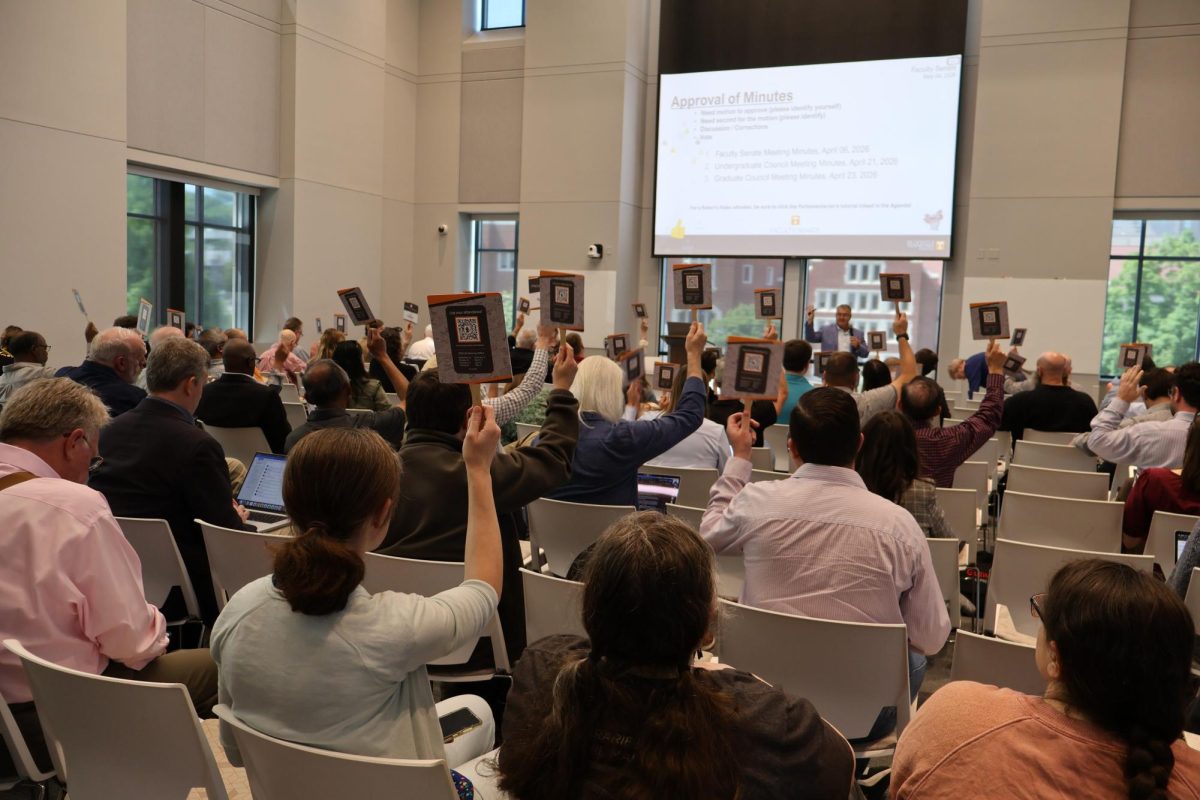
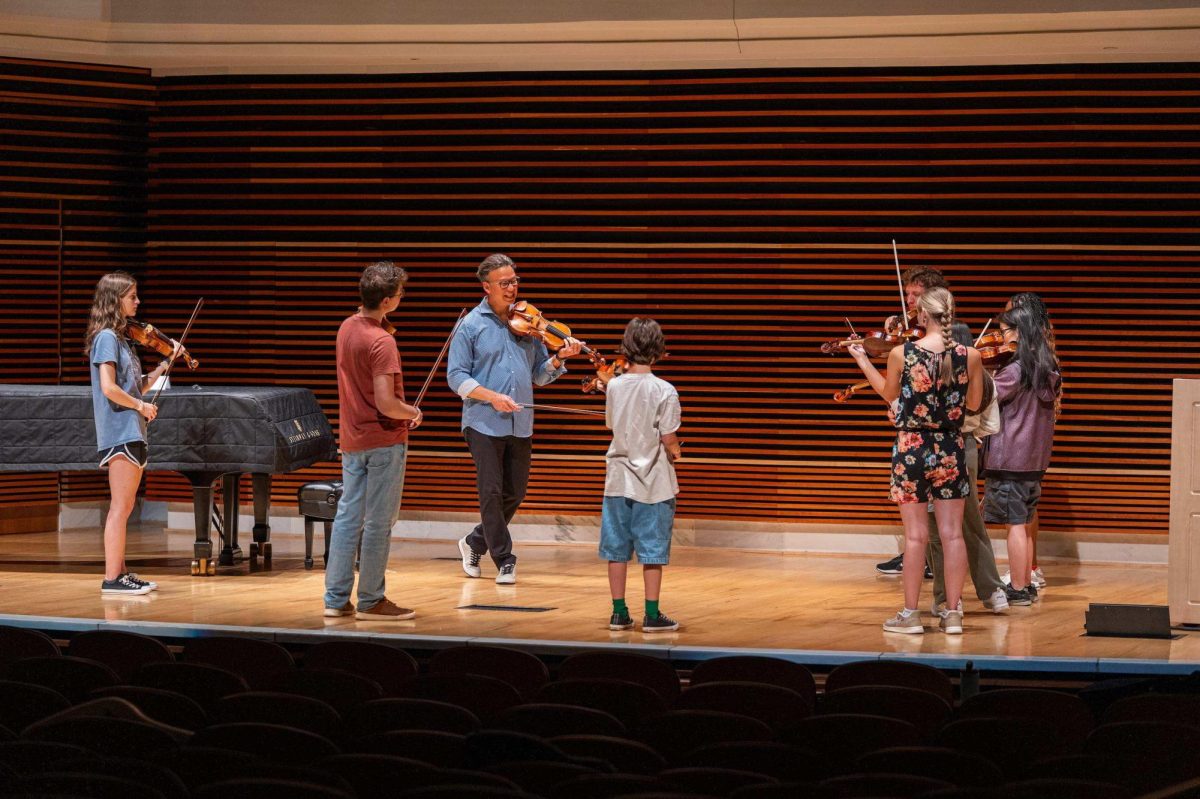
KNOXVILLE, TN - Students and staff listen to historian Jennifer V. Evans as she talks about "What Does it Mean to Queer History?" in the Student Union. Wednesday, Oct. 26, 2022.