From microbes to neurons, how beer works is a lot more complex than a Miller Lite may appear.
No matter the kind of beer, whether pilsners, IPAs or porters, they all start with four basic ingredients — water, grains, hops and yeast.
Although they may taste radically different, for any type of beer these basic components form the core of what makes a beer and how it interacts with your body.
To summarize the process, barley grains are mashed up with water to extract sugars, hops are brewed into the mixture and then yeast is added to ferment before the beer is filtered and bottled.
It all starts with the wort, which is simply sugar water. A wort is made by malting grains (making them germinate) by soaking them in water. Then the wort is ready for the hops.
Ph.D. candidates in organic chemistry Sam Mattern-Schain and Adam Jusdon Carr went into the process with more detail.
“During brewing, adding hops early on increases bitterness and adding them later on increases aromaticity,” Mattern-Schain said. “This is a major way in which the flavor of beers is fine tuned.”
As a home brewer, Carr said that even after siphoning off leftover material in the boiled wort, you will still leave some hops behind.
“At the very end you should just get a big syrupy brown, tan tank of sugar water,” Carr said.
Boiling during the addition of hops also helps to prepare the sugars of the wort for fermentation by the yeast, but first the mixture must be cooled.
“You have to be gentle with the yeast,” Mattern-Schain said. “Yeast is a tiny single-celled organism that eats sugar and excretes alcohol and CO2 gas; this is fermentation (The mixture) can’t be too hot, because (yeast) it’s a living organism and it’s fragile.”
The fermentation through yeast provides brewers another opportunity to customize their beer.
“Top fermenting strains (they rise to the top as they ferment) make ales. These strains of yeast also produce esters which give ales a little something extra in terms of flavor” Mattern-Schain said. “Lagers are made with bottom fermenting yeast, and typically fermented in a cooler environment over a longer time, giving them a crisp, mild character.”
After the fermentation, what happens next is up to the brewer.
Commercial brewers strive more for consistency and a clean appearance in their beer, so they filter to be sure all residue from the brewing process is removed. However, for home brewers, what’s left over is sometimes the best part.
“Every now and then if you’re lucky, you get a craft beer from the store that has a bunch of chunky stuff at the bottom,” Mattern-Schain said. “I always recommend drinking that; it’s usually the best.”
So how does this mixture of plants and microbes get you drunk?
The simple answer is because it contains alcohol. The more complicated answer involves ethanol, the specific type of alcohol that acts as the “drug” within beer.
For anything to be called an alcohol, it must be a chain of carbons that ends in a hydroxyl (-OH) group. When beer is digested, the hydroxyl group helps alcohol leave the stomach and small intestine to dissolve into the bloodstream. From here, the bloodstream acts as a conveyor belt or a bus route that transports materials throughout the body.
One place where the alcohol leaves the bloodstream is in the brain, and this is where the delightful or unpleasant effects of alcohol begin.
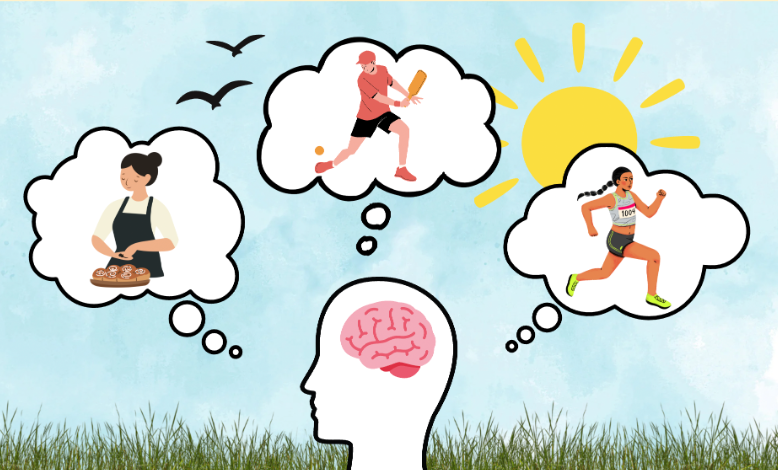
The brain is a vast network of neurons that shoot messages from one to another like calls along telephone wires. One neuron sends out a signal to linger in a gap called a synapse, and from the synapse, the other neuron snatches up the signal. Different parts of the brain regulate this communication by speeding up or slowing down neuron activity.
When alcohol enters the brain’s network, you can think of it as causing static between wires. By binding to a regulator that slows down neural activity, alcohol acts to muffle communication. When one neuron sends out a signal, this regulator blocks or delays the second neuron’s uptake of the signal, slowing down the neural function.
As more beer is consumed, more alcohol is shuttled up to the brain, and the neurons become more saturated in this inhibiting substance.
“As BAC goes up, alcohol acts upon the brain’s cerebral cortex (that uninhibited feeling you get when you’re a lil’ buzzed), limbic system (why drunk girls and guys cry over nothing), cerebellum (picture a drunk dude with one eye closed poking at his phone trying to text people), hypothalamus and pituitary glands (automatic bodily functions governed by hormones) and finally the medulla (now we are at the functions you don’t think about at all … how to breath and not die, etc.),” Mattern-Schain said.
The medulla controls blood flow to muscles throughout the body, and disruption of this blood flow is what causes you to feel hungover, along with all the other medulla functions disrupted by alcohol.
After being processed by your liver, alcohol finally leaves the body, and it’s lingering effects are no longer felt.
From grain worts to our bloodstream, a lot goes into every beer. A recipe of barley, water, hops and yeast may sound simple, but there’s a lot that happens behind the scenes.