Easily distracted or anxious before or during an exam? If so, there is no
need to worry because overcoming anxiety can be done, said a psychologist
from the UT Student Counseling Services Center.
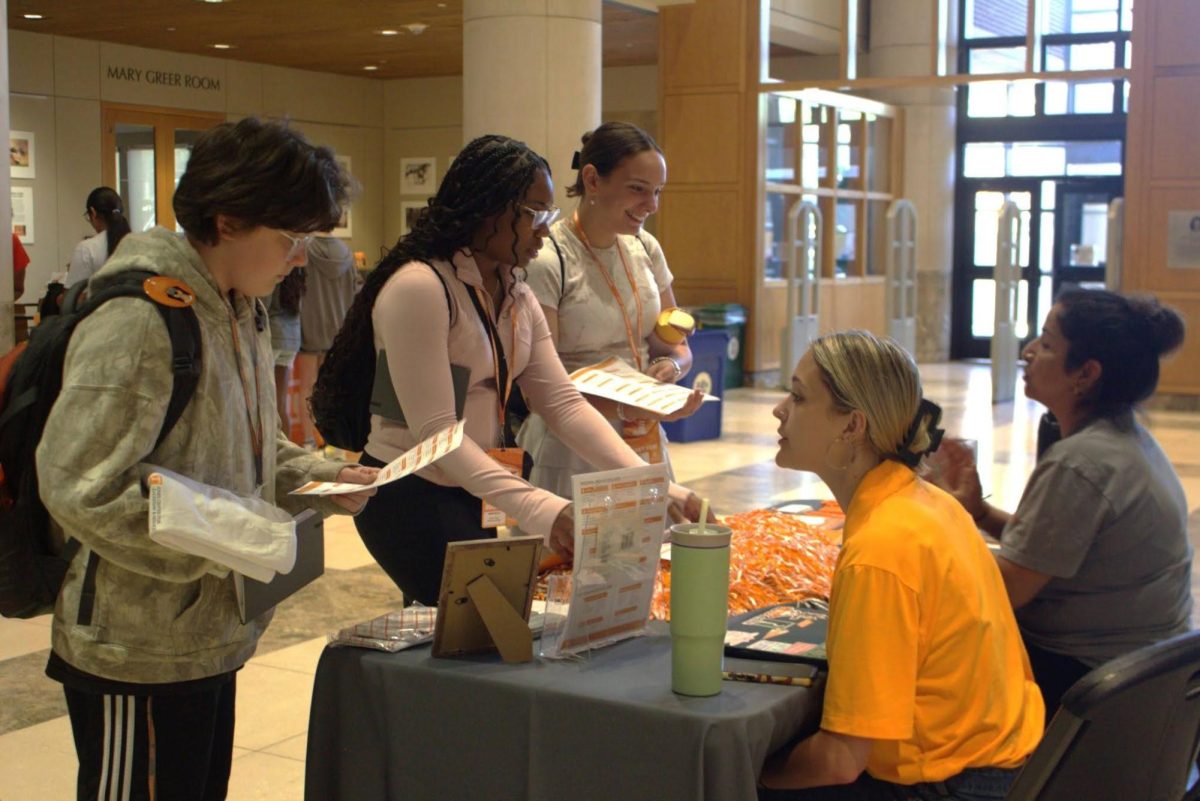
Psychologist Philip Johnson spoke about test anxiety and how to work
through it in a Wellness Brown Bag Seminar last week at the University
Center.
Some signs of test anxiety include feeling unprepared even after studying
and temporarily forgetting what one has studied until the test is over.
This anxiety can be brought on by imagining one test will determine one’s
entire future, asking others how long they have studied, and studying with
nervous people.
To stay calm and reduce test anxiety, Johnson suggested practicing deep
breathing exercises during the test, preparing well in advance, and
avoiding quizzing others before the exam.
Johnson said the anxiety one feels does not come from the test itself, but
rather what the person is telling himself about the test. People are
programmed by their culture to think in certain ways, he said.
“Our beliefs are really powerful in limiting us or helping us achieve what
we want to do,” he said.
In childhood, everyone is taught to attach behavior with self-worth, he
said. These “automatic thoughts” lead to associating poor performance with
worthlessness as a person, he said.
“People teach us what we do is who we are and that gets us into very
dangerous thinking,” he said.
When faced with an anxious situation, the body undergoes certain
physiological changes and gets into a “fight or flight” mode, Johnson said.
Among these changes are an increased heart rate, tensed muscles, and
dilated pupils.
Neither fight nor flight is a way to deal with anxiety in the long run,
Johnson said. Reducing anxiety can be accomplished by writing down
irrational beliefs causing tension, challenging them, and refocusing on a
positive goal.
“What we’re talking about is reprogramming in a positive way,” he
said.
Jane Groff, psychology major, said she attended the seminar because of the
anxiety she feels when dealing with people in a confrontational
situation.
“When I deal with conflict with other people, I just get really sick and
nervous,” Groff said. “I wondered if there were methods I could use to
overcome it. I give other people a lot of power.”
Any student wishing to discuss anxiety problems with a psychologist can do
so at the Student Counseling Services Center on campus free of charge.