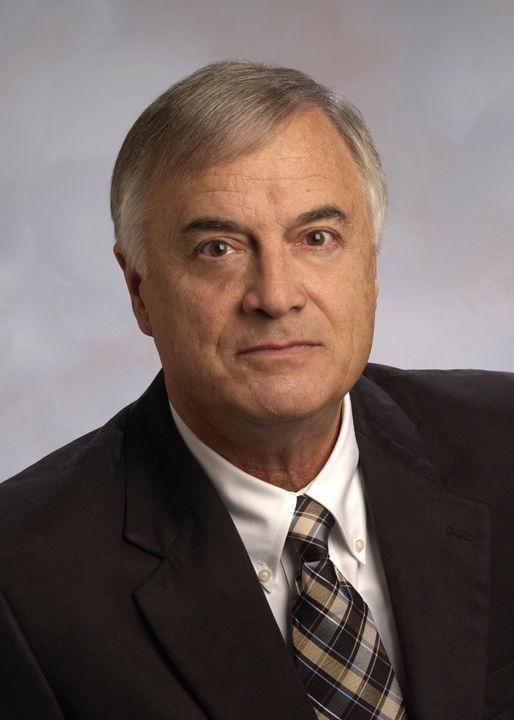
It’s true that sometimes hobbies turn into lifelong professions. For Harry “Hap” McSween, his childhood pastime of rock collecting certainly helped spur him to pursue a career in planetary sciences.
However, never in his wildest dreams did he picture working with NASA on prominent spacecraft missions such as Opportunity, Spirit, Pathfinder and Mars Odyssey.
Now, after over 30 years in the field, studying Mars and martian meteorites, professor McSween has become one of the most accomplished scientists in the nation.
“You know, I feel so lucky to have been at the right place at the right time because this is kind of our generation’s frontier,” McSween said. “You know, we understand the earth and we’re using the same tools that we used to understand the earth to now understand other planets.”
Thirty-five years ago as a geology Ph.D. student at Harvard University, McSween and a fellow student were the first to suggest that the earth contained meteorites from Mars. And, as a rite of passage most prominent scientists face at least once in their careers, both young men were “laughed out of the room” at the thought of such an outlandish suggestion.
However, as the years progressed, the gentlemen’s ideas started not to seem as unconventional as initially thought. After in-depth research into the matter, it was concluded that many of the meteorite samples that had been gathered on earth actually did have martian atmosphere in them. McSween and his colleague had been right.
Since then, McSween has been involved in a number of Mars spacecraft missions, working with other NASA scientists and receiving grants from the organization as a NASA principle investigator.
Because of his work, the National Academy of Sciences awarded McSween with the J. Lawrence Smith Medal, given every third year since 1888 to a scientist in recognition of their work and research in planetary science. The prize consists of $25,000 and a gold medal. McSween will receive the award on April 30 in Washington, D.C.
“I got a letter in December,” McSween beamed. “I couldn’t believe it. It was a surprise. I had no idea that I had even been nominated, and so it was a thrill. It still is a thrill. I’m still kind of smiling every day.”
One of McSween’s professors at Harvard, John Wood, also received the J. Lawrence Smith Medal.
“While I was his student, he won this same award,” McSween said. “So it’s kind of like father-son — a kind of passing-the-torch, academic father-son thing.”
Despite receiving such esteemed recognition, McSween still strives to continually impact the next generation of students and scientists, most especially as a faculty member at UT.
“I’ve had probably maybe close to 50 graduate students over the course of my time here, and I’ve learned as much from them as they’ve learned from me,” McSween said. “You know they push you to do things differently and think a different way. If I were at a research institute instead of at a university, I don’t think I would have accomplished nearly as much and had nearly as much fun because it is so enjoyable and stimulating to work with students.”
To date, McSween has worked at UT for 35 years, and his enthusiasm for both his work and his students never seems to fade, though he admits he does sometimes worry about the future.
“I’m getting towards the end of my career, and I worry that I’m going to run out of ideas before I run out of career,” McSween said with a laugh. “You know you work to generate these interesting ideas for research and you basically give them away to your students. And the students do wonderful things with them, but they take the idea with them when they go. And so you have to constantly come up with new things, and I just worry that I’m going to run out before I retire, you know?”
Nevertheless, in spite of such concerns, McSween’s colleagues and students have complete faith in him.
Research assistant professor Josh Emery spoke very highly of his co-worker, commending him on his work ethic and his zeal for his research.
“You know, he’s really impressive in every single way,” Emery said. “He teaches, he’s won teaching awards in this department time and time again. He seems to really connect well with students, and I think a large reason for that, aside from his expertise in the field that he studies, is that he really exudes enthusiasm.”
Graduate student Arya Udry also praised McSween as a professor and as a very sincere mentor.
“I love what he does,” Udry said. “I mean I love listening to him. I took an independent study class with him and he had this big book on Mars. And he was just telling me everything about it, sometimes like a grandpa talking to his granddaughter because he knows everything. I mean it’s always a pleasure to listen to him. I think he’s a great teacher. He’s a hard worker.”
Geologist, researcher, colleague, teacher and mentor, McSween certainly has made a large impact on both his field and on the people around him.
“He really is still super active, and it’s impressive to watch how much he can do,” Emery said. “When you talk to him he’s up, he’s there. When he’s talking about science his eyes twinkle like a little kid. I mean it’s really just infectious.”