When the curtain opens at the Clarence Brown Theatre this fall, there will be 100 characters on stage for opening night. The trick is that there will only be four actors.
For the upcoming production of “The 39 Steps,” the Beacon decided to take an in-depth look at the behind-the-scenes preparation that went into this farcical rendition of an Alfred Hitchcock classic.
A lot happens before the opening scene, and even more happens before the actors enter the picture. Joe Payne, the sound and projection designer for Clarence Brown Theatre, detailed how the design crew begins their preparation.
“The play is chosen, and the whole design team all gets together with the director,” Payne said. “The director talks about the concept of the piece or the theme or mood or feeling of the piece and how he/she wants to portray the piece.”
After the director sets the stage for the team, the individual designers begin production.
Bill Black, the costume designer, starts each production in the same way. Equipped with an elaborate chart outlining which roles the actors play in each scene, he begins his research.
“My research for this play was that I read the novel that the movie was based on, which wasn’t very helpful because Hitchcock really changed it for the film,” Black said. “Then I watched the film, and online I found a bunch of stills from the movie for reference.”
From the online stills featuring period dress of the 1930s, Black sketched out costumes for his production that fit with the established style of each individual character.
“Sometimes that involves finding clothes and putting them together in the right way, and sometimes it involves making them from scratch,” Black said. “When it involves making them from scratch, the drawing goes to the draper and he makes that into a pattern.”
The costume for the female spy character is a dress pattern, which Black found in a 1937 Sears catalogue.
“You can see a lot of the way through the movie she is wearing a dark dress with a big white collar or a big white bow so that’s why I kept that,” Black said. “In the movie she had three or four different dresses but … we didn’t have time for her to make all those changes.”
For a play this extensive, most characters only have one costume, but even that is enough to keep the actors busy.
“The idea in a play like this where one actor plays more then one character is that the costume tells you which character they are,” Black said. “The actress plays three different women so she’s not too complicated…then these two guys play every other character in the movie.”
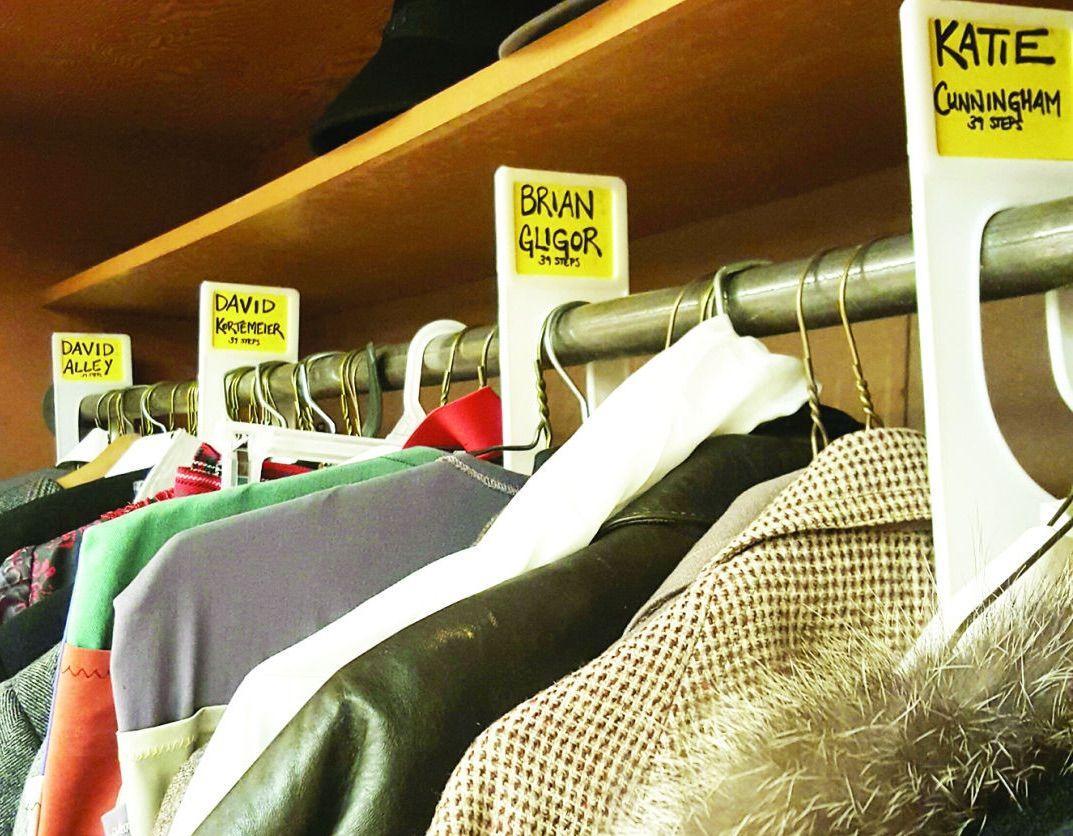
The two actors, called “clowns,” play every male role (with the exception of the lead) and even a few female roles. Their basic look is a white shirt, black pants, red suspenders and red-and-white socks.
“Whenever they play a woman or someone in a nightshirt or whatever, they will just pull their pant legs up and we will see those red-striped socks,” Black said. “When they are being stage musicians they have their basic costume and then they just put on a vest and shirt and bow tie in one piece over their thing and add a jacket.”
The rapid quick-changes these characters undergo are facilitated by sewing multiple items of clothing into a single piece and swapping out buttons for Velcro and snaps.
“Its not like we’re trying hide the fact that these two guys are playing all the other people; it’s part of what’s funny,” Black said. “They have a whole lot of different voices and accents and funny things that they do.”
David Alley is an actor-in-residence at UT playing one of the “clown” roles. For Alley, the quick changes only add to the comic nature of the play.
“One of the elements of farce is that there’s always some sense of danger, of things going too fast or things reaching right to the point of being out of control,” Alley said. “Our job is to make that appear to be the case but really to have things under control at the same time.”
Once costume and set design are wrapping things up, that’s when the other production teams move into full swing.
“I actually wait until the set design is done and the costume design is done because they hugely influence where I go from there,” Payne said. “I always like the sound and music and sound effects to feel like the physical world that has been created.”
The sound designer is in charge of the music and sound effects that go into a show. Payne described his job as “emotionally driving the piece, keeping the piece going and keeping the mood and feeling of the piece where the director has intended so that we never fall flat.”
To do this, Payne and his team search through source materials that capture the time period, location and mood of the production. After a lengthy process of whittling down their selections, it is time to move to rehearsals.
“By the time rehearsals begin we have an idea of most of the sound and music generally,” Payne said. “Then as the actors start bringing it to life, that’s when you say all the little ‘ooh this piece of music needs to be 10 seconds’ or ‘this sound effect needs to be much angrier’ and all those things that are based on what the actors are actually doing.”
Lighting and sound bring a play into the fourth dimension. They move the action through the world that costume and set design created and help bring it to life.
“Lighting actually visually creates the world but also has to help us move from one place to another or from one time to another with the action and sound does the same thing,” Payne said. “We call these the ethereal elements or the time-based elements of plays.”
As much as the design team relies on the actors to shape their work, the actors are equally dependent on the design team for inspiration.
“It’s our job to inhabit what the scenic designer and the costume designer and the sound designer have provided us,” Alley said. “Those tools are very very useful in allowing us to sort of go to a particular place almost instantly. They have provided us with some of the costume pieces, in particular hats, as well as the full sound design, and that has been absolutely vital to us for rehearsals of this particular show we are doing.”
In the end, each individual team works to create a world which the actors can introduce the audience to on opening night.
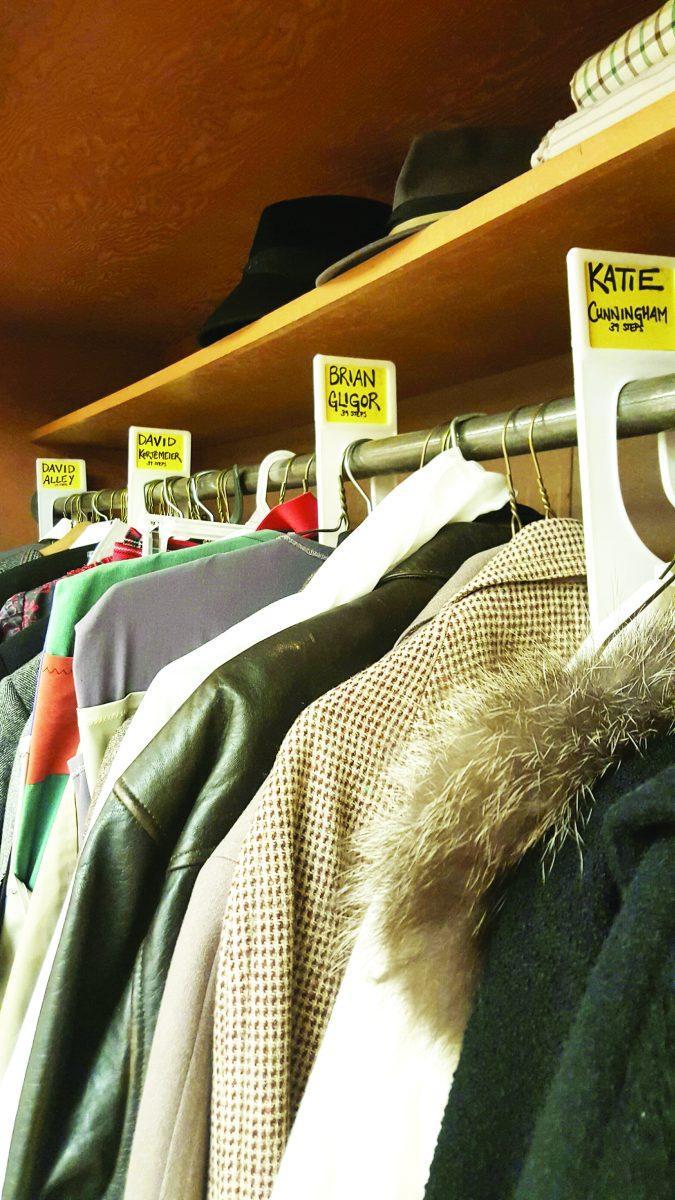
Costumes lined backstage.