The phrase “Women’s History” typically brings to mind notable figures such as Rosa Parks, Elizabeth Cady Stanton, Marie Curie and Hillary Clinton.
But UT’s Commission for Women is creating a new way of recognizing the women who are impacting our society through various campus events occurring in the month of March for Women’s History Month.
The commission will end the month Wednesday night by hosting Women Artists and their Work in Hodges Library. Several student artists will be presenting and discussing some of their work beginning at 6:30 p.m. in the Mary Greer Room.
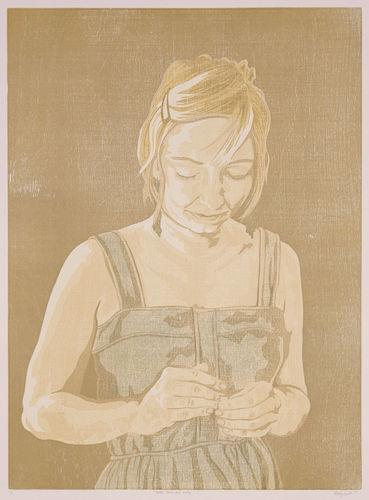
Keely Snook, graduate student in printmaking, plans to present pieces that she has created over the past three years.
“They will be primarily woodcuts, screen prints and lithographs with a few paintings and drawings,” Snook said. “I will also be showing some of my influences and discussing a little bit of my background.”
Alanna Wilkinson, senior in 4D art, will screen a short film for the audience.
“I’m presenting a documentary about how my parents met and giving a look into their married life, all based on a collection of mixed tapes I found that belonged to them,” Wilkinson said.
Bailey Davenport, graduate student in painting and drawing, will present her most current work, a union of painting and performance art.
The function of this event is to celebrate women’s presence in an industry that is male-dominated.
“The film industry is very male-based. You really don’t see many women in film,” Wilkinson said. “But then there’s always going to be a hurdle that some have to work harder to get past than others.”
It’s an industry that Snook sees progress in but admits women are still fighting to make their influence known.
“The visibility and status of women in the arts has improved, but male artists still dominate the majority of art history and are primarily identified as the canons of the art world,” Snook said.
These presenters were each selected by their art professors for their tendencies toward work that connects and deals with various aspects of gender identity, feminism and society’s gender codes and norms.
“As a non-binary person, I feel like I absolutely represent everything that womanhood is and everything that manhood is,” Davenport said. “And I’m uniquely positioned to speak on behalf of people who are perceived to be women because I have spent my life being perceived as a woman 100 percent of the time.”
Snook also takes a more fluid approach to gender — a large influence in her art.
“I feel that trying to break society into two disparate groups, male and female, leaves the majority feeling like outsiders, either rejected or forced to conform,” Snook said. “I think that people are complicated and efforts to generalize often result in incomplete definitions and stereotypes.”
While each of these presenters acknowledges the lack of gender equality in society, and also the ongoing progress toward more equality, Snook believes society may be focusing on the wrong issue.
“Personally, I feel that allowing for a stagnant and closed-minded view of gender creates an array of issues in today’s society,” Snook said.
Davenport agrees with Snook’s belief.
“I think gender equality is a very difficult issue, and it means something different to every person that you talk to, but we just talk about women as being equal to men rather than having a different conversation about abolishing all of those binary gender codes,” Davenport said.
Davenport hopes to share these ideas with the audience in attendance.
“I hope that they experience a shift in perspective,” Davenport said. “I think that’s really valuable no matter what your perspective is.”