The Women, Gender, and Sexuality program at the University of Tennessee was designed to teach students how gender and sexuality shape human culture. A myriad of WGS classes are offered each semester, often intersecting with other departments to cover topics such as women in literature, sexuality in cinema and more.
Two WGS classes that are being offered during the upcoming spring 2024 semester are Sexuality & Social Media (WGS 400: Topics in Women, Gender, and Sexuality) and Gender & Crime (WGS/Sociology 453). These classes will be taught by Alexandra Chiasson and Lois Presser respectively.
Chiasson is an associate director and lecturer in the WGS program. It is her first year at UT as an instructor, though she was an English major here until her graduation in 2015. Her research is focused on internet culture and sexuality, which easily qualifies her to teach Sexuality & Social Media this spring. With her knowledge of the subject, Chiasson plans to make this class interesting for her students.
Chiasson will be organizing Sexuality & Social Media around some keywords, like meme and discourse. By using these keywords, she will find readings, online content, art and films for her students to watch or look at in order to fully understand the topic they are exploring.
“Social media is intimately bound to how we discuss sex and sexuality today,” Chiasson said. “The internet is now such a fixture of our lives that it doesn’t make sense to discuss sexuality without also working to understand the social media cultures that now so often structure sexual identities, practices and communities.”
With social media becoming so prevalent in everyday life, Chiasson hopes that this class will pique the interest of students who would like to study internet culture in the academic context. She will be focusing on mainly TikTok, Instagram, Snapchat and dating apps in this upcoming class.
A student who takes this class may even learn something about themselves. By studying the way people are communicating, especially with social media, Chiasson hopes that students will become better communicators themselves.
“Social media and other internet functions are so deeply ingrained in our daily lives that we don’t always see how they shape our identities, habits, interests, and desires, even when what we are doing isn’t explicitly or obviously sexual or romantic,” Chiasson said.
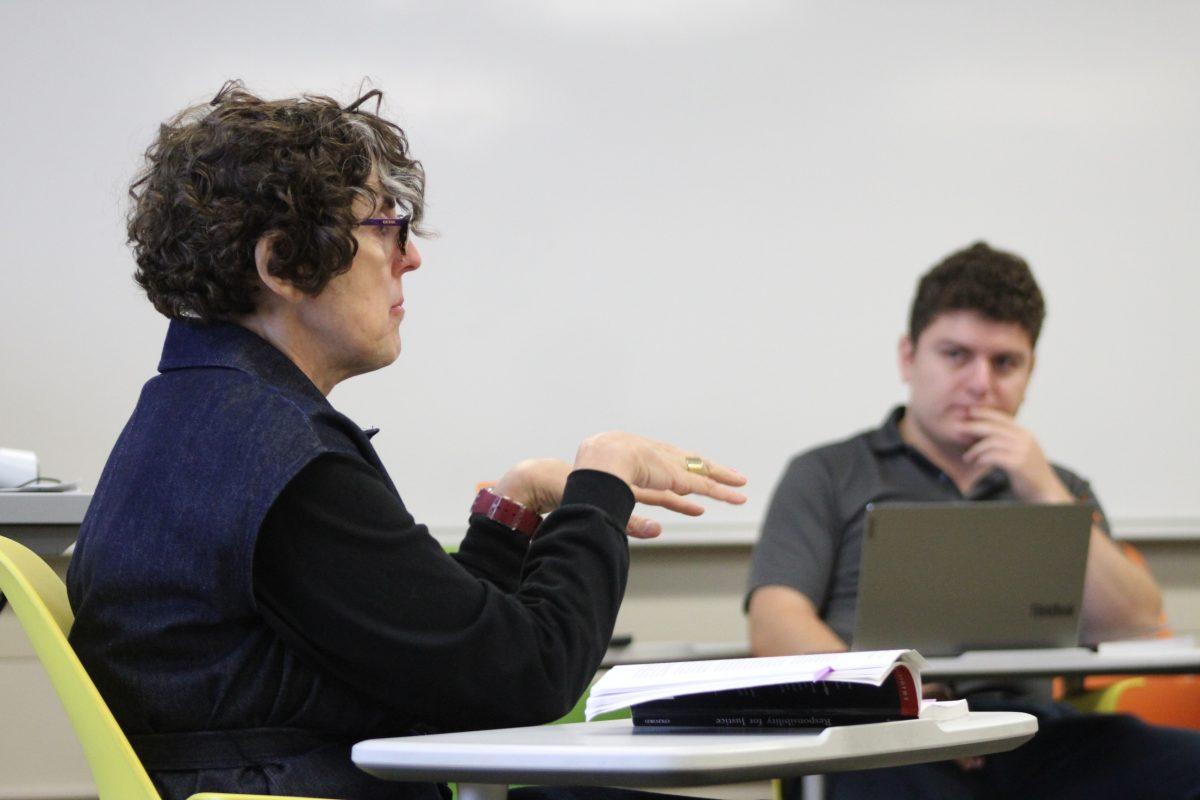
Similarly, Presser hopes that her class on Gender & Crime will make students understand the problems of daily life as bigger than the individual. Crime can be incredibly individualized, though this course will address the question of how gender shapes harm-doing, victimization and social control.
Presser is a professor of sociology at UT, a role that she’s been in since 2002. Her research is focused on how stories and language in general shape patterns of harm. This spring will not be the first time she has taught Gender & Crime, so her history with the subject will make for a well-polished class.
The class will cover various forms of violence, much like how Chiasson’s class will focus on various forms of social media. Additionally, like how studying social media is intended to help people better understand their own use of social media, Gender & Crime aims to help students understand themselves.
“The class is designed to help students understand how their actions, inclinations and even feelings are influenced by social institutions, expectations and discourses and how they are constructed in language,” Presser said.
One of the interesting things about this course is that its students will wonder about the extent to which crime is ‘gendered.’ This increases the complexity of the crimes themselves and will spark creative discussions among students.
These classes are just two of the WGS classes offered for spring 2024. Even if these classes aren’t your cup of tea, you may be able to find another WGS class that you’re are interested in. Even though LGBTQ History Month will be over by the time these classes begin, it is never too late to become more educated on topics that pertain to LGBTQ history.