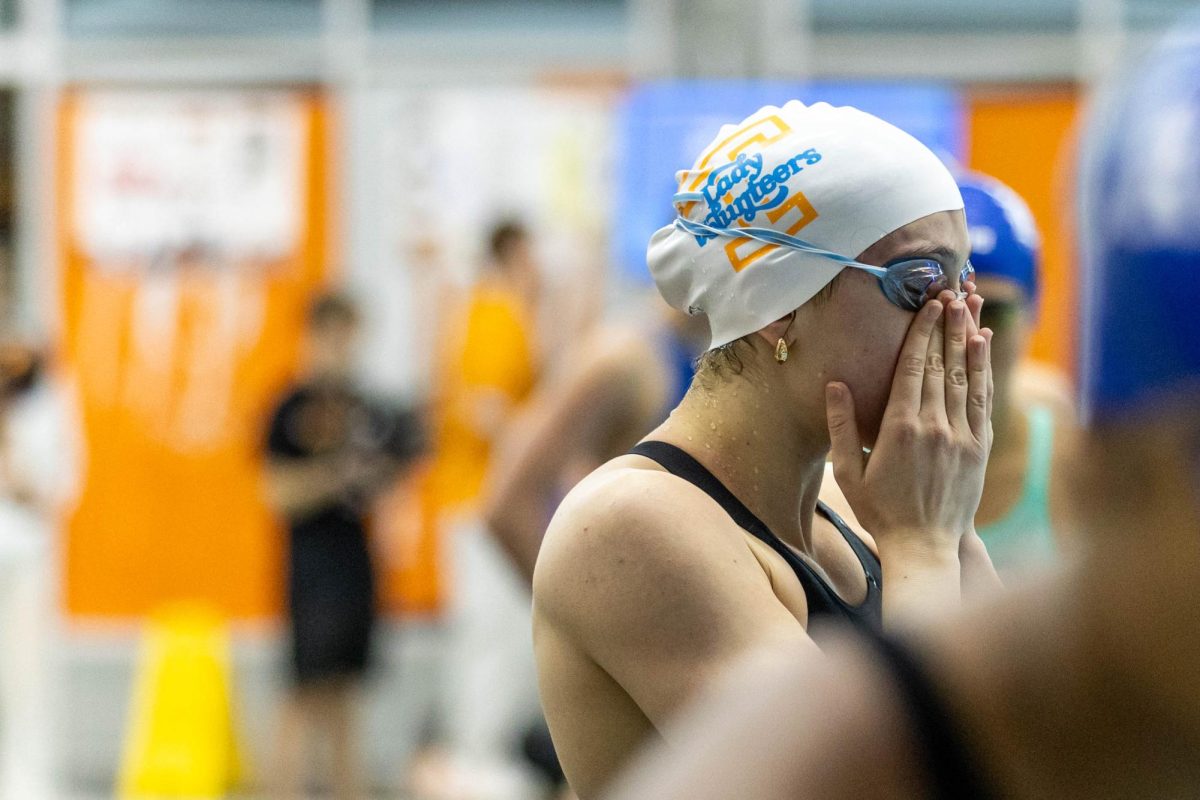
Jordan Crooks got up on the blocks preparing to race for the SEC tournament. The calm before the storm took over — as it did every race. Crooks felt at peace, similar to how he felt swimming in the reefs outside of the Cayman Islands as a child.
The mark for collegiate swimmers in the 50 free is 18 seconds. Only one man had ever swam the 50 free in less than 18 seconds. Crooks didn’t think he would get it as a sophomore, but it was his goal to break the 18-second mark before he graduated.
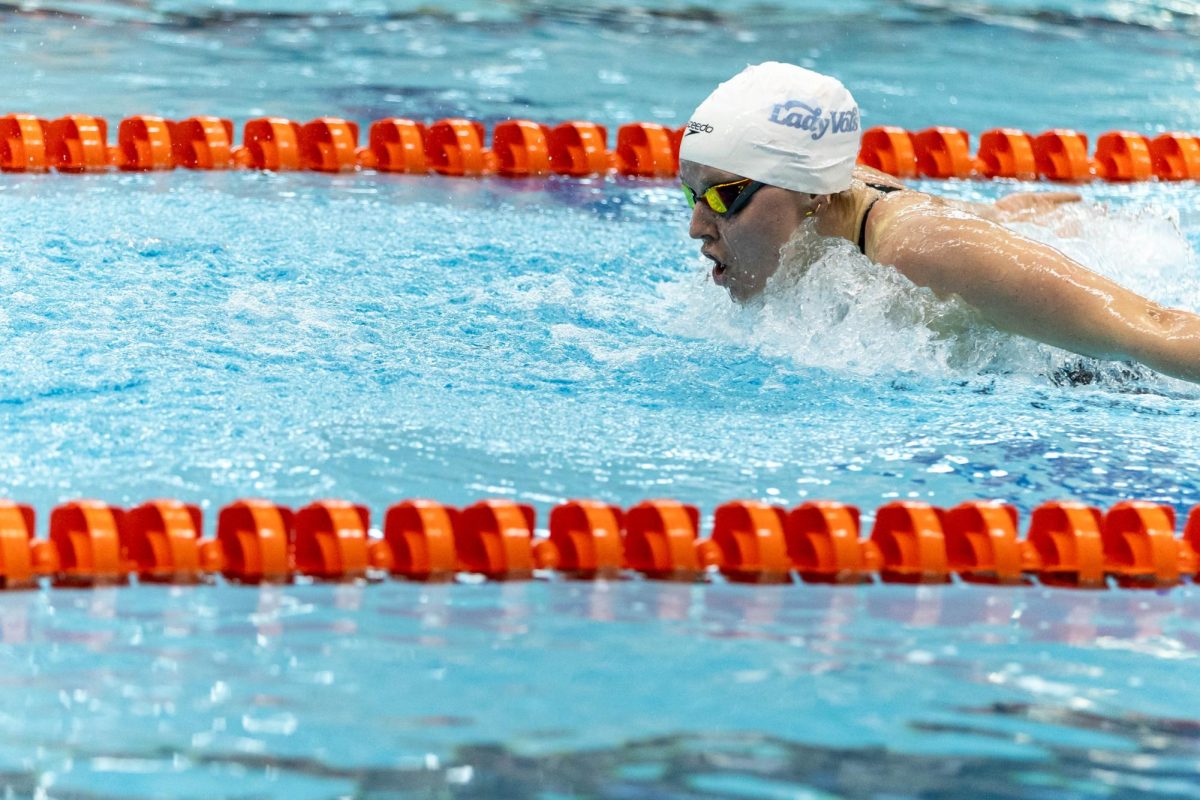
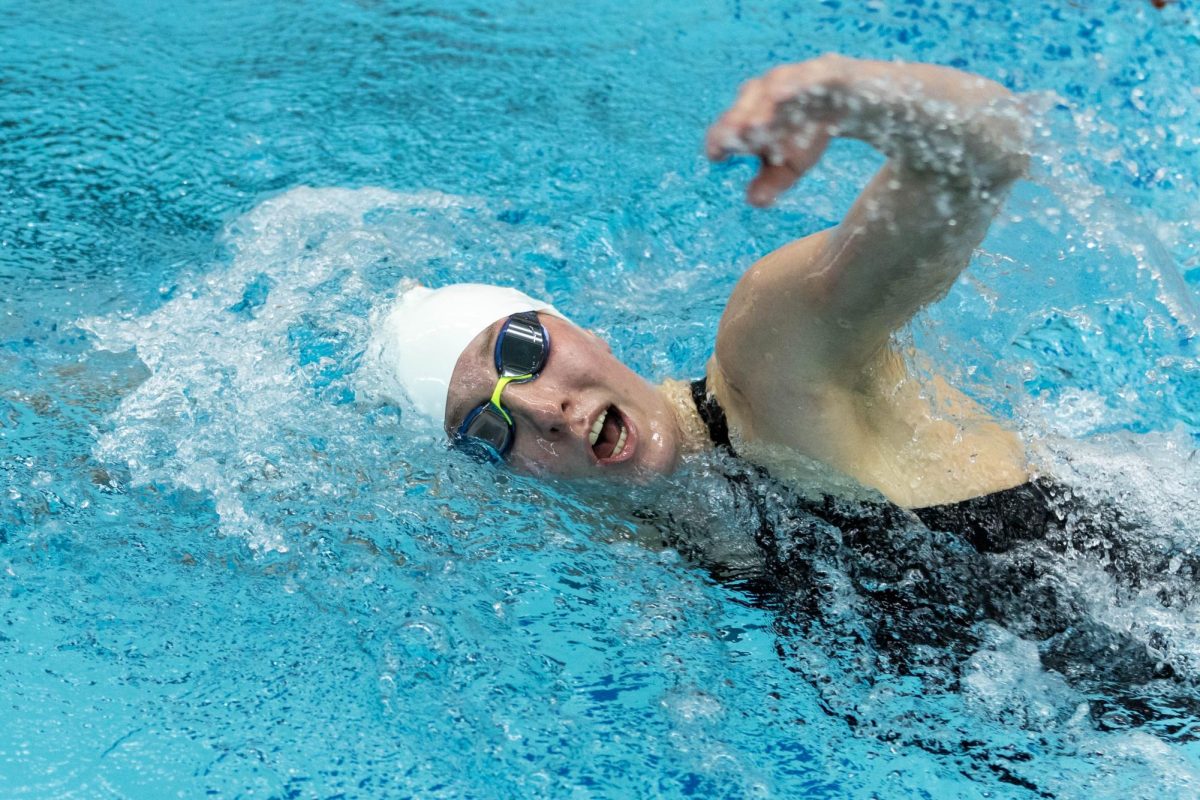
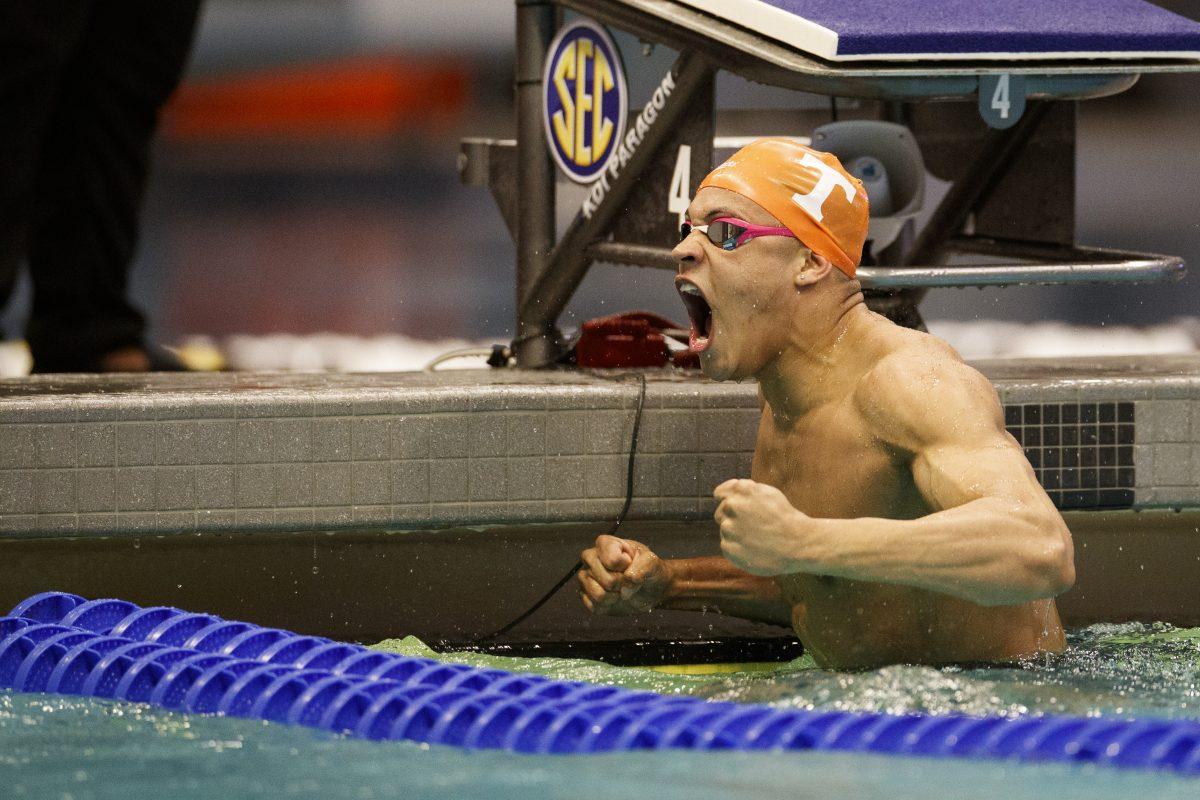
The peace is quickly set aside as the beep goes off. Crooks shoots out of the blocks into lane four, a perfect start. Utilizing his strength underwater, a strength he picked up as a child in the Caribbean, Crooks took an early lead. As he approached the wall at the halfway point, he had a nearly perfect jump to increase his lead.
“When he jumped, I knew it was gonna be a special, special performance,” Crooks’ coach Josh Huger recalled in a conversation with The Daily Beacon. “I think he was 8.6 at the 25, and the way that he hit the wall, it was just spot on.”
The jump allowed Crooks to utilize his underwater strength and win the race. After Crooks touched the wall, he looked toward the blue scoreboard in Rec Center Natatorium at Texas A&M. He paused for a moment as he read his time.
17.93 seconds.
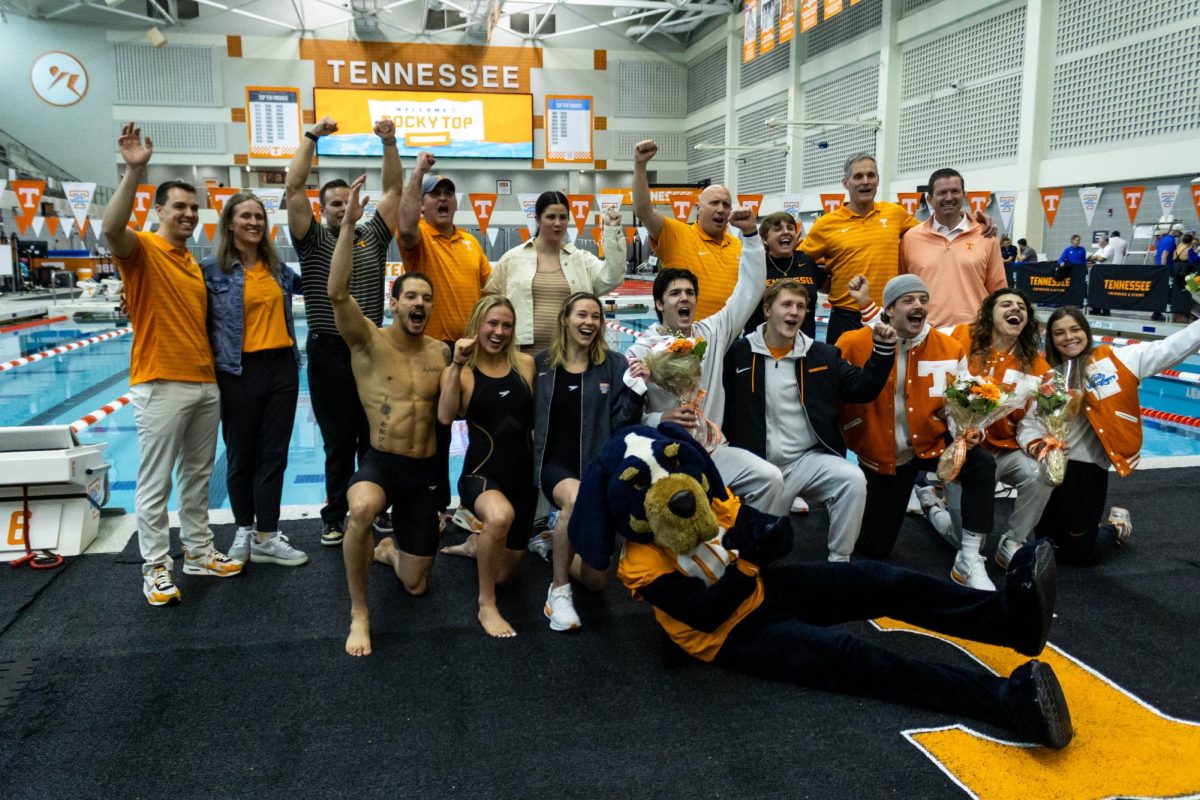
A burst of emotion overcame Crooks as he slammed the water and pointed to his team. Teammates and coaches clad in orange rushed the sophomore to celebrate. A kid from the Cayman Islands had just become the second-fastest swimmer in the 50-yard free ever, only behind Caeleb Dressel’s 17.63 second time.
A kid who almost gave up swimming
Swimming was not Crooks’ first sport of choice as a child, but it was something he certainly couldn’t avoid. In the tropical Cayman Islands, it was basically a requirement that Crooks was an adept swimmer.
“Growing up on an island, I think it’s just really important for everybody to know how to swim,” Crooks told The Daily Beacon. “I didn’t really take it that seriously growing up. I was more interested in basketball and soccer. But then I realized I was a little bit better at swimming than those sports at probably about 13 or 14. That’s why I think I cut those sports out at about that time and then just focused on swimming.”
Crooks was never the biggest kid growing up, forcing him to adapt to be able to keep up with his friends on the island. While his counterparts were able to swim above water with ease, Crooks began to become an underwater specialist.
It was a tool that would help him in the long run, as a young Crooks soon realized his tool for beating other swimmers was his underwater abilities.
He also used his underwater abilities to explore the tranquility that is the Caribbean. A free diver, Crooks has become skillful at controlling his breathing. He explored deep coral reefs and tropical wildlife that the Caribbean Sea offered.
“If you really wanted to see what was down there, you had to hold your breath a little bit longer to see the cooler stuff,” Crooks said. “And so I think getting comfortable at those really deep depths cause there was a lot of pressure on your chest, your lungs and stuff like that. I think it really helped with sprinting because in the sprints like the 50 free, you don’t breathe at all and it’s a lot.”
Swimming was something Crooks didn’t take very seriously for a while. He did it for fun or just as a hobby. It wasn’t until 13 that he entered his first major race.
He headed to nearby Aruba to race in the CARIFTA Aquatics Championship. It was Crooks’ first taste of the International scene.
Swimmers from all over the Caribbean descended on Aruba to race, including Crooks. Many of the swimmers were those that he looked, or still looks up to today. The taste of the first international meet and seeing swimmers from other small islands gave Crooks the drive to pursue swimming.
“Seeing that they could do it I think made it easier for me to just kind of wrap my head around the fact that just cause you come from a little island doesn’t mean you can’t achieve the same success as people who come from bigger places,” Crooks said.
While the international meet lit a fire under the young swimmer, he soon hit a rough patch. Things weren’t progressing for Crooks like they were before. A change had to be made.
The 16-year-old was ready to give up. At the same time, Dressel was breaking records while swimming for Florida. Crooks saw what he was doing and changed his mind about the future.
“There was a point where swimming was not that cool for me,” Crooks said. “I wouldn’t really watch it the way somebody would watch football or basketball or something like that. But when he came onto the scene, it, that’s what made it cool for me because he just had this different level of sprinting that I hadn’t seen anybody else have.”
Swimming was cool again for Crooks. Ironically enough, that rough patch was when Crooks focused all of his talents on swimming and began competing at a higher level than ever before.
“I made some changes in practice and just kind of the way I went about the sport,” Crooks said. “I think I started taking it a lot more seriously and being more invested in trying to get better and not just wanting to get better.”
Crooks saw the fruits of his labor at that next international meet. He had reached his first final on that big stage. The final race didn’t go the way he had hoped, but the opportunity to race next to the best was enough.
“I remember that moment of realizing like, this is what it’s like to be on the international stage in a final,” Crooks said. “And even though it didn’t pan out the way I wanted it to, like that was a little taste that I needed and I feel like that kind of lit the fire underneath me.”
That fire burned under Crooks as he worked toward college and recruitment. Despite his early success, Crooks was under-recruited coming out of high school.
Tennessee was one of the few schools recruiting Crooks out of high school, but it was the one who wanted him the most.
“Jordan’s just a great human being,” Huger said. “I think anybody could spend even a little bit of time around him. You immediately pick up on just kind of his contagious energy.”
Crooks’ recruitment lined up with the NCAA’s COVID-19 restrictions. Lots of Zoom and FaceTime calls later, Crooks decided to take his talents from the Caribbean to Knoxville. His only visit was during a meet he swam at in Tennessee’s pool.
He didn’t need more visits to pick Tennessee, the decision was easy for Crooks. Knoxville reminded him of the Cayman Islands. His new home offered the “perfect blend” of a big city, while also feeling “homey.”
Over 1,000 miles from home, Crooks had to adjust to Knoxville. The Cayman Islands, home to 68,136 people, was a lot slower-paced. Everyone knew everyone on the island, Crooks explained.
While it is over double the size of his home, Crooks felt at home in East Tennessee.
“It feels homey really,” he said. “I can just drive up the road and I don’t really need a GPS or something like that. It’s not too hard to find anything here. And then a lot of the people that I swim with live kind of around the area so it’s not too hard to go visit a friend or something like that.”
Coming to a foreign place was not as big of a transition as some may think. Tennessee’s Director of Swimming Matt Kredich has become very good at making overseas swimmers comfortable in Tennessee.
Fresh off of his 17th season as the head man, he has created a friendly environment that attracts the top talent, both men’s and women’s swimmers, from anywhere in the world.
“They know that they’re gonna be taken care of in and out of the water,” Hugey, who is also Tennessee’s recruiting director, said. “They know that we’re gonna support their athletes’ goals and also involve them in the overall process. And I think that’s something that, you know, some programs don’t do or maybe not have the same level of support for their athletes in and out of the water.”
The adjusting outside of the water may not have been as the adjusting inside the pool. Crooks had raced both short-course meters before arriving to Tennessee.
The NCAA races short-course yards. A pool 25 yards long was the shortest Crooks had ever raced in. Unbeknownst to him, it was something that he could use to his advantage.
Dating back to his childhood days of catching up to his friends underwater in the Cayman Islands, Crooks realized he could stay underwater for almost half the race. The improvement was instantaneous.
“I think my first couple of meets when I saw like a lot of improvement from where I came in, especially on the underwaters,” Crooks said. “I realized I can really use the underwaters to my advantage a lot more than when I was in short course meters.”
His underwaters earned him a 2022 SEC Championship, Caribbean Swimmer of the Year and the fastest times in Tennessee history for a freshman in the 50 and 100 frees.
His freshman-year success at Tennessee was no surprise to his coach. His first practice as a Vol, Crooks put up insane times in underwater times and during drills. His first-day performance was something Huger hasn’t forgotten.
“Ever since that moment, he continues to have more and more moments like that where he’s just doing things in training that we’ve never seen before,” Huger said. “It’s exciting to think about the way that he’s continuing to progress, the way that he’s hungry to kind of learn more and, you know, what, what that might lead to.”
Along with his first-year success came the realization that Dressel’s record was something he could reach. 17.63 seconds in the 50 free has yet to be accomplished again. Dressel didn’t swim under 18 seconds until his senior year.
Crooks accomplished that time as a sophomore on his way to another SEC Championship in his 17.93-second race. He also earned a National Championship in the 50 free among a slew of other honors for the 20-year-old.
Those honors don’t include breaking Dressel’s record.
“I think to beat Dressel you’d need to have something beyond perfect, beyond a perfect swim cause he is really, really talented, very well put together, and is really the standard when you think about sprinting,” Crooks said.
He watches film of Dressel’s races in the 50 free and compares them to his own. Dressel is the standard. Dressel made swimming cool for Crooks. Dressel is a recognizable name to anyone, in the swimming community or outside of it.
Now, thanks to his SEC Championship performance, Crooks is a name right next to Dressel’s.
“Dressel, I think for obviously Jordan and many others, kind of set a standard of excellence that people then tried to replicate and or improve upon,” Huger said. “So that’s what people like Dressel and, and Jordan and whatnot are there for, to set standards, great barriers and push the sport forward.”
While achieving below a 17.63-second time is a personal goal for Crooks, he has a lot of goals for the team as well. He sees an SEC Champion-caliber team next season. He wants to be a part of bringing that trophy back to Knoxville.
“I want to leave something here for Tennessee swimming,” Crooks said. “I wouldn’t say a legacy, but leave something meaningful behind and feel like I’ve kind of left the team in a better spot than when I found it (because) it was already in an awesome spot when I found it.”