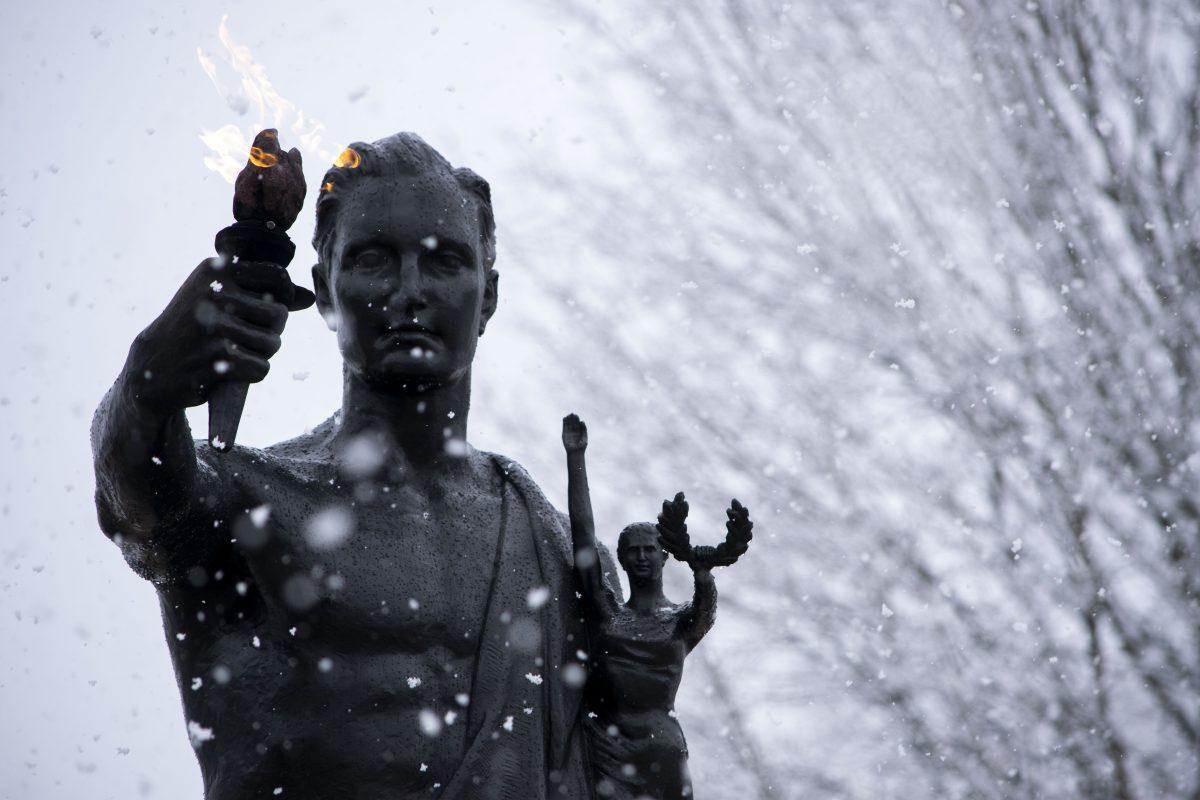
Since 1931, the University of Tennessee has awarded the prestigious Torchbearer Award to some of its graduating students. This year, 11 students were selected for this award. Through these students’ leadership and accomplishments at UT, they have exemplified the Volunteer Creed: “One that beareth a torch shadoweth oneself to give life to others.” These eleven students join the long line of Torchbearers before them.
This year’s 11 Torchbearers are Pilar Garcia, Evan Mays, Patrick Angelaccio, Juliet Gear, Diego Lourenco, Daniel Dassow, Diba Seddighi, Jordan Brown, Emily Morgan, Kiki Milloy-Robinson and Michael Rodriguez.
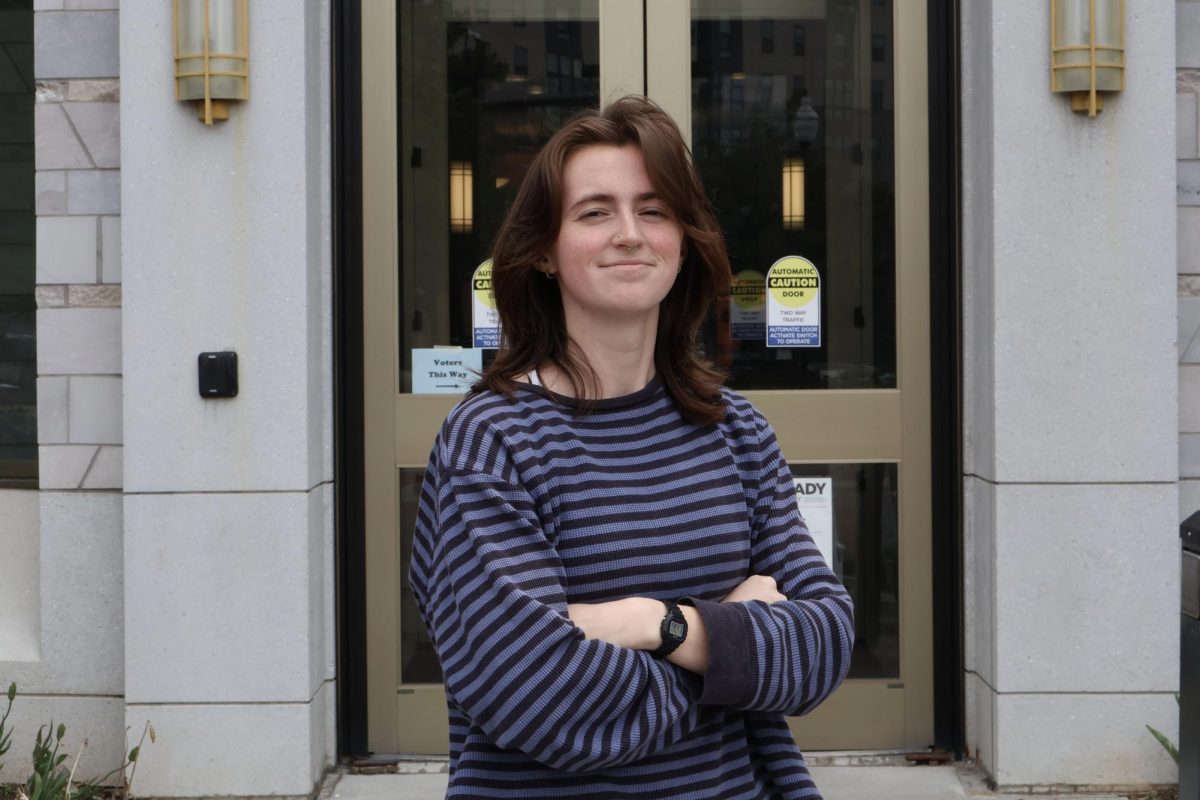
Garcia noted that they do a lot of work with the Native American Student Association, and as a research assistant to Prof. Lisa King. According to King, Garcia could potentially be the first Indigenous person at UT to receive the Torchbearer Award.
“I didn’t really realize that it was that big of a deal, but it feels good having your accomplishments be recognized. I think having a Native American in that position now … me and Dr. King were talking about it, and she’s like ‘yeah, you might be the first Indigenous Torchbearer.’ I was like ‘wow, that’s crazy,’” Garcia said.
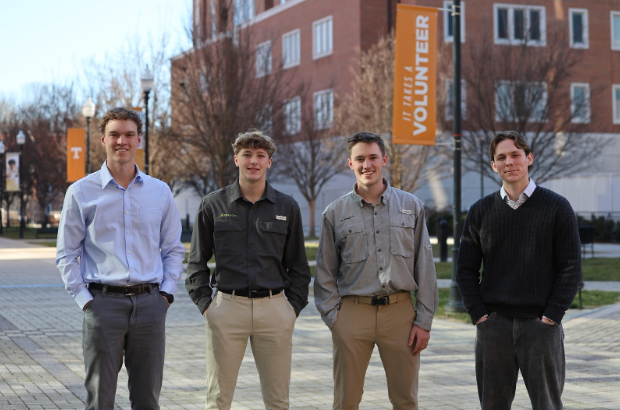
Similarly, Mays and Angelaccio are the first social work majors to receive the Torchbearer Award in an estimated 25 years. The fact that they both received the award after such a long time was a surprise to both of them, but they both spoke highly of each other.
“Me and Patrick are the first social work majors to win the award in, like, 25 years or something, so we’re both really happy. I’ve known Patrick since I was a sophomore, so three years now, and he’s just the sweetest guy. I’m very honored to have won it alongside him,” Mays said.
Mays founded the LGBTQ Student Advisory Board to form a student advisory report with different potential reforms on UT’s campus in order to make it into a more inclusive space for the LGBTQ community. He praised the administration at UT for being so open to the advisory board’s ideas.
“I had asked Chancellor Plowman about the Princeton Review study that ranked us as the least friendly campus for LGBTQ students, and I was just like, you know what, what are some ways that we could improve? They did not shoot down a single idea,” Mays said. “Being an openly gay student at this university and winning the university’s most prestigious award means a lot to me, given the fact that the state is working to push back on gay marriage, trans and non-binary rights and banning drag in public spaces.”
Many of the Torchbearers talked about what the award meant to them: that it was a great honor, but not the driving force of their work.
“I’m sure on paper, I’ve done things and been a part of great movements, but honestly I’ve just tried to wake up every day and leave the world better than I found it,” Angelaccio said. “I get my energy from being around people and helping people out and serving others, so I wasn’t doing it for the award, but I’m happy to be honored in this way. It means a lot that all the work I’ve been doing has been acknowledged.”
Lourenco agreed, explaining that he appreciated the recognition for his work that the Torchbearer represented, but it was not something he set out to achieve.
“At the end of the day, it’s just kind of what I do. It’s what all the Torchbearers do. I think I received this award because of my contributions to the UT and Knoxville community, but I’m going to keep impacting my community wherever I end up,” Lourenco said.
This sentiment was repeated over and over by these students, one of whom being Seddighi. She spoke of how humbling it was to receive this award after years of research and work.
“I was humbled when receiving this award,” Seddighi said. “Obviously, I wanted to put my best foot forward and all the things I’ve done throughout the past several years were never with the intention of pursuing awards or recognition. I’m so appreciative and happy – all the positive feelings.”
Not only was this award notable for being the first awarded to an Indigenous person and the first awarded to a social work major in 25 years, but it’s also validating to those who do work in an area that is not always seen as openly.
“For me to have received this award means the university recognizes that writing is an act of leadership and service,” Dassow said. “That’s why I didn’t think I would win an award like this, because writing is often treated like an act of self-expression or an academic obligation only. I’ve always felt like writing was critical to creating community and serving others. I’m glad the university thinks so, too.”
The Torchbearer Award is also a family affair. Gear has been a Volunteer her whole life, having many family members who have attended UT. She explained that receiving the award was not only a meaningful experience for her, but also for her entire family.
“I knew that getting Torchbearer meant a lot to my family, not only me,” Gear said. “When I called my brother, sister, parents, aunts and uncles, I mean … they were (at UT). They knew that Torchbearers were there when they were students and they were all crying.”
Each of these students that received this award have at least one thing in common: they are community stewards who are very deserving of this award. They have put in the time and effort it took to stand out amongst their peers.
“I think this award is an example of how everything pays off. Not that any of this needs to be something that you get anything back from – but it shows that other people are noticing my work and it is mattering. That’s what this award represents: you’ve impacted someone in the community and that they have benefitted from it,” Seddighi said.
These students will be awarded a medal at the Chancellor’s Honors Banquet on May 2.