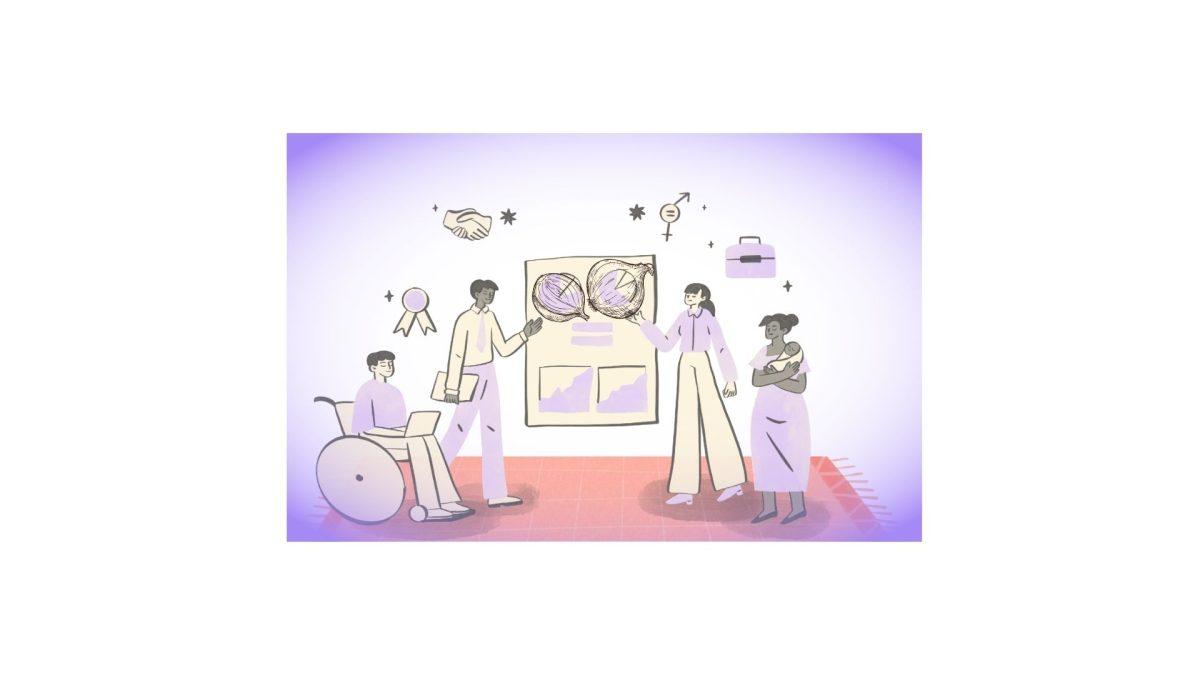
A few weeks ago, I attended a leadership seminar pertaining to service and inclusion while on campus. An assembly of fellow leaders and I broke off into more intimate small groups overseen by a facilitator. We held multiple team meetings discussing a variety of topics as they pertained to our duties on campus. In our last meeting, we were challenged by a very unique activity. It was called “The Page of Privilege.” We were to listen to a series of statements given by the facilitator relating to privilege and see which ones we would identify with.
A handful of these statements that were said included, “I can do well in a challenging situation without being called a credit to my race,” “My elected representatives are mostly people of my sex,” “I do not need to worry about the ramifications of disclosing my religious identity to others,” “I can go for months without me or anyone else referring explicitly to my sexuality,” “People generally assume that I can communicate proficiently in English,” among others.
If you related to any statement, you were to draw a circle. Each time, you drew a circle outside of a previous one, eventually layering your “Page of Privilege” like an onion. The goal was to recognize privileges that we have and use them both individually and collectively to work for a more inclusive university environment. However, this activity surfaced many emotions of all types. For me personally, I didn’t find that some of these “disadvantages” were disadvantages. I didn’t feel that some of these “privileges” were privileges. I also felt that there were many components missed in this activity. There were seven sub points of privilege, which were as follows: sexuality, ability, gender/sex, race, religion, class and nationality. I find it obvious that the world is far too complex to condense down the many facets of problems an individual may face into only seven categories.
That is far too small a number and portrayal.
Despite my “onion” being large, I know that I am nowhere near a privileged individual. The page of paper staring back at me was not proportional to the list of privileges (or lack thereof) that frequents my mind. This activity brought up many items for discussion. Some people felt that the disadvantaged don’t have to be. Everyone is born with a chance to make something of themselves — they just have to try. Others felt that such a statement is false, and while people may have the ability to do so, not all of their circumstances allow them the accessibility to do so. Someone also mentioned cultural differences and how minorities in America aren’t always going to be minorities in a handful of other countries. Regardless of how you feel about your definition of privilege and how privileged you may think you are, there is one thing that we can all agree on: We are human. We are just people. I think we try so hard to be inclusive that we actually exclude others simply by the condition of how we classify them.
This poses the question: Are those we call “minorities” such simply because that’s what we call them?
Why is it that we are so divisive? No matter what privilege(s) we hold in society, understand that it is not entitlement. Instead of using your advantages for yourself, realize that they can be used for the betterment of others as well. This is why these hard questions truly aren’t as hard as we make them seem. The power within you is also the power to be used before you.
So why do I bring up this activity we did at our event? I do so because it taught me something. Many of us looked around after every question, trying to see who circled their paper. We wanted to see how big their circle was. We got so preoccupied by what was on others’ papers that we failed to realize what was on our own. See, we miss out on our own paper when we compare.
Comparison is the number one thief of our potential. In fact, that’s where the paradox of privilege stems from. We classify our uniqueness based on the uniqueness of others. It doesn’t make sense. It’s counterintuitive, truly. Sure, I may not have the most advantageous life in a certain area, yet I excel in another. This is the danger of classifying privilege. I’m definitely a glass-half-full person. I focus on what I do have rather than what I don’t. No matter what sector I may lack, be it any of the seven sub points as previously mentioned, I am powerfully my own, and that is all I need to excel, which is enough.
So ask yourself, “How can I attain what I lack and apply what I have?” I think you may surprise yourself with what could follow.
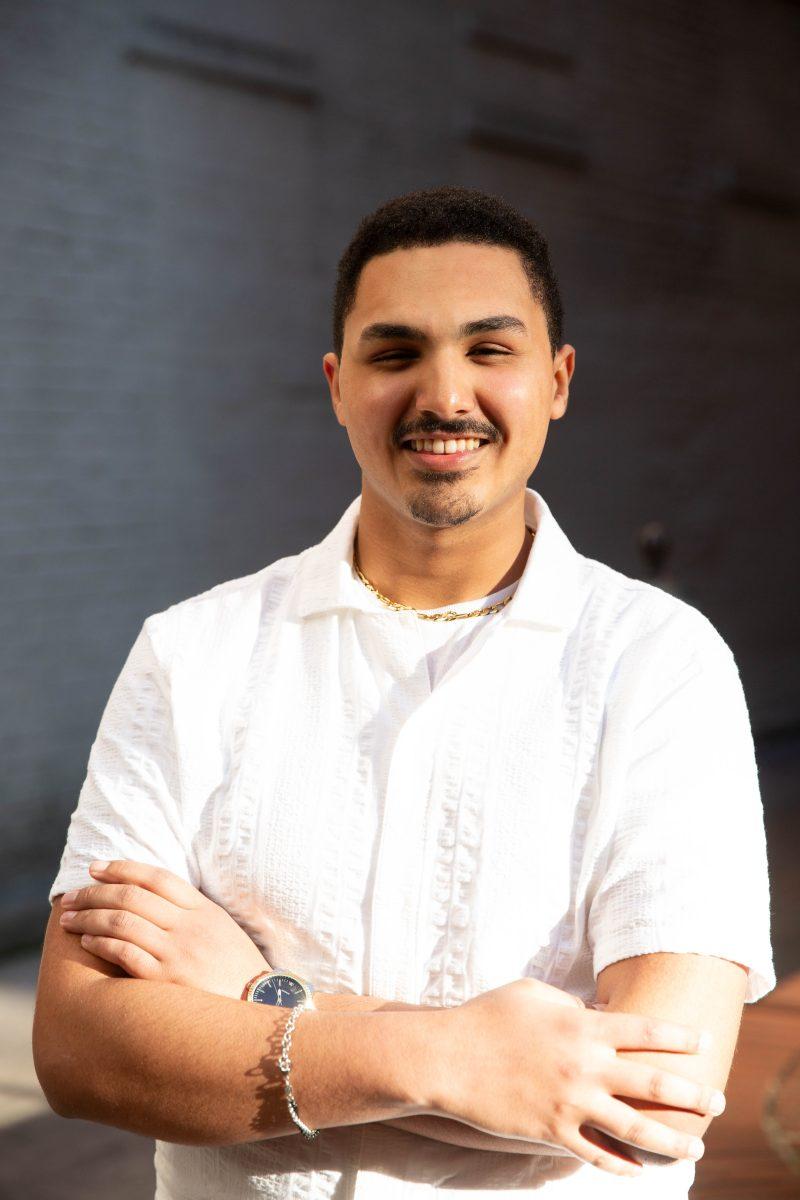
Jeremiah Vecchioni is a freshman at UT this year studying secondary social studies education. He can be reached at [email protected].
Columns and letters of The Daily Beacon are the views of the individual and do not necessarily reflect the views of the Beacon or the Beacon’s editorial staff.