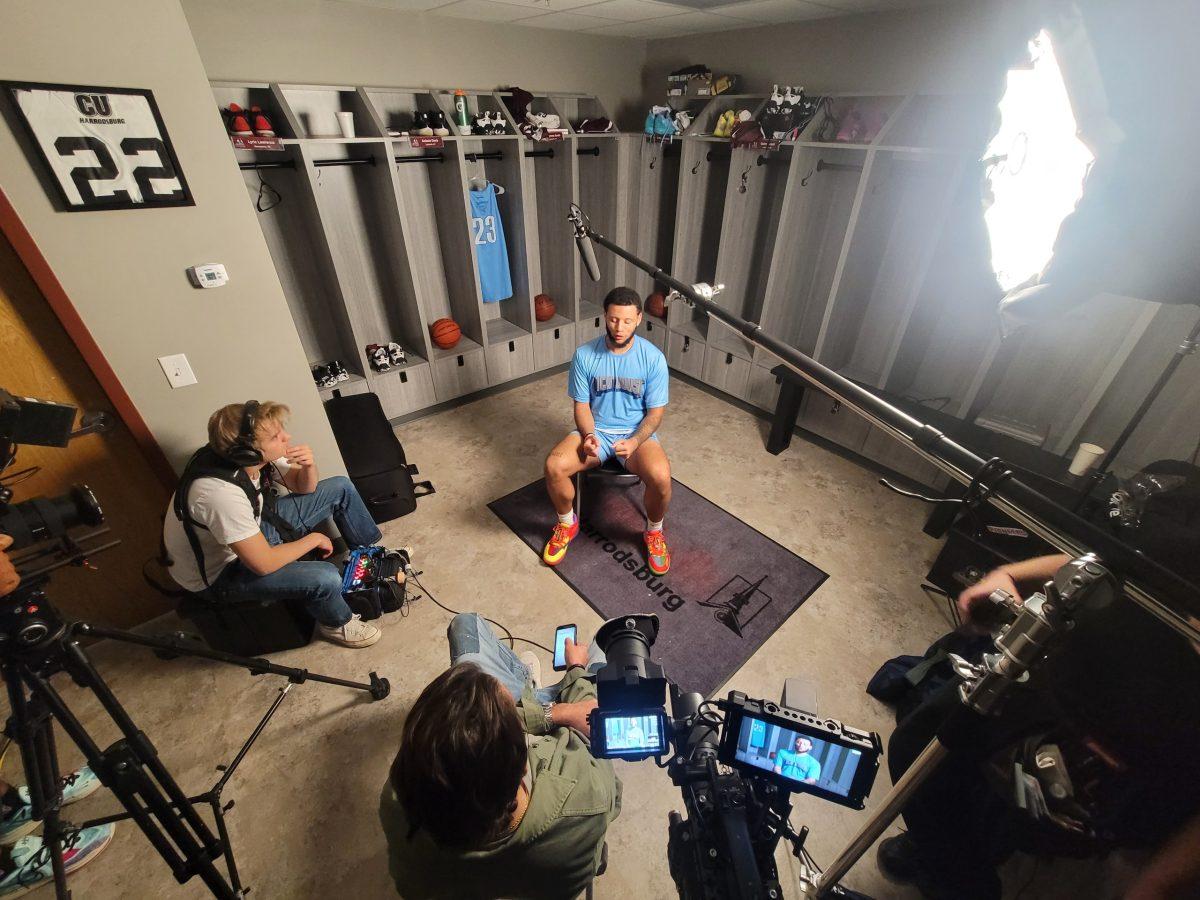
With the increase of streaming services, the landscape of television and movie-watching is rapidly reshaping. Streaming has changed the way television is produced, the role writers play and how they get paid. While streamers enjoy the endless array of options at their disposal, streaming culture has caused many writers to lose their jobs. Writers work less with streaming television, as streaming platforms tend to prefer shorter seasons compared to long-running television series. This leads to fewer episodes and potentially less compensation for writers.
Over the past year, the nation has paid close attention to the impact of strikes on Hollywood workers and productions, but the effects are also evident in Knoxville, a city rich with production and consistently named one of the best places for movie makers to live and work.
Jason Hensley is the president and executive producer of McCosh Films, a Knoxville-based television and content production company focusing on the narrative side of unscripted television. For McCosh Films, a wave of change began to take over even before the strikes began.
“I think really COVID started the whole process of everything that changed in the industry,” Hensley said. “We had some lucrative projects with a couple of networks, and when that hit, everything was closed down, you know. We’re not gonna shoot anymore. They tell us that we’re not gonna do any projects right now.”
Any progress in recovery made in the three years since COVID-19 came to a screeching halt in the spring of 2023.
On April 18, 2023, members of the Writers Guild of America voted to go on strike if they failed to reach an acceptable agreement with the Alliance of Motion Picture and Television Producers. AMPTP represents the major film and television studios in Hollywood, negotiating contracts on behalf of hundreds of producers, writers, streamers, studios and networks.
As an agreement was not met, members of the Writers Guild began a strike on May 2, 2023, fighting for higher royalties, mandatory staffing of TV writing rooms and safeguards to their jobs from the threat of artificial intelligence.
“When the writers strike happened, it kind of trickled down to us in unscripted,” Hensley said. “I think what you saw was a lot of layoffs for sure, a lot of shows not being produced on the narrative side, but then that also came into our world, which is unscripted, so no projects at all were being greenlit.”
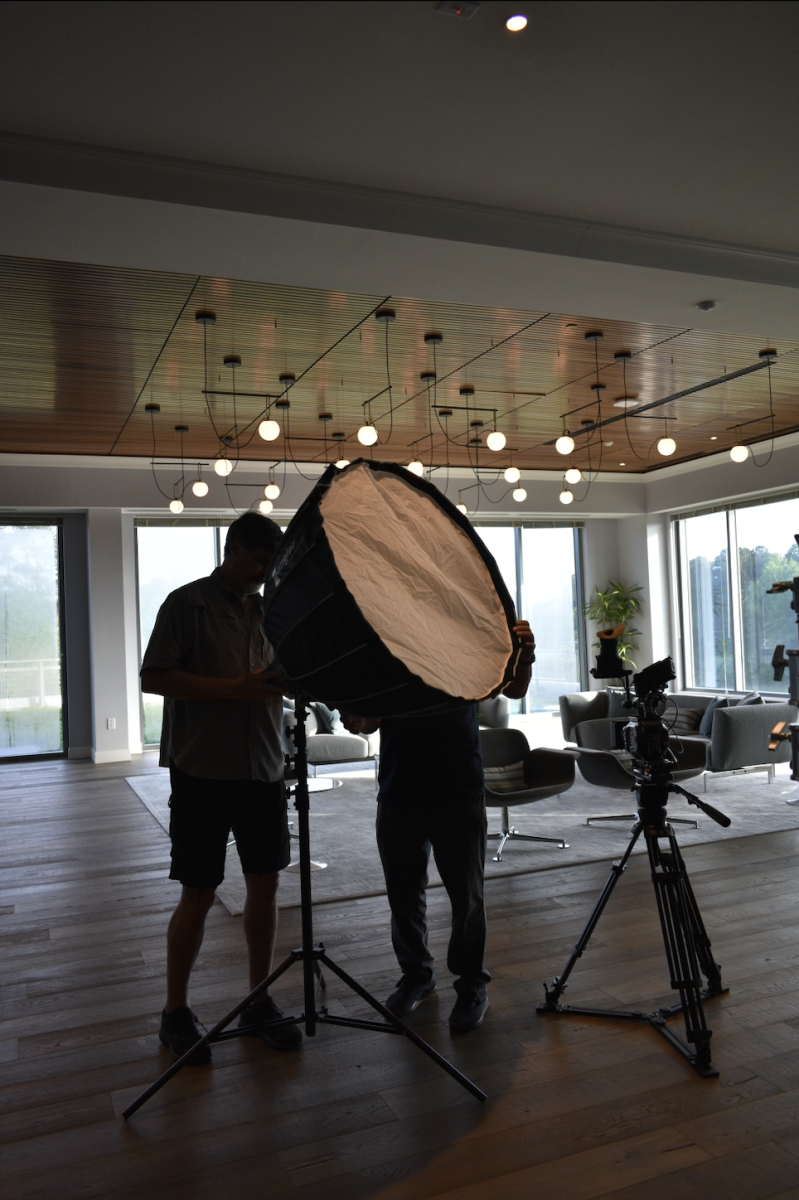
McCosh Films sets up equipment for a shoot.
On July 14, 2023, members of the Screen Actors Guild joined the strike, causing detriment to the recruitment side of the industry. Among these recruiters is Curt Willis, the film office director at Visit Knoxville. Willis’ main task is to recruit feature films to shoot in Knoxville.
“It was slowing down a little bit before that out of anticipation of the strike, and when it happened, it pretty much, you know, everything kind of came to a standstill,” Willis said. “I think SAG was supporting them (writers), so projects were just slowing down then, and certainly when SAG went on strike, it completely shut everything down.”
SAG rules apply to every film Willis recruits.
“We weren’t able to recruit anything during the strikes,” Willis said.
Hensley noted a sense of uncertainty throughout the strikes as he and his team had to navigate uncharted waters.
“It was a massive wave of scary times because nobody knew what was gonna happen,” Hensley said. “What’s gonna be the new norm when the writers are rehired, you know? Are they gonna produce as much content? Are we gonna need as much help from production companies outside?”
After 148 days of fighting, the writers strike in Hollywood finally came to an end on Sept. 27, 2023, with a tentative agreement on a new labor contract. While the job may be finished in Hollywood, the Knoxville film industry is still battling many repercussions as there continues to be an abundance of mergers and layoffs happening.
Hensley explained that the biggest difference in the industry since the strikes is a heightened sense of caution among networks when choosing what projects to take on.
“I think networks and streamers were more, I guess they felt … a little more free to explore new ideas, new concepts for shows,” Hensley said. “I think now it is so difficult to get anything past the powers that be. I think you really have to have something that they feel like they think is gonna be an absolute winner. Otherwise, they’re not gonna take a chance on it. They don’t want to take a risk, and they don’t want to put their name out on a project that may flop or may succeed. They’re not willing to take that gamble.”
This increased vigilance has in turn created a cycle of rejection, making it more difficult for companies like McCosh Films to get their names out there.
“I get told ‘no’ every day,” Hensley said. “And so really it’s a numbers game, so you’re really trying to pitch and develop a certain number of ideas and shows to hopefully get a ‘yes’ out of a handful of projects that you put out there.”
With studios still recovering, Willis has experienced a change in the types of films they are able to recruit.
“We don’t get studio films,” Willis said. “Now we’re getting a lot of independent films.”
Knoxville’s film industry is still in the process of recovery, trying to regain what was lost during the strikes. Production remains held up as shows and movies begin to trickle back in.
“Being honest, we’re still feeling the ripples of that, and we’ve not fully gotten back to where I guess where everybody wants to be, which would be everybody selling shows, and there’s massive production going on,” Hensley said.
“It’s gonna be a good year still, but it feels like people got knocked off track when the strikes happened,” Willis said. “They’re still trying to get some stuff plugged in, so it hasn’t quite started rolling yet.”
Despite facing a slow comeback, Willis is hopeful that the industry will regain its pace within this year.
“We’re having conversations with a lot of people and a lot of people we were talking to before the strikes and then some other new projects,” Willis said. “It feels like they’re all right on the cusp of getting their financing line back up, you know, deciding on locations, so I feel pretty strongly that later on in the spring and summer, things are gonna start rolling pretty good.”
On the production side, Hensley also estimates a resurgence well into this year but remains unsure of what the future could look like.
“It does seem like there’s a little bit more excitement going on that networks want and streamers want to produce more content,” Hensley said. “But I think some of the financials are affecting that, and a lot of people are losing their jobs. So that’s the scary thing, but hopefully we’ll get it shaken out and things will, you know — I say ‘get back to normal’, but I really don’t know what the new normal is gonna be in our world and in our industry.”
Amid a rough time, the Knoxville film industry has still found ways to be successful. The Knoxville Film Office experienced enormous success in November with Film Fest Knox in just its inaugural year. McCosh Films is currently in post-production on a documentary that will be coming out later this spring in addition to several corporate projects in the works. The ability to be flexible and find windows for success amid unpredictable times is a testament to the Knoxville film industry and community as a whole.