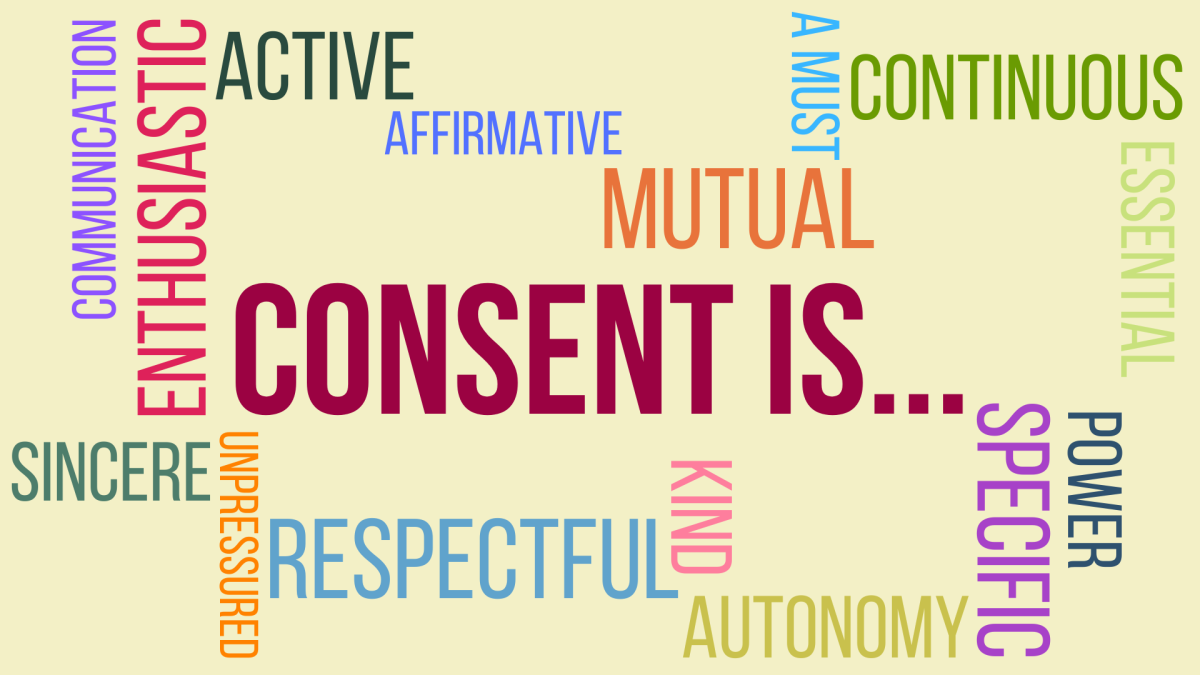
We have all seen the Center for Health Education and Wellness’ “Consent Is…” shirts on campus. Maybe you have even worn one yourself. Perhaps you know the message, but few know the story behind the one wearing it.
We see these shirts on campus all the time, yet many students view consent as an uncomfortable or taboo topic. Sharing uncomfortable conversations or personal experiences with an older adult or professional can be overwhelming. This is why CHEW offers peer health educators — fellow students passionate about these issues to relate to and grow with, each with their own stories and reasons for prioritizing consent.
Finding your ‘why’
Shawn Hoppes, a freshman majoring in biology with a minor in public health, struggled with finding his passion while in high school. It wasn’t until he opened a book about public health and statistics that he discovered his deep interest in it. Upon arrival at UT, Hoppes knew he wanted to get involved with public health services in his community. Becoming a peer health educator with CHEW allowed him to do just that.
“It kind of opened my eyes,” Hoppes said. “This is a place where we can really talk about these things that are so stigmatized in society. This is so amazing that we can voice our opinions. So, I knew I wanted to get in on giving people the shirts and spreading that word.”
The campaign’s goal is not to lead the way or spark chaos on campus. It is simply to get students thinking and talking about consent, not shying away from it.
“To me, one of the most important parts of public health is that educational intervention,” Hoppes said. “Just spreading the word and letting people know it’s not something to be quiet about. It’s not something to be shied away from. It’s not an awkward subject. I mean, it is for people, but I hope one day we get to a part of society where it’s not awkward to talk about.”
Marina Pellicciari is a junior majoring in social work and peer health educator with CHEW. For her, the shirt is a visual reminder for students that there are people who care about the things they may be struggling with.
“Maybe it helps one person if they’re going through something with sexual assault or something similar,” Pellicciari said. “It helps even one person to realize, ‘OK this is something I can do to help myself and better myself and maybe feel better about my situation. I know that people care and are aware of the situation,’ even if it’s just one person.”
When Hoppes wears the shirt, he knows people see him as just another student rather than a face of the campaign.
“When I pick up that shirt, I am just a very small part of this big moment that is just trying to simply end that stigma,” Hoppes said. “I know walking through this big campus, and I go to this big school, I know I can feel confident that one person looked at my shirt today and felt a little bit easier about talking about consent.”
Mischa Patel is a sophomore majoring in public health and a peer health educator with CHEW. Like Hoppes, the shirt’s power is in the thoughts and discussions it can spark.
“Seeing a fellow student wearing the T-shirt would make me feel so much more comfortable about it,” Patel said. “Just knowing that other students are thinking about consent and making that a part of their life and one of their priorities.”
Misconceptions about consent
Students involved with CHEW and the “Consent Is…” campaign have noticed many misconceptions surrounding consent on campus. The primary issue is the lack of conversation surrounding the topic. While experiences with consent in relationships can be private, it is equally important to make the subject public, especially on a college campus.
Students may be having their first encounters with an intimate relationship or struggling with sexual violence. It is important to create an atmosphere that welcomes these conversations so students can adequately seek support.
Hoppes has noticed that many students view consent as a one-sided action rather than a mutual agreement.
“I think that people think about consent and automatically assume ‘I could get someone to consent. I could be the reason someone consents,’” Hoppes said. “People take it upon themselves to be the one to change that decision. … If it did come from your pressuring or your manipulation, then it wasn’t real consent.”
One misconception that Pellicciari noticed was that some students see CHEW offices as unapproachable or intimidating.
“This is all about promoting awareness of the offices, too,” Pellicciari said. “Even if you have an unlucky or unsuccessful experience, that’s not the end-all-be-all. We’re around to support people, make them aware, and learn with and from them too.”
What consent looks like in a relationship
Consent means something different to everyone. Understanding what consent means for you and your partner on a mutual level is an essential first step toward establishing a healthy relationship.
“It’s all about just respecting your partner,” Patel said. “If you have the respect to say ‘no’ because you know that you don’t want to, then they should respect that you dared to say no to them, which should be enough. If ‘no’ is not enough and the respect isn’t there, then something needs to be addressed in the relationship.”
“Consent is human understanding and respecting one another,” Hoppes said. “Coming back down to earth and realizing that you’re also a human, you have a voice and you have autonomy over your decisions.”
“Understanding between two people, mutual understanding, kindness and being willing to learn from each other and accept each other — that’s sort of my idea of consent,” Pellicciari said. “Finding that compromise and middle ground is important.”
Learn more
The campaign encourages students to be open-minded about consent and what it may look like for you within your relationships. Consent is not something to be ignored on campus. If you find yourself avoiding consent in your relationships, take the initiative to learn more and perhaps sit down for a conversation about consent with your partner.
For more information about consent and the campaign on campus, visit the CHEW website. If you need someone to talk to — whether a professional or a fellow student — visit the CHEW office on the second floor of the Student Health Center. If you are interested in helping others and bringing awareness to issues like consent, which are many like it on campus, consider applying to be a CHEW peer health educator.