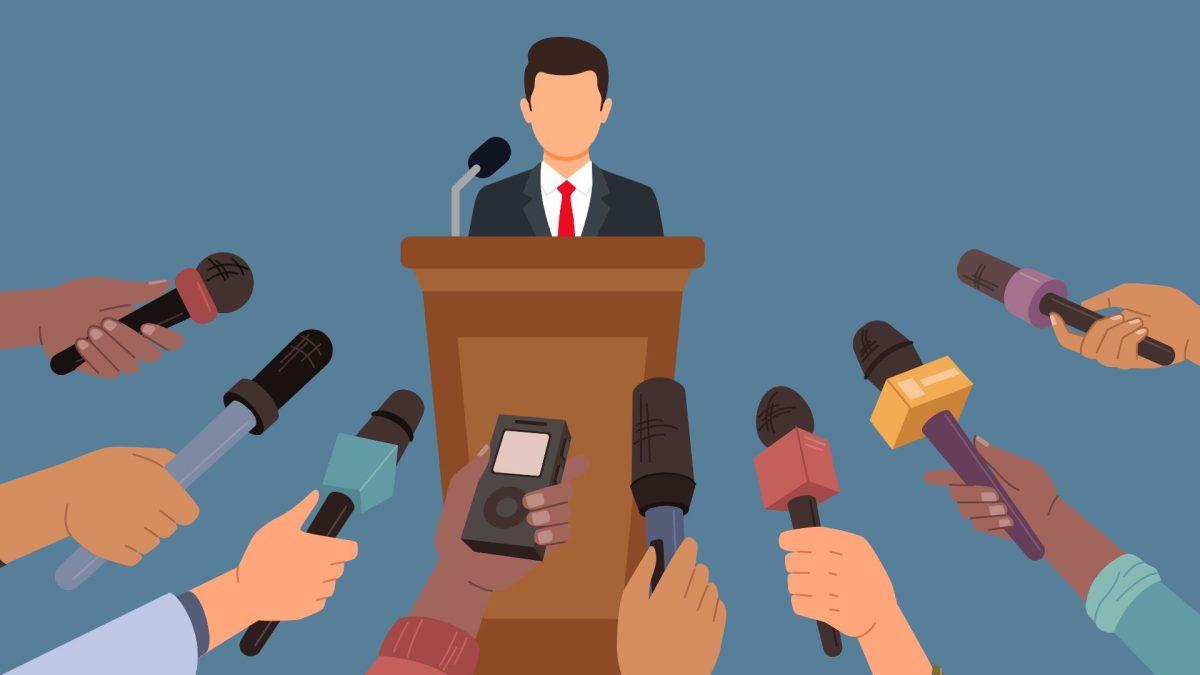
Tuesday, Feb. 25, Press Secretary Karoline Leavitt announced that the Trump administration will begin to choose who will make up the White House press pool — a group of journalists and media outlets that cover and share information on events at the White House.
You may be wondering, ‘How does this affect me?’ or ‘Does it really matter?’ Yes, it affects you and it matters, especially for aspiring young journalists.
With the White House in charge of what coverage is made, President Donald Trump can choose journalists who work for outlets that best represent him, creating biased coverage that can alter the public’s perception of the government.
For a century, the White House Correspondents’ Association has monitored the White House press pool, keeping coverage diverse and ensuring that press freedom is not violated. With this new decision, our freedom of the press is at risk, and so is your right to unbiased, informational coverage within the White House.
Scott Brinton, assistant media professor of journalism, media studies and public relations at Hofstra University, explained what the press pool should look like.
“The press pool is supposed to be a diverse representative group that represents the various media, both conservative and otherwise, that are covering the White House,” Brinton said. “It’s not supposed to be selected by the president because the president could select media that are biased.”
Brinton explained that coverage on the White House has no place for opinions, only what happened and what was said. David Schulz, the director of the media freedom and information access clinic at Yale Law School, shared similar ethics to Brinton’s.
“The whole point of the forum is to let the public know what the president is up to,” Schulz said. “The forum can’t function and it can’t accomplish what it is intended to accomplish if the president gets to pick and choose who gets there and can limit what they can say and how they can say it. Then it’s not a forum for gathering news — it’s a propaganda outlet.”
Trump has repeatedly called media outlets and journalists “enemies of the people.” This trend of attacking the press did not suddenly begin with his second term — it is a continuation of a long grudge he has had with the press since his first term.
“When you start limiting the media’s ability to report on government activity you’re also limiting the public’s right to receive information and the ability to be able to make intelligent decisions on who we should be voting for and how our government should be run,” Micheal Martinez, assistant of practice of journalism and media at the University of Tennessee said. “My fears are moving more into an authoritarian state where the media, at this point anyhow, is indirectly controlled by the government. It is not a direct control, but there is certainly a threat.”
Most recently, the Associated Press was stripped of access to the White House due to its refusal to recognize the Gulf of Mexico as the Gulf of America because the AP is a worldwide information center and the name change could create confusion for those outside of the United States.
The AP took this to court, and on Tuesday, April 8, the judge ruled in favor of the media organization, allowing them to gain access back to events at the White House.
“The public needs to be aware that there are now considered efforts to further limit, and the president’s high-profile effort to ban the AP is just one example,” Brinton said.
Brinton explained that throughout his over 30 years as a journalist, he has experienced erosion of press access. He said the government, at any level, has always sought to withhold information from the press for various reasons, but not to this extent.
“There is a difference between ‘we’re not going to give you the documents’ and ‘we’re not going to give you any access at all,’” Brinton said.
Without access, there are limitations on how and what the media is able to report on, ultimately affecting the information the public receives and their views on what is happening at the federal level. The majority of the public already chooses media outlets that align with their political beliefs, Martinez explains.
“If you get bombarded with one sort of ideology coming from a news organization, I am going to use that term loosely,” Martinez said. “That erodes the ability for people to make intelligent decisions.”
Under the First Amendment of the United States Constitution, any American journalist has the right to press freedom. Citizens of America also have the right to disagree with the government and call it out when necessary. Having unbiased news coverage of our government allows the public to take control and make decisions about what is right or wrong.
“It is really important to remember that the founders, when they were developing the Ten Amendments in the Constitution, they put press freedom first,” Brinton said. ”The press as they envisioned it was meant to be a check against government power and that is ultimately why journalism exists.”