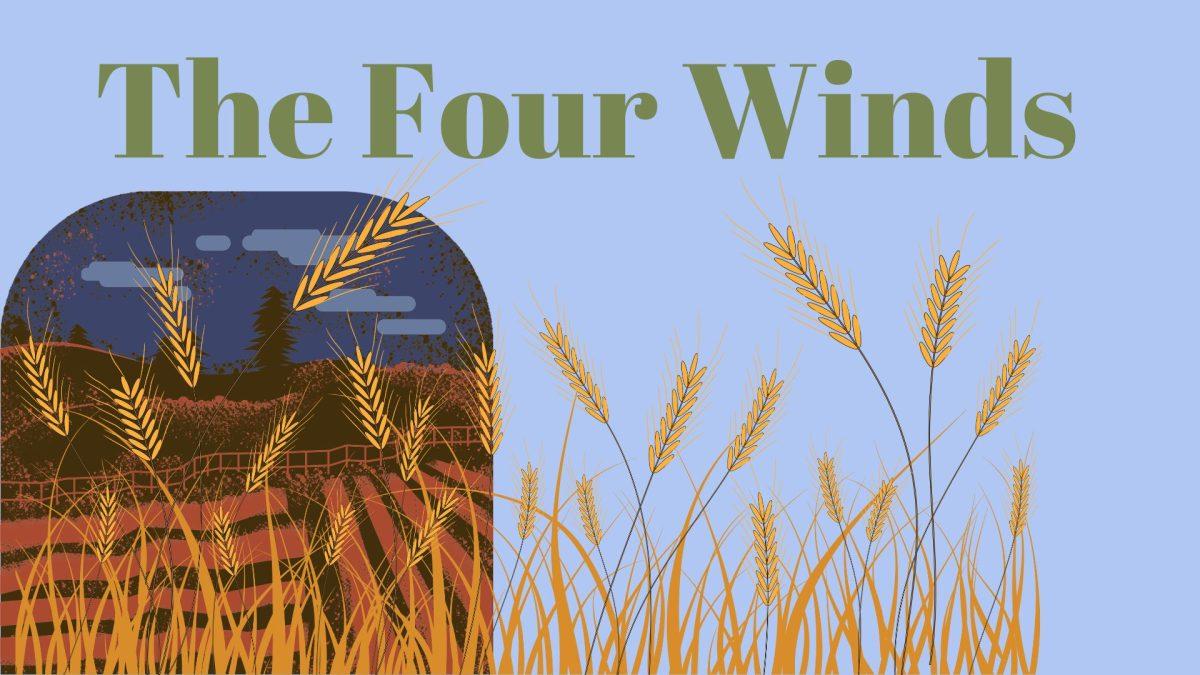
Kristin Hannah, the author of “The Nightingale” and “The Great Alone,” had much to live up to when releasing another historical fiction novel. Hannah is known as one of the greats of this genre, so the expectations were high for “The Four Winds.”
This depression-era epic quickly became a bestseller and a staple in modern historical fiction. But does it deliver the same gripping narratives readers have come to expect from Hannah, or does it get lost in the dust?
Set during the Great Depression, “The Four Winds” follows Elsa Wolcott, who transforms from a weak, overlooked girl into a resilient mother willing to risk everything for her family.
The novel centers around themes of motherhood, the American Dream and survival — depicting the harsh realities of the Dust Bowl for working-class Americans.
“The Four Winds” begins in 1921 in Texas, where Elsa is abused and confined by her wealthy family following a childhood illness. However, one night she is feeling rebellious and leaves home, where she meets Rafe Martinelli.
Years later, Elsa and Rafe are living on his parent’s farm with their two children, when drought and economic devastation ravage Texas and their marriage. Elsa must make a difficult decision — stay, suffer and most likely die in the Dust Bowl or head west with her children to California and start a new life.
Elsa’s development throughout the novel is both heartbreaking and empowering. She begins as a woman full of self-loathing and doubt, but over the course of the novel, she finds her inner strength — not only for herself but for the lives of her children.
The emotional core of this novel is the love Elsa holds for her children, Loreda and Anthony.
The supporting characters represent many real-life emotions of the Dust Bowl. Rafe represents the broken spirit of a man who cannot face reality. Loreda is both a source of conflict and hope, representing the divide between those pushing for change and those enduring hardship, while Anthony represents the love and innocence of young children at that time.
The novel sheds light on many issues during that time, including migrant worker strikes, labor rights, childhood mortality, communism and rampant homelessness.
Hannah paints a beautiful yet devastating picture of America during the Dust Bowl. The imagery of bare fields, dust storms and starving families gives the audience a truly immersive experience. Readers can feel the dust in their teeth and lungs, the desperation of Elsa and can share in the disappointment of the American government.
Some readers might find the beginning of the book slow but taking the time to set up Elsa’s early life is imperative to who she was and who she becomes for her family. However, the pace picks up drastically once Elsa sets out on her journey west — hardly giving readers a second to catch their breath.
“The Four Winds” is not for the faint of heart. Hannah does not shy away from suffering, and some may find the relentless hardship of Elsa’s life overwhelming. While the novel offers some moments of joy, it is largely focused on her struggles — making this story rather bleak and requiring emotional investment.
This novel is completely gripping and will leave many haunted by its themes long after the final page. If you are looking for a novel that challenges and inspires, “The Four Winds” delivers on every front.
If you have enjoyed other novels by Hannah or are looking for a good stepping stone into the world of historical fiction, this book is a must-read. But do not expect easy victories.
Rating: 5/5