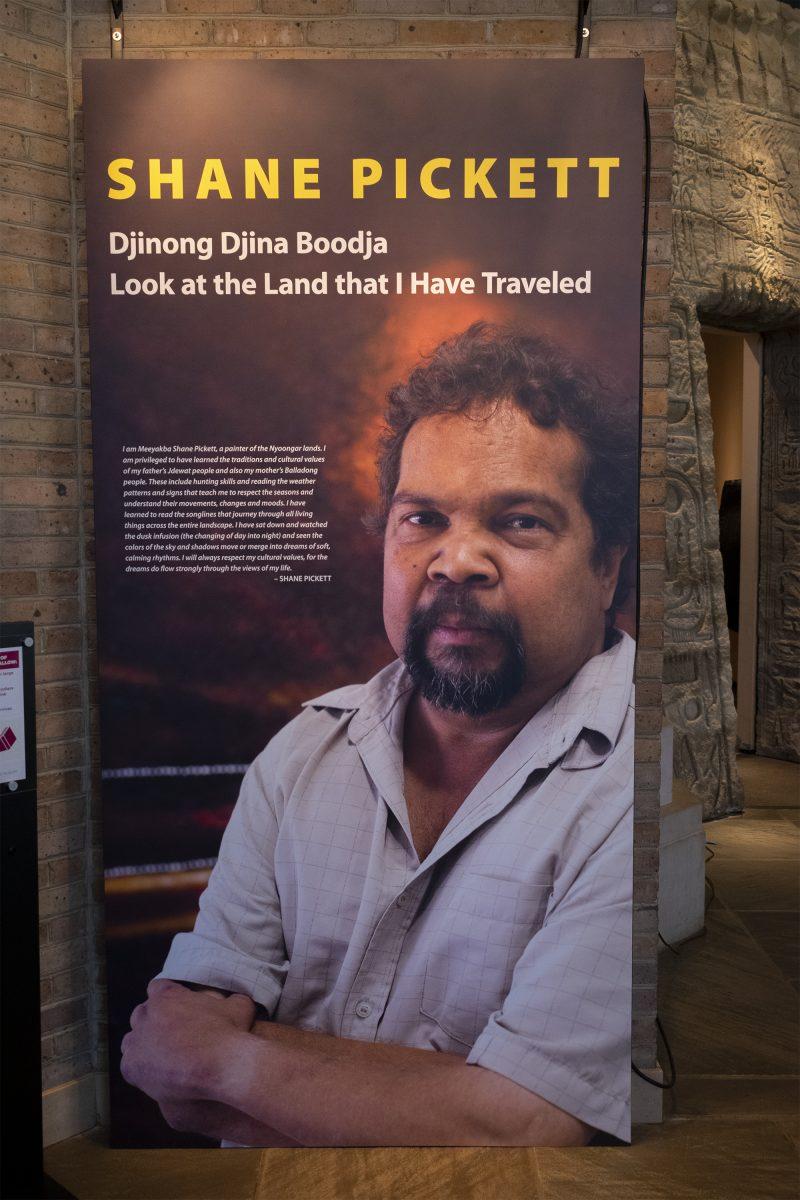
The McClung Museum of Natural History and Culture is currently showcasing some of the final paintings from Nyoongar artist Shane Pickett.
The exhibit, titled “Djinong Djina Boodja (Look at the Land that I Have Travelled),” will be on display until May 7. It features 23 paintings, six prints, three informative displays and a video that plays when prompted. The video is a short documentary with interviews from Pickett’s family.
Pickett painted these works in the final few years of his life before his death in 2010. At the time, he had developed rheumatoid arthritis and found it difficult to hold paintbrushes. To counteract this, he primarily painted using his hands, which gives some of the works a swirling and streaked effect that a paintbrush can’t fully replicate.
The paintings are a form of gestural abstraction with swirls and splatters that dot across the canvas in a scattered manner. He used it to portray the landscapes and sceneries that he witnessed near Perth, Australia, which is mostly noted through the titles of the individual works. The abstract nature that is put on display is both unsettling and awe-inspiring.
His works utilized a representation of the seasons that the Nyoongar culture provides. There are six seasons that represent adolescence, adulthood, fertility, conception, birth and youth: Bunuroo, Wanyarang, Muguroo, Djilba, Kambarang and Biroc, respectively. Each season is further portrayed using specific colors, like Bunuroo’s usage of yellow, orange and red, which appear within Pickett’s paintings.
Another technique that Pickett used in his work relevant to his cultural influences was song lines. These white dotted lines represent multiple aspects within the paintings, primarily the pathways of ancestors and the paths of stars.
These lines guide the observer to focus on the patterns within each landscape, leading them through rivers, hunting trails and horizons. Some lines dissipate as the dots get smaller and smaller before disappearing altogether, while other lines continue off the canvas, infinitely stretching past the observer’s imagination and the limitations of the painting.
All in all, the paintings on display are mesmerizing and incredible. Pickett’s eye for the emotional resonance of the landscape and his ability to capture that ethereal feeling without relying on traditional depictions of the said landscape is beautiful. In particular, “Hunting Ground Over the River” and “As Nightfall to Cool the Bunuroo Heat” are breathtaking works of art.
In these works and more, Pickett brought forth his view of the sublime aspects of nature, capturing the terrifying, beautiful and awesome force that is the world around us. The paintings take something that might have been a rock formation or a riverbank and dig up the true beauty of the world through them. His art is a mixture of that terrifying reality that shows how stunning everything truly is.
He further did this through his stark use of color. His usage of white stands in stark contrast to the other colors used in his paintings, like reddish browns, crystal blues and deep reds. The mirage of colors that are spread through the horizons and landscapes with the perfect imprecisions of the human hand are unlike anything that you can find.
Shane Pickett’s indescribable depictions of the world should be witnessed instead of read about. There is no justice that the written word can do to convey the raw spiritual nature that these paintings represent. The hunting trails, rivers, rocks, skies, horizons, spirit, nature, history and so on that are buried in his abstract view of the world tie into his culture, spirituality and essence as an artist.
This exhibit will be available to visit for free at the McClung Museum until May 7. If you have a few spare minutes, do yourself the necessary action of seeing the final works of an artist who seemingly put every ounce of himself into his work, all the way up until his death. It’s breathtaking.
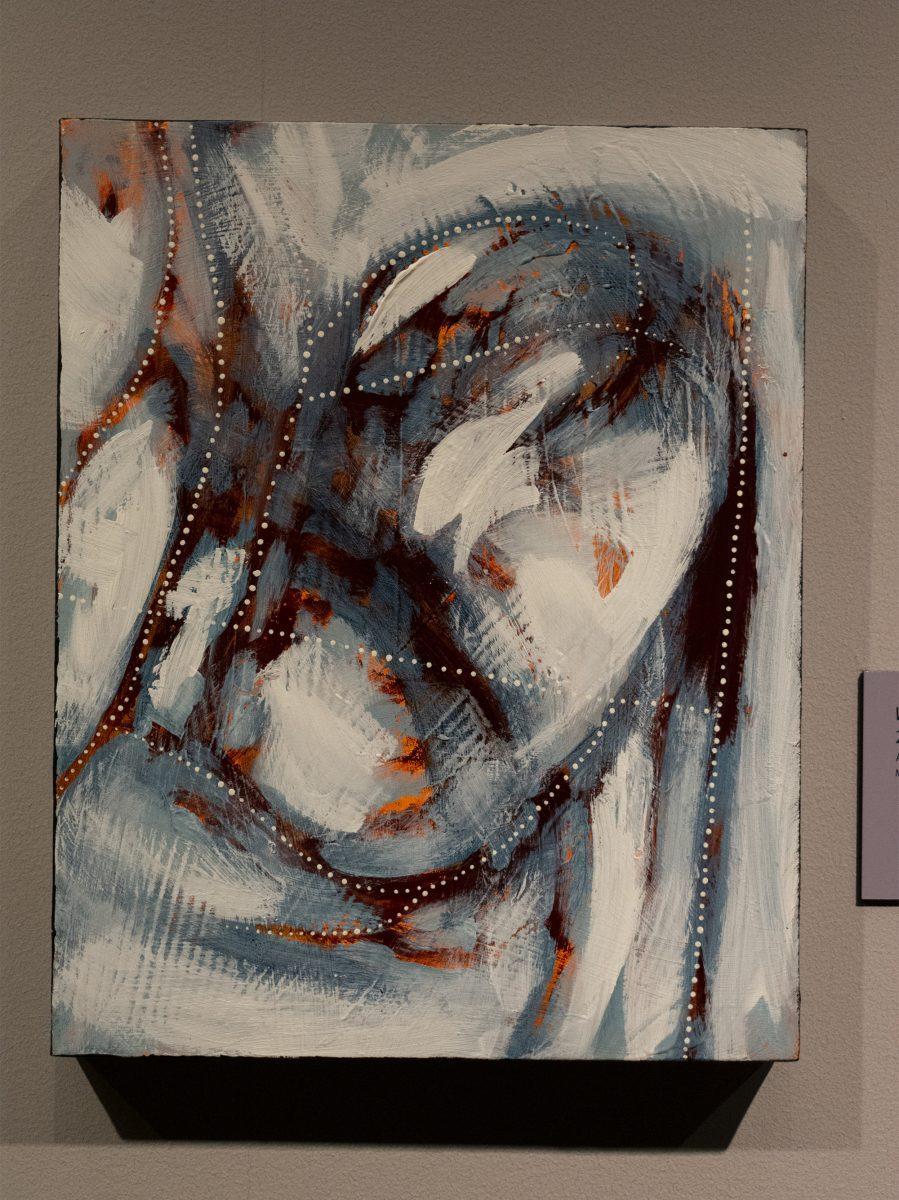
"Water Clouds Biroc Afternoon" (2009). Artwork by Shane Pickett on display at McClung Museum of Natural History and Culture. Tuesday Jan. 25, 2022.