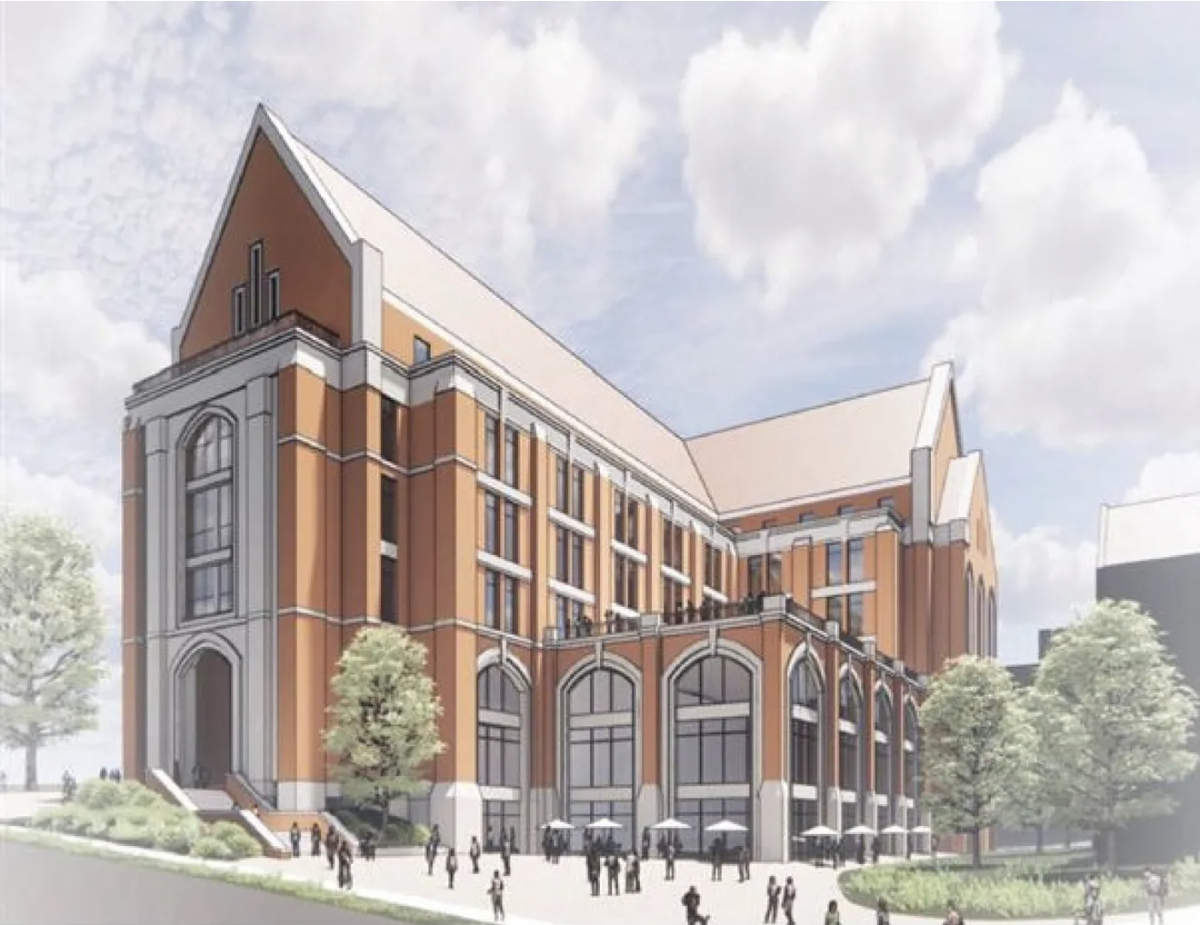
On Oct. 28, the UT Board of Trustees approved construction of a new Haslam College of Business building with a larger budget and size than originally proposed.
The board voted in favor of an amendment to the campus master plan to allow for construction of the building beginning as soon as fall 2023, as well as a $127,350,000 increase in funding for the project, bringing the total budget to $227,350,000.
The original $100 million budget, composed of $83 million in state appropriations and a $17 million institutional match, was approved by the board in June 2021.
Now, the budget includes the $83 million in state appropriations, plus $44.35 million in institutional funds and $100 million in external gifts.
Along with the larger budget comes the expansion of the plan’s original projected size to 306,000 square feet to accommodate the college’s growth.
When completed, the building will be among the largest on campus, and will include 14,000 square feet of space dedicated to research, behavioral and social sciences and design thinking labs, as well as 32 classrooms and additional office space.
The plan will go before the State Building Commission, which oversees the construction of public buildings in Tennessee, in January 2023 for approval.
Since 2018, the Haslam College of Business has seen a stunning 42% undergraduate enrollment growth. Over the last year alone, the college’s undergraduate population grew 17%, from 6,156 students in fall 2021 to 7,227 students in fall 2022. Enrollment is expected to grow by 6 to 8% annually in coming years.
“We’re experiencing unexpected, phenomenal growth and most of the growth, much of it, is driven by interest in the Haslam College of Business,” Chancellor Donde Plowman said at the board meeting.
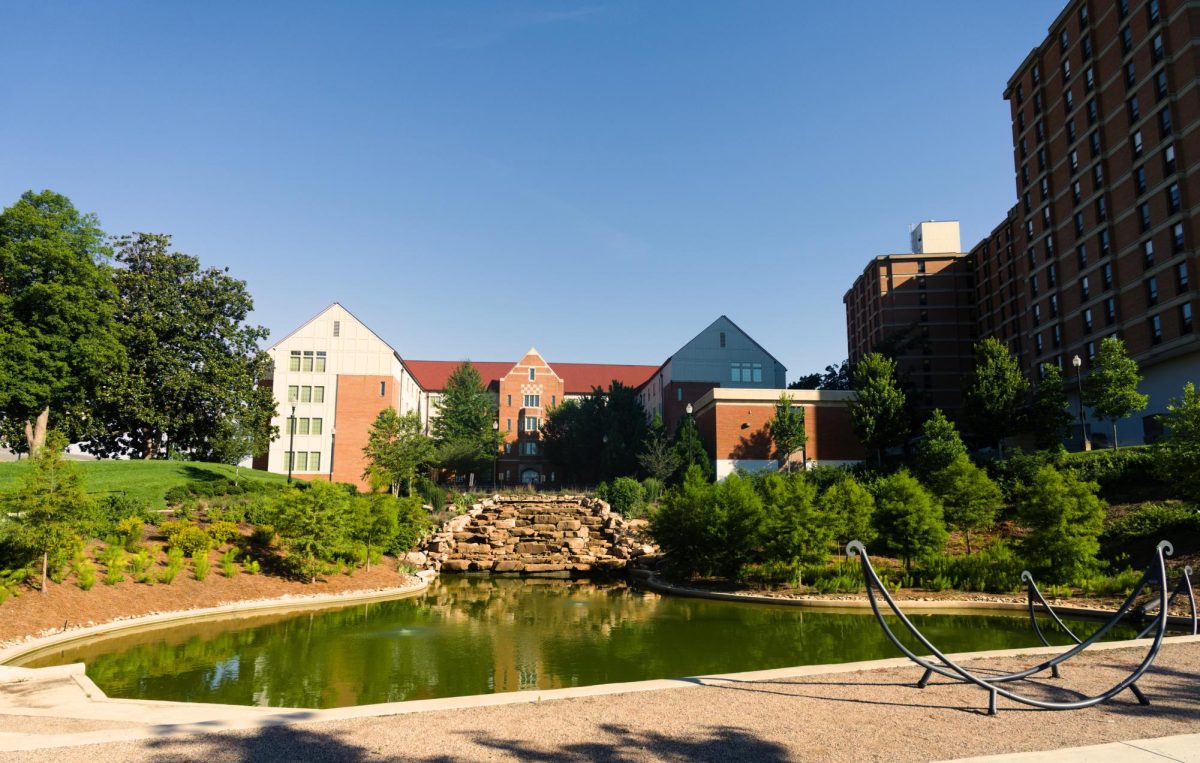
When completed, the new building will sit across from the James A. Haslam II Business Building on Volunteer Blvd. on the site where historic Dunford, Henson and Greve halls – slated for demolition – currently stand in a horseshoe configuration.
The Stokely Management Center will remain as office space for the college and will not be altered by the construction.
Although Dunford, Henson and Greve halls were originally dormitories, they now operate as office space for various departments and programs, including the history department, Humanities Center, Disability Services and the College of Social Work.
The decision to demolish the buildings has caused controversy because of their historical value and their function as office spaces for non-business units. Several faculty members have spoken out against the university’s unusual decision to replace demolished buildings with a facility for a different college.
“The challenge that the university really faces is the challenge of preserving its history and its uniqueness while also meeting some of these new space challenges that come from a growing student population,” Nicole Eggers, assistant history professor, told The Daily Beacon.
Numerous departments and offices will be displaced in the demolition, and their offices are expected to be scattered across campus.
The University Space Committee (USC), part of the Office of the Provost, oversees the process of relocating staff and faculty displaced by construction. The committee has 11 members representing faculty and administrative staff, and they meet as a committee and with department and unit leaders to answer questions about the use of space on campus.
According to the USC’s update page on the new construction, “Departments and offices affected by construction will be given ample notice prior to relocation and opportunities to provide input on their space needs.”
It is unclear where each unit in Dunford, Henson and Greve will be relocated, though administrators say they are making plans to meet with unit leaders and find alternative spaces both on and off campus.
On Friday, the board also approved a request from Chancellor Plowman to award billionaire businessman and former Tennessee governor Bill Haslam with an honorary doctorate. As heir to the Pilot Flying J truck stop chain, Haslam was at one time the wealthiest elected official in America.
The Haslam College of Business is named after Bill Haslam’s father, James Haslam, founder of the Pilot Corporation and one of UT’s largest donors.
The construction plans have raised concerns among some non-business faculty about a broad undervaluing of arts and humanities at UT. John Zomchick, provost and senior vice chancellor, addressed these concerns in a statement to the Beacon.
“We value the contributions of faculty across all domains of knowledge, and humanities disciplines are vital to a flagship, land-grant university,” Zomchick said.
The university is preparing to finish a ten-year update to the campus master plan which includes several near-term projects. Among these projects is a new arts and humanities facility in the early stages of planning.
“I look forward to working with our faculty to conceptualize this space and plan for how we can work together to grow our humanities majors,” Zomchick said.
The updated master plan will go before the board in February 2023 for approval.
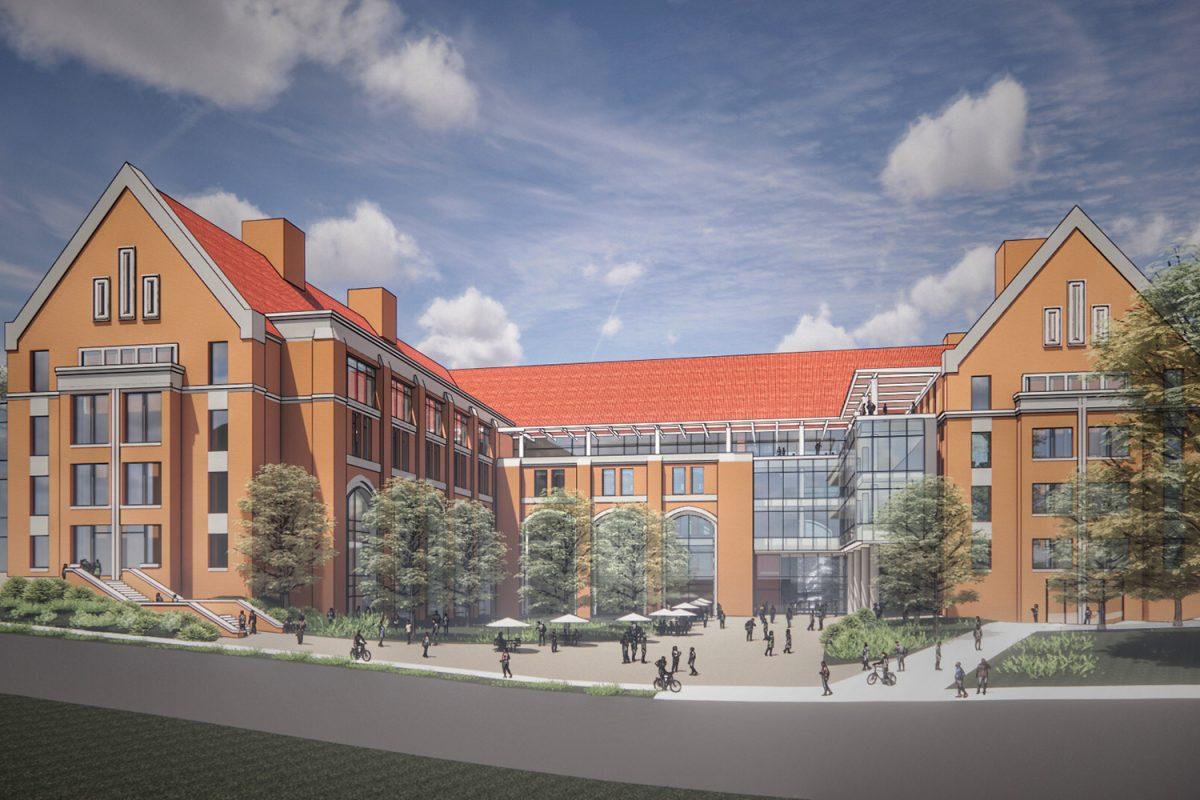
A 306,000-square foot Haslam College of Business building will sit on Volunteer Boulevard where Dunford, Henson and Greve halls now stand. It is just one of many construction projects UT will undertake in the coming years.