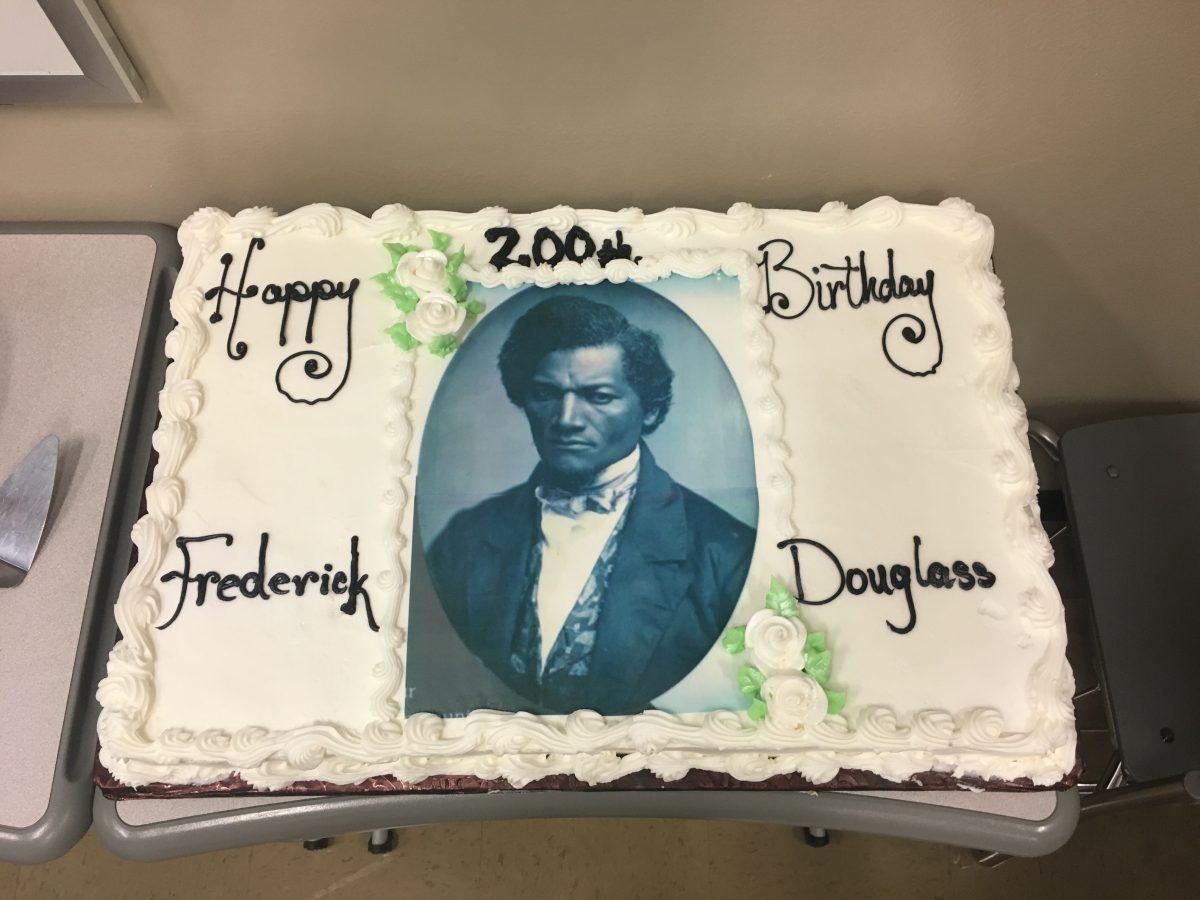
The University of Tennessee will celebrate Frederick Douglass Day during the week of Feb. 14.
Since 2018, UT has held events for Frederick Douglass Day, as he proclaimed Feb. 14 to be his birthday due to not knowing its actual date. Lectures, transcribing and cake events are held each year to celebrate Frederick Douglass and Black history. It was held online last year due to the COVID-19 pandemic, but will be a hybrid of in-person and online events this year.
Assistant Professor and humanities librarian Shaina Destine talked about what the day of celebration is all about.
“Frederick Douglass Day is a collective action for Black history,” Destine said. “Every year, they focus on a different collection. This year, we are focusing on the papers of the Colored Conventions Project. Last year, we focused on Mary Church Terrell.”
Associate Professor of English Katy Chiles also talked about the day of celebration and what they aim to reach.
“The best way to describe it is to say Frederick Douglass Day is a celebration of Black literary history where we also do a nation-wide transcription project,” Chiles said. “This year, we will be transcribing the records of the Colored Conventions (very important Black political meetings in the nineteenth century), specifically looking at how Black women contributed to this crucial organizing effort. Also, it’s a birthday party for Frederick Douglass, so we will have cake from Mer-Mer’s bakery.”
Events will begin on Feb. 10 with a lecture from 3:30 p.m. to 5 p.m. titled “Frederick Douglass and the Politics Trust: Black Organizing, Black Wealth, and the Failure of the Freedman’s Bank.” On Feb. 11, there will be a “Know Your Value/s: Strategies for Success for Scholars of Color” Zoom meeting from 9 a.m. to 12 p.m.
The Frederick Douglass Day Celebration and Transcribe-a-thon will begin on Feb. 14 from 12 p.m. to 3 p.m. in Student Union room 262 and on Zoom. Finally, there will be two “Fixing the Leaky Pipe” lectures on Feb. 16 and 17, focusing on graduate school for BIPOC (Black, Indigenous and people of color) students.
Information and registration links can be found on the Department of English’s webpage for Frederick Douglass Day.
Destine talked about some of these events and what makes the day important, specifically the Transcribe-a-thon.
“Primarily it is a day of collective action solely focused on Black history,” Destine said. “The collective action means that it relies on the crowdsourcing of labor. The activity that is central to the activities is the Transcribe-a-thon. … You don’t need any previous experience or interest to do it — and it’s fun.”
She expanded on the event further, detailing that it connects other institutions and schools to each other during the Transcribe-a-thon through livestreams and social media.
“Volunteers join to transcribe documents from schools and institutions all over the world (they have had folks join from the U.S., Canada, the Caribbean and even the Middle East),” Destine said. “It’s fun because people get to learn history and contribute to history through this really fun activity. Also, the history they focus on and feature are primarily from Black women — the demographic that is most often purposely unremembered.”
Junior in English and sociology Savannah Brown works with Chiles and Destine on the committee for the celebration. She commented on the importance of Frederick Douglass Day and the Transcribe-a-thon.
“Frederick Douglass Day is important because there is so much that you can learn from these events,” Brown said. “Especially during the transcription, we have the ability to learn about a long history of Black history and activism. We have an opportunity to get the community together to celebrate a significant piece of history through the transcriptions, but also through all the presentations that are available.”
Brown started helping with the committee for Frederick Douglass Day after Chiles introduced the celebration to her. She is also involved with other events and organizations on campus. She talked about the impact that helping organize these events has had on her.
“All the work I do on campus is valuable in working towards an inclusive environment for everyone,” Brown said. “Working towards this event and other events have impacted me significantly. It has allowed me to work on many skills like program planning, but also have a part in bringing people together, which is something that I love being able to do.”
The day is mostly about teaching and celebrating Black history to students and faculty, something that Destine hopes people take away from attending the events.
“That Black history is important and there’s still so much that we don’t know,” Destine said.
Chiles talked about how much Destine has added to the celebration this year to guide and teach Black faculty, graduate and undergraduate students at UT. A large aspect of this during this year’s celebration will be the “Fixing the Leaky Pipe” lectures, which Destine hopes people will register for.
“I would love for students especially to register for the Fixing the Leaky Pipe series,” Destine said. “The purpose of the series is to help students of color in the academic landscape. There is one event for undergraduate students of color who are trying to decide if grad school is for them. The other event is for graduate students of color who are trying to finish up their degrees and figure out what’s next.”
She talked about the name of the series as well as what she hopes students gain from attending.
“I call it the Fixing the Leaky Pipe series because at every level of academia, we’re losing students and faculty of color because there isn’t enough support for them to be successful,” Destine said. “My hope is that these programs will help students get clarity, make informed decisions and grow their networks to include people at the next level of academia. I want them to cultivate the support that they need.”
Destine, Chiles and Brown hope students and faculty will attend the events and celebrate Frederick Douglass Day with them. The event is open for everyone, and they encourage everyone to attend.
“I hope that students will just take away new knowledge,” Brown said. “I want students to learn something that they may have not known before. Even if it is something little, it can spark the interest in digging deeper into that content, and finding a passion.”