After a sold-out run in 2003, “Always … Patsy Cline” has been brought to the Clarence Brown Theatre once again. The musical debuted on the CBT mainstage for a second time with a Pay What You Can Preview performance on April 20, and it will continue to run through May 15.
CBT’s production of “Always … Patsy Cline” is directed by Terry Alford, a distinguished lecturer in theatre who teaches Musical Theatre Performance and Honor’s Introduction to the Theatre and Acting at UT.
Main cast members include Laura Beth Wells as country music sensation Patsy Cline and Deanna Surber as her cherished fan and friend, Louise Seger. Both came into the alumni production with years of experience in theatre – Wells having performed in “Spiderman: Turn Off the Dark” on Broadway and in regional theater productions and Surber with multiple local stages and years of experience as a professional vocal and acting coach.
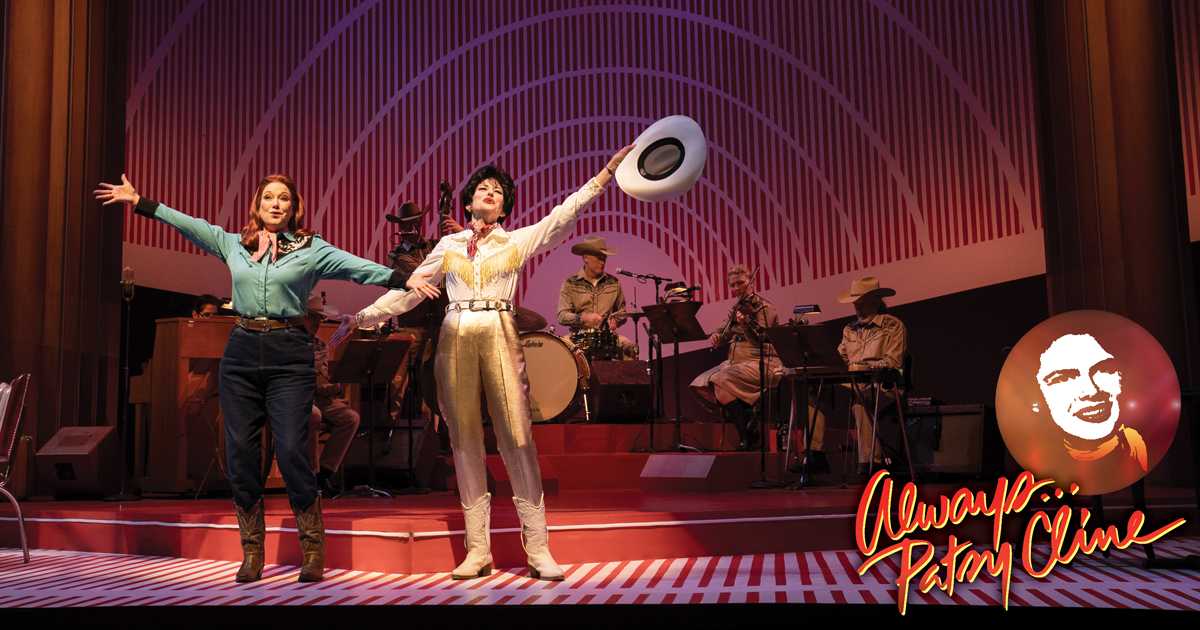
The musical opened up with a performance of “Honky Tonk Merry Go Round” in a general stage set-up meant to resemble the Grand Ole Opry. The set was largely dominated by a slightly elevated stage that contained the band and a standing microphone that was frequently used by Patsy. On each side of the lower main stage was a table holding a variety of props such as a radio, beer bottles, a coffee pot and mugs.
The set stayed the same throughout the entire musical with the only big change of scenery being different hanging fixtures appearing throughout different musical numbers, including an “ALWAYS” sign and a disco ball.
A rectangular arch above the elevated stage contained lights that changed colors to reflect different moods throughout the musical. For instance, when Patsy sang more upbeat, fast-paced songs, the lighting tended to be warmer and brighter. When she sang more mellow, slow-paced songs, the lighting was typically cooler colors like purple and blue.
What did change often were Patsy’s outfits. In the opening scene, she wore a red cowgirl dress and white boots. Throughout the musical, she could be seen wearing a beautiful selection of different outfits, including but not limited to a pink cotton set, a blue sparkly dress and a silky cowgirl button-up and slacks complete with a white cowgirl hat.
The character Louise wore the same outfit the entire musical – typical Western wear popular in the late ‘50s and early ‘60s – but this was hardly a problem, as the hilariously charming personality of the character was powerful enough to always set her apart.
Deanna Surber in the role of Louise truly managed to make the performance as engaging as it was. She added the essential element of comedy to the musical in a way that was only rarely overdone, and she often asked questions directly to the audience and encouraged audience members to clap and dance along to some songs.
The duration of the musical was just under two hours, with an intermission about halfway through. Before the intermission, Louise’s discovery and quick attraction to Patsy was explored.
Much of the musical was dominated by Louise’s narration of events. She talked directly to the audience about how she first discovered Patsy as her kids were watching a morning TV program, and she expressed how her love for the singer’s music grew very quickly – so much so that she frequently called in to her local radio station to request that Patsy’s music be played.
Before the intermission, Patsy and Louise’s first interaction was shown at the honky tonk bar Patsy was booked to play at. At first, Louise was giddy with joy to meet Patsy and called her ma’am as a sign of respect. Soon enough, Patsy was sitting with Louise and the company she brought to the show – people who were only mentioned, not physically present. Louise and Patsy bonded and became close friends with ease.
After the intermission, Patsy’s show at the honky tonk concluded, and she took Louise up on her offer to stay at her house for the night. There, the two were seen bonding even more. The next morning, Louise easily convinced Patsy to participate in an interview at her local radio station, then she dropped Patsy off at the airport.
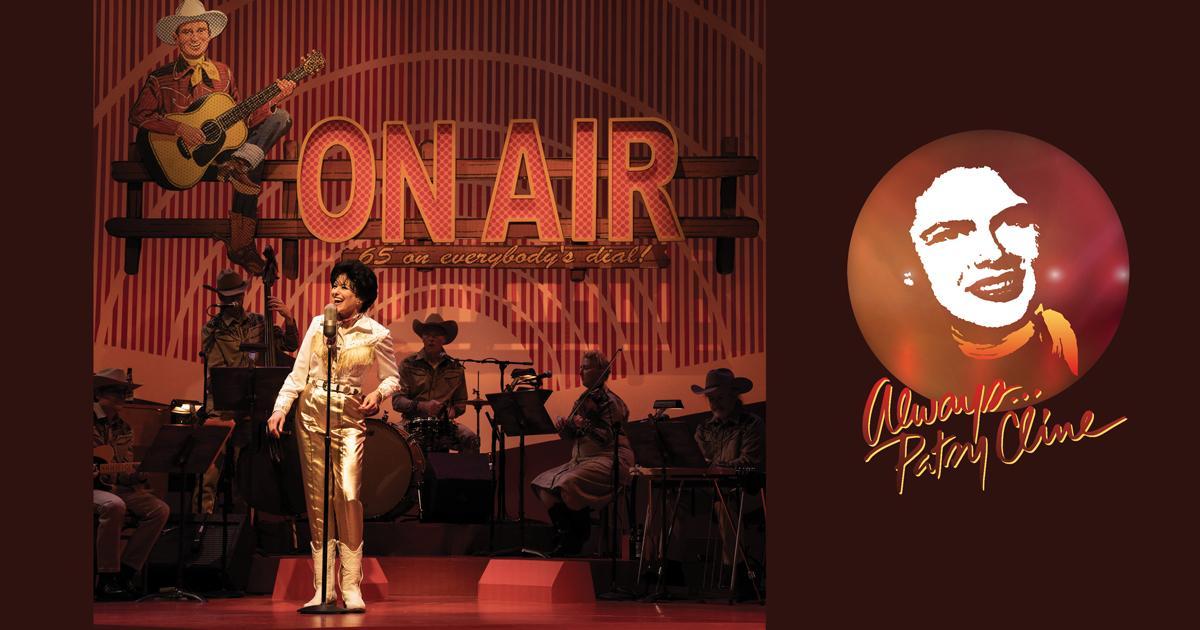
Laura Beth Wells plays Patsy Cline in the CBT’s revival of "Always…Patsy Cline," running through May 15. Photo by Ella Marston.
After Patsy left, she and Louise continued to stay in touch by being pen pals. Patsy always signed her letters off with “Love Always … Patsy Cline.” When this line was delivered, it created a very satisfying connection to the title of the musical, yet it was not quite over.
When Louise announced Patsy’s tragic death at 30 in a plane crash on the way to Nashville, Patsy did not leave the stage, but continued to engage the audience with her powerful vocals. Even as the musical neared its end and the actors’ took their bows, they continued to stay in character, with Louise asking Patsy to sing one more song two different times.
The musical featured a total of 27 songs, including classics like “Crazy,” “She’s Got You” and “Back in Baby’s Arms.” Aside from Wells and Surber as the two main characters, a six-person band helped make the musical feel much larger than it was. Instruments played include the piano, drums, pedal steel guitar, guitar, bass and violin.
The band members performed both with Patsy and on their own – each individual even had their own introduction and solo during “Stupid Cupid.” On occasion, a band member had a line or two of dialogue, almost always to produce a comedic effect.
While the main target audience was clearly older individuals, a handful of college-aged students were seen in attendance on the April 27 performance. Members of younger generations may never have heard of Patsy Cline before, but CBT’s performance of “Always … Patsy Cline” introduces audience members to her legacy in a way that’s entertaining to people of all ages.
The remainder of performances at CBT will all take place at 7:30 p.m., with the only exception being the final matinee production on Sunday, May 15 at 2 p.m.
Tickets are only $5 for students and are 20% for UT faculty and staff, making this musical one that’s definitely worth seeing – not only for the simple purpose of entertainment but also to explore powerful themes of friendship while learning about one of the most influential pop culture icons of the 20th century.