In a world full of lines, squares, rectangles and other architectural logistics, what truly matters is simple – people.
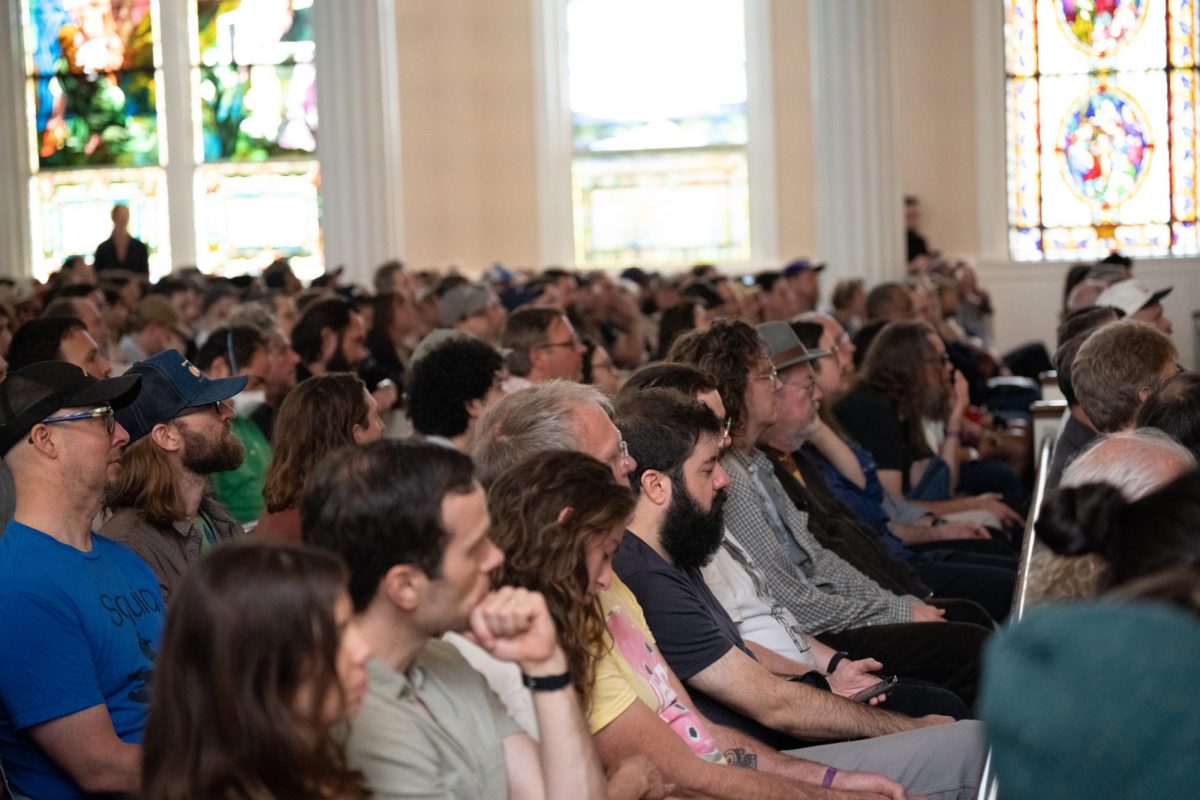
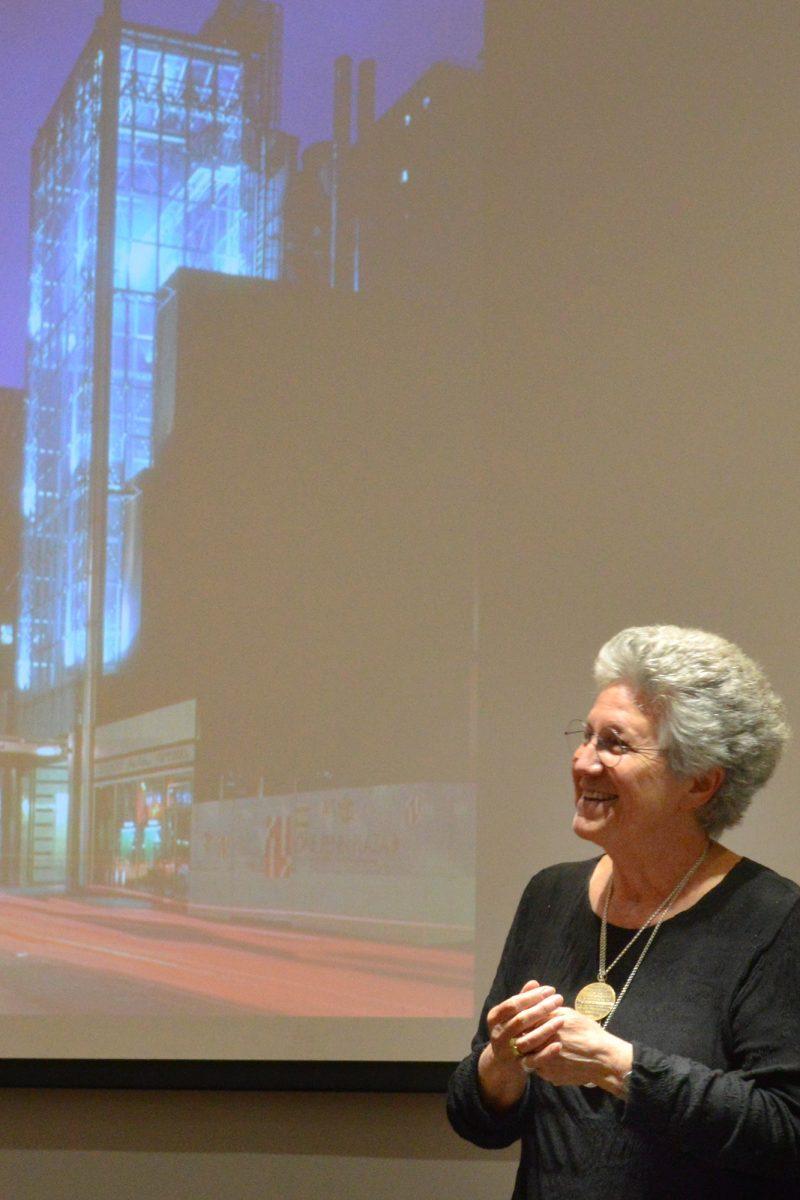
This was the main point Frances Halsband conveyed to an intrigued audience Monday night in the McCarty Auditorium in the Art and Architecture Building.
Halsband is a co-partner of Kliment Halsband Architects, one of the top architecture firms in New York. Her firm is nationally recognized for its outstanding work in architecture, historic preservation and overall innovation. She has also renovated and designed pieces at numerous colleges including Columbia University, Brown University and Johns Hopkins University.
Halsband previously served as dean of the School of Architecture at Pratt Institute, the first female president of the New York chapter of the American Institute of Architects and the first female president of the Architectural League of New York.
But Monday night, her numerous accolades weren’t the topic of discussion – instead, she explained her belief in historical preservation and community-oriented architecture.
Though her work ranges from monasteries in upstate New York to libraries in Ivy League colleges like Brown and Dartmouth, one theme spanning her portfolio emerged.
“I think what people want, almost more than anything else, is a sense of community, a sense of belonging and a sense of a place that you have designed for them is a place that they would like to be,” Halsband said.
But Halsband wasn’t the only people-minded architect in the McCarty Auditorium on Monday night. Logan Higgins, junior in architecture, agreed with Halsband’s innovative user-based approach.
“I think that a lot of times, architects will sometimes get egotistical,” Higgins said. “If a person doesn’t completely like a building, they are more likely to complain about it than to notice one that they really love because, in a sense, the best space is one that you appreciate without even noticing you appreciate it.”
Higgins and Halsband agreed on several subjects, one being the notion that people should matter most in an architect’s world.
“I love working with people, especially trying to figure out what people need,” Higgins said. “Without people, you don’t have architecture. So it’s crucial to get whatever makes people happy.”
When designing, Halsband focuses primarily on who will use the structure. In fact, she doesn’t even consider her own hopes a factor.
“I don’t have any dreams as an architect. I think my job is to realize other people’s dreams,” Halsband said. “So architecture, I don’t think, is about self-expression.”
Halsband then dove into displaying her work on the old Penn Station, a New York cathedral, a Buddhist monastery, numerous campuses throughout the North and even her renovations of of the Franklin D. Roosevelt Presidential Library and Museum in upstate New York. One of the architectural aspects for which Halsband is known is her belief in historical preservation and what it can do for a building and the story it tells.
“It’s not right to say that only new things express the culture,” Halsband said. “In fact, it’s really preservation that expresses who we are as a culture.”
During her presentation, Halsband described an anonymous donor who funded her team’s renovations of one of Johns Hopkins University’s buildings. Through this story, she described how important it is to preserve a certain building characteristic and its sentimental value.
“No amount of architectural ‘This doesn’t belong here!’ can compete with the idea that if something means something to somebody, you’ve got to hang on to it.”
With her love for human architectural needs, historic preservation and her dedicated craftsmanship illustrated throughout the lecture, Halsband both informed and reminded future architects why they are needed in the first place — to fill the needs of the people.
The lecture is the third installment in the “Robert B. Church III Memorial Lecture Series.” The next installment will take place Sept. 29 in Room 109 of the Art and Architecture Building at 5:30 p.m.