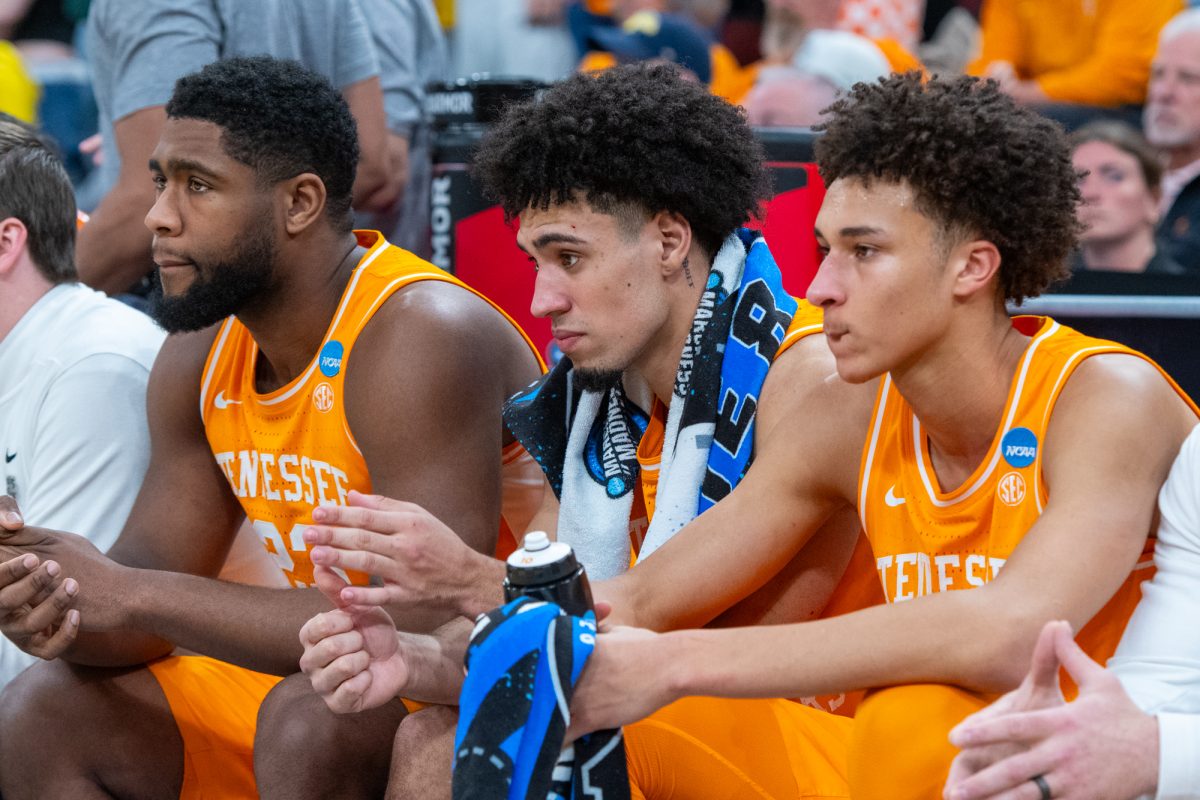
Imagine that you work for a large business that earns millions of dollars off the work you perform, and you are not paid at all.
Your boss earns millions while you get nothing. Would you consider that to be fair? Not at all.
College athletics is a business, plain and simple.
The Tennessee athletics department brought in $111,579,779 in 2013. An interesting note is that $1 million of that revenue came from student fees. Tennessee was only able to swing a $1.3 million profit. That figure pales in comparison to Alabama’s $27 million earnings (though Tennessee’s profits might be higher if they didn’t have to pay so many fired coaches).
http://www.usatoday.com/sports/college/schools/finances/
Bottom line: every major college athletic program is rolling in money, and lots of it.
The NCAA and its member schools rake in millions of dollars and hardly any of it goes to the players that actually play on the field or court. College athletes are nothing more than pawns on an economic chessboard.
For the college athletes fortunate and talented enough to leave college early to play professional sports, they are just biding their time until they can become a part of the real deal and earn the big paycheck.
I don’t blame them one bit. I would do the same thing if I were in their shoes. I guarantee you I wouldn’t take classes as seriously if I knew I was leaving school after three years to turn pro.
So let’s stop calling those individuals “student-athletes.” If an athlete is talented enough to play professionally immediately, they should.
A famous NCAA commercial says, “There are over 400,000 NCAA student-athletes, and just about all of us will go pro in something other than sports.”
For those students who do not become professional athletes, an education is necessary, because after their playing career is over that college degree will be their ticket to earn a living. I would expect them to take their education a bit more seriously.
Every college athlete, however, is extremely busy.
According to an NCAA study, college athletes spend 40 hours of labor in their sport per week. That’s a full-time job. You have games, practice, workouts, team meetings and travel. Oh, and they are also a full-time student as well.
College athletes must commit themselves not only to their sport but also to their academics. There is no other time for them to earn any money to support themselves.
College athletes don’t have the luxury of working and getting paid to support themselves, and because of that we hear stories from players like Kemba Walker at University of Connecticut who went hungry during the season because he had no money to buy food.
Not every athlete comes from a background or family that is able to support someone who is not working.
To alleviate this problem, athletic departments should step in and provide compensation to athletes for their performance.
In an interview with head basketball coach Donnie Tyndall, he said college athletes should be paid enough money to support themselves and to do the things that are important to all college students, like go out to eat with friends or go to a movie.
Colleges should also guarantee every scholarship. Currently, player scholarships are on a rolling year-to-year basis, and if a scholarship player gets injured and is no longer able to play or is deemed not good enough to remain on the team, his or her scholarship can be terminated.
The noble ideas of education are suddenly thrown out the window to field a better team.
Once a player signs a scholarship offer, it should not be terminated because of an injury or diminished playing ability.
The NCAA or individual school should also cover its student-athlete’s medical insurance. A player who gets injured should not have to pay anything out of pocket to take care of any health issues as a result of playing for a school.
At the end of the day, college athletes are just like all other hard working Americans who should receive a fair day’s pay for a fair day’s work.
Wes Tripp is a rising senior in history. He can be reached at [email protected] or followed on Twitter at @Wes_Tripp.