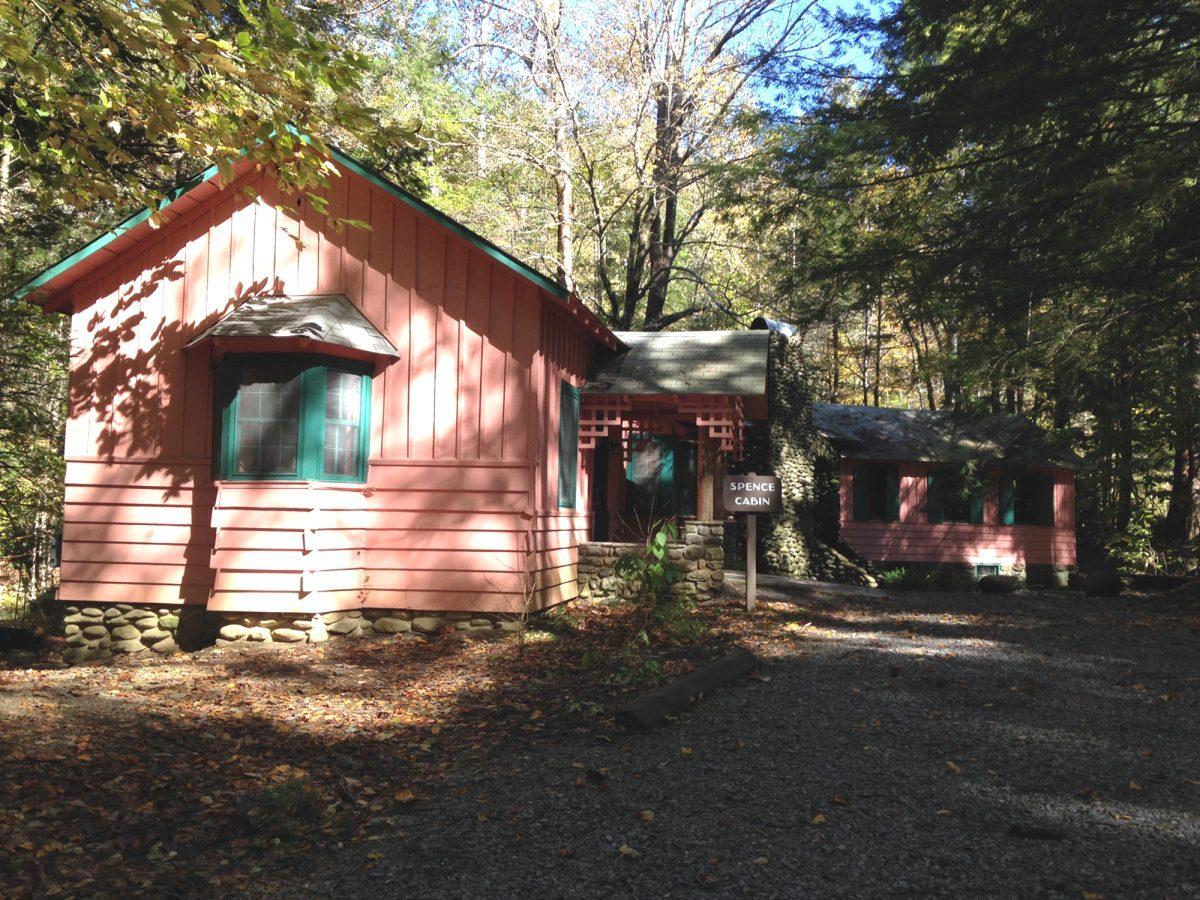
Earlier this month, hiker Jordan Liles made international headlines when he claimed he had “discovered” something truly remarkable about six miles from the hubbub of Gatlinburg.
“Hiker Discovers 100-Year-Old Untouched Abandoned Town in Tennessee’s Great Smoky Mountains National Park,” declared one article by Inquisitr. Even the United Kingdom’s Daily Mail had something to say on the subject, commenting Liles had made “the discovery of a lifetime.”
But what the Californian tourist had actually stumbled upon was a section of the Elkmont Historic District. Though now deserted, the former community is “far from forgotten,” said Dana Soehn, management assistant in the park’s public affairs department.
“The Elkmont community got a lot of attention when (Liles’) video went viral,” Soehn said. “But as you can tell by looking at the cabins, there’s a long history of inhabitants here.”
First permanently settled in the 1840s by the families of Jacob Hauser and David Ownby, the fledgling community was then known as “Little River.”
After the area was identified as a valuable timber source, Col. Wilson B. Townsend founded The Little River Lumber Company in 1908. Suddenly, the sleepy Appalachian hollow had been transformed into a booming lumber town.
“Most of the logging happened between then and the 1920s,” Soehn said. “Some of the cabins you see out here tell a piece of that story.”
The majority of the more than 70 cabins standing today, however, hail from the town’s “resort” period.
Knowing his lumber company couldn’t last forever, Townsend began to advertise the area as a mountain getaway. The Little River Railroad began offering nonstop Sunday trains from Knoxville to Elkmont in 1909; within a year, a wealthy group of wildlife aficionados from Knoxville had formed the Elkmont-based Appalachian Club.
Soon, it became popular for club members and other sanctuary-seekers to build summer homes in the surrounding area.
“In reality, a lot of the people who had homes or cabins in Elkmont were movers and shakers in the Knoxville area,” said Dianne Flaugh, Great Smoky Mountains National Park cultural resource specialist. “They were prominent people for the most part. … A lot of the families are still very prominent in Knoxville.”
By the ’30s, development of the town would come to a complete halt with plans for a national park in the works. Interestingly, although the speculated park would encompass the land upon which their own cottages stood, several members of the Elkmont community were intrinsic in advancing these plans.
Backed by several Knoxville business owners, David C. Chapman, a seasonal Elkmont resident, began to petition the state government for the creation of a national park in the Smokies. Chapman even hosted a group of legislators at his summer home in 1925 to sell the idea.
By 1934, the determination of Chapman and fellow activists had paid off with the founding of The Great Smoky Mountains National Park. Extended leases, some to encompass the owner’s lifetime, were granted to several members of the Elkmont community, who continued to use and enjoy the resort town for decades.
“Because it had developed before the park was established, Elkmont is a sort of picture of what other areas of the park would have looked like, given time,” Flaugh said.
Since the death of the last two lifetime lease owners in 1992, Elkmont has taken on the visage of a ghost town. Although entering the cabins qualifies as trespassing on government property, many of the porches have been stabilized, allowing for a glimpse inside.
What can be seen, said Joseph Donovan, sophomore in engineering, resembles a “time capsule.”
“It’s a good example of how nature can reclaim civilization,” Donovan said. “It was interesting how you could tell a building was old, but someone had renovated it to add plumbing and electricity. You could tell what kind of changes were going on outside the house by seeing the changes made inside of it.”
Although most of the cabins are empty save for a forgotten bottle of bug spray, an occasional old mattress or broken television set testifies to the ghostly presence of their former owners. The most unusual relics to be recovered, Flaugh said, include looms from the ’30s and an upright piano.
“Over the years since the park has been established, we’ve collected representative specimens that relate to the park and help us tell its story and added them to our museum collection,” she said.
This collection, which is often loaned out to organizations like the East Tennessee Historical Society or Townsend’s Heritage Center, will soon be all that is left of some Elkmont buildings.
In 2008, it was determined that 19 of the town’s structures would be stabilized, with the remaining 57 buildings removed. Today, two of the 19 protected buildings – the Appalachian Clubhouse and Spence Cabin — have been fully restored.
“What we’ve done is restore them in such a way that they can be used the same way they were historically,” Soehn said. “People will now rent them and have weddings here, or they may just have a family reunion or celebration.”
Although not all cabins were salvageable, Soehn believes the 19 buildings that are will help preserve an important aspect of Smoky Mountain history.
“(These homes) are a part of the whole Elkmont story,” she said, “and by telling a piece of it, I think that makes it a richer experience.”