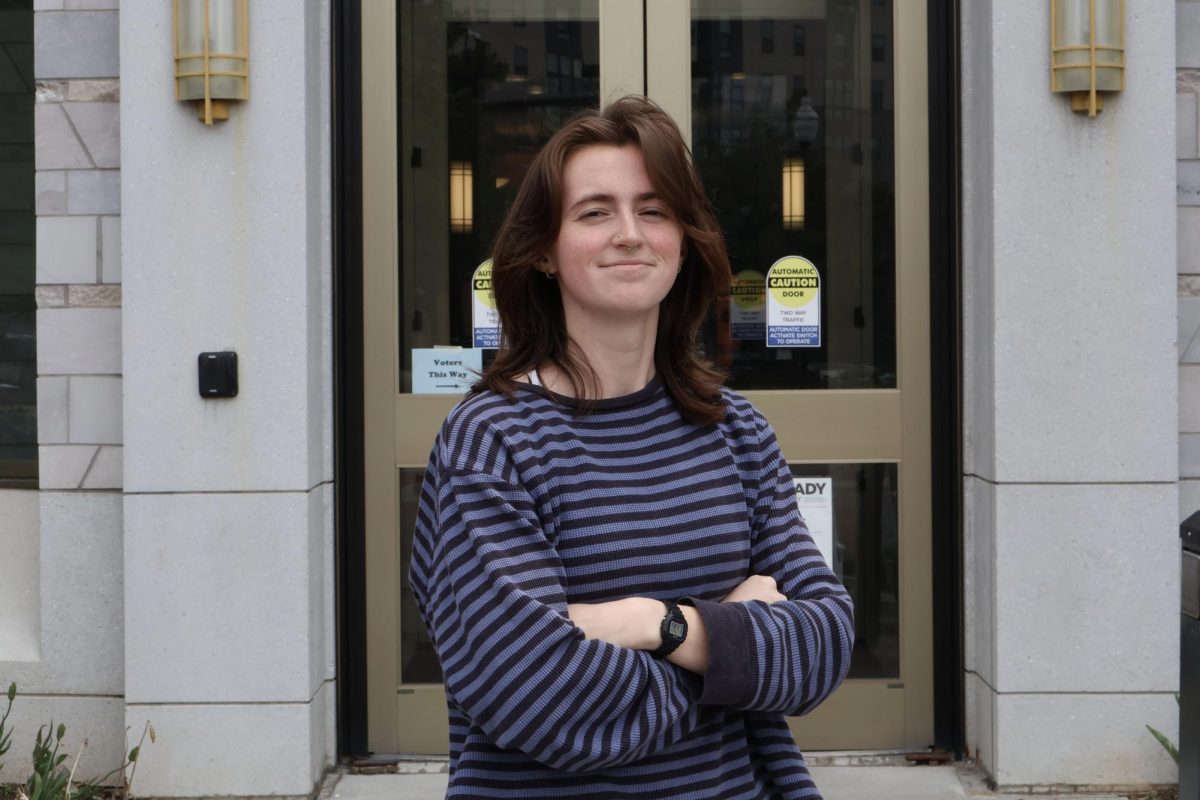
Over the course of the spring semester, Brendon Crum has become quite familiar with late-night campus walks in his swim trunks.
Scuba diving and Tennessee are two elements that most wouldn’t think to pair together. However, Crum, a political science major, as well as other students, are trying their hand at combining the two through the scuba courses offered here on Rocky Top.
“It’s unlike anything I’ve ever done before,” Naomi Winn, a junior double majoring in Spanish and political science, said.
Though an unexpected course, diving has been available to students since the 2000s. Offered through the department of kinesiology, recreation and sports studies, the scuba curriculum has now grown to include five courses: scuba diving, advanced scuba diving, rescue scuba diving, master scuba diving and scuba dive master, and even a recently offered minor.
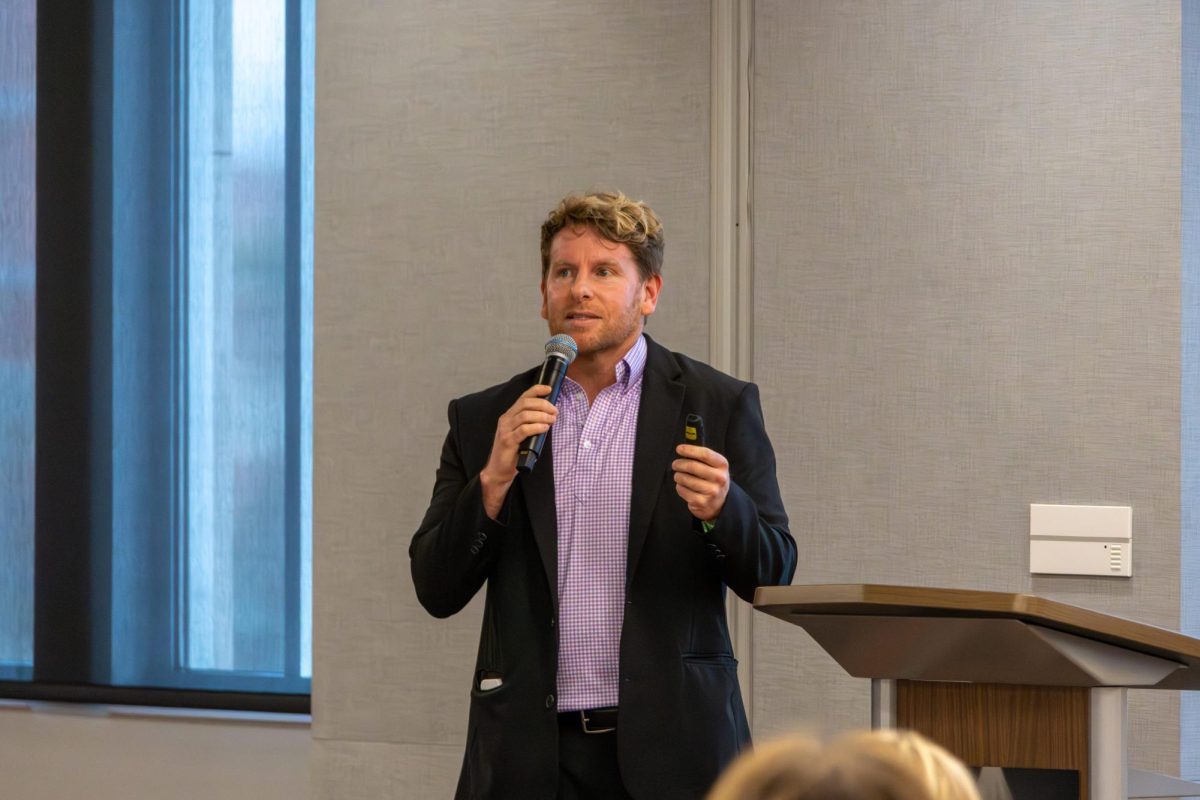
“Being able to offer this as a minor was a huge goal and process,” scuba instructor Greg Blankenship said.
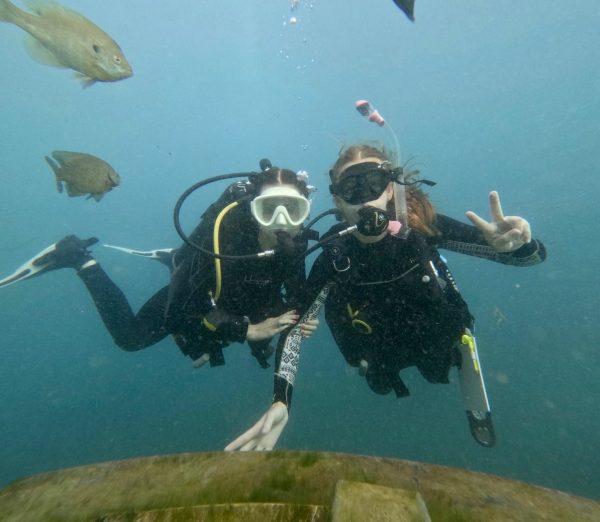
For those just jumping into their scuba diving journey, PYED 261: Scuba Diving is the go-to course. According to Blankenship, this introductory course adheres to a “hip pocket” style of learning, something that he gained from his time serving as a Marine. Instruction in the course balances a classic element of online learning with hands-on underwater experience that provides students with all the basics they need to know about open water diving.
With the help of instructors and dive masters there to supervise, students get familiar with basic elements of diving such as their dive kit, which includes an oxygen tank, a buoyancy compensator and a regulator, along with a mask, fins and a snorkel. This equipment is provided by scuba instructor Don Orr and is completely covered in the students’ lab fee. Additional instruction focuses on safety, diving theory, diving communication and other foundational skills.
“The teaching style we have implemented has been a whole lot more productive for us,” Blankenship said. “With (the National Association of Underwater Instructors) using the e-learning to introduce the topic and then us reinforcing and implementing that topic, we’ve seen a market difference in how our students learn and retain stuff versus doing a stand up lecture.”
Students’ PYED 261 journey begins with a simple swim test and comes to a close with a potential diving certification. At the end of PYED 261, students have the opportunity to hit the open water and earn their NAUI certification. With this lifetime certification, students gain the ability to dive around the world.
Over spring recess, Blankenship led a group of roughly 150 students to Vortex Spring in Florida to complete their checkout dive. For those in the intro course, their checkout dive consisted of four dives spread out over two calendar days. Advanced divers completed six dives and master divers completed eight dives over the course of the trip.
The UT scuba program has proven itself to be successful over the years and even has grown to become one of NAUI’s largest collegiate academic programs, according to Blankenship.
But before hitting the open water, students learn to overcome a few learning curves. Adjusting to manually breathing underwater, swimming with dive equipment and getting acclimated to underwater pressure are a few things students have had to get comfortable with.
Thankfully, a supportive community of instructors and assistive dive masters has made the transition relatively easy, allowing students to enjoy their experience while still learning.
“I definitely recommend it to other people,” Winn said. “It has been a really cool experience. The instructors are all awesome and very knowledgeable in what they do.”
Even if students don’t end the course with a certification, they learn transferable skills like teamwork, communication, problem solving and critical thinking skills. And they’ll walk away with a new topic for conversation.
“Getting to do this my last semester has been a really good focal point of my senior year that I’ll remember for years from now,” Crum said. “I’ve really enjoyed it, and it’s one of those fun classes that you get to tell people about.”