University of Tennessee students are closing the gaps in a widespread space industry.
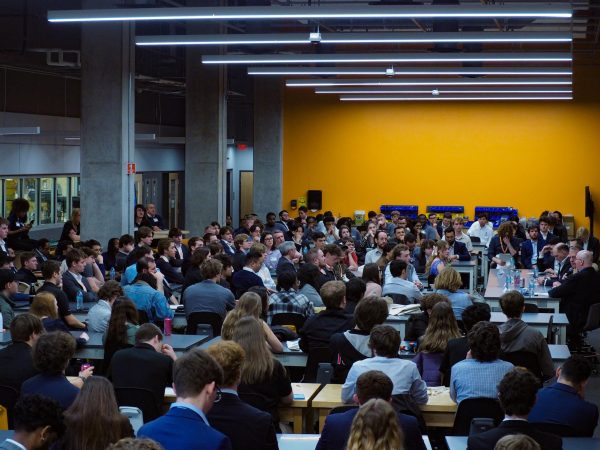
Two hundred and fifty students from more than 25 schools across the nation gathered right in Knoxville, Tennessee, during the weekend of Feb. 28 to discuss bringing the frontier of space closer to the grasp of aerospace undergraduates.
The conference, put on entirely by students a part of the Student Space Technology Association, sought to connect the wide-ranging and disconnected space industry, provide students with vital networking opportunities and empower them to pursue their careers.
The headline sponsor of the event, Type One Ventures is a venture capital firm focused on “investing in an interplanetary future.” Ryan Kriser, a partner at the firm, explained why this moment for space is unique.
“There’s two structural shifts that make this moment different. First is cost curves, and second is revenue durability. Reusability didn’t just reduce launch costs, it fundamentally altered capital markets and capital formation,” Kriser said. “For instance, over the past decade, launch costs have decreased 90 to 100 times, and that has allowed entire businesses that were once thought impossible to become viable.”
Maj. Gen. John Olson of the United States Space Force and former chief of space operations mobilization assistant, echoed the sentiment that this moment isn’t only unique in its advantageousness, but in the United States’ critical need to respond.
“You are so fortunate, you live in an absolutely extraordinary time,” Olson said. “I’ll make a pretty bold statement here. I believe the nation that leads in space, hypersonics, advanced energy, material science and engineering, and probably synthetic biology, AI, and quantum — the nations that lead in those in the next 3.5 years, will lead the world for the next 200.”
China, Russia, Iran and North Korea are America’s leading competitors in a weapons and technology race. Olson specifically discussed Russia and China’s partnership as they compete to beat American advances in the second space race.
“This is game on. They’re laying out that international lunar research station in 2030. We’re supposed to land on the moon by 2028,” Olson said. “So this is game on. This is during your time. Whether you’re a sophomore, junior, freshman or senior here, this is so tangible. When we look at that, it’s that team sport.”
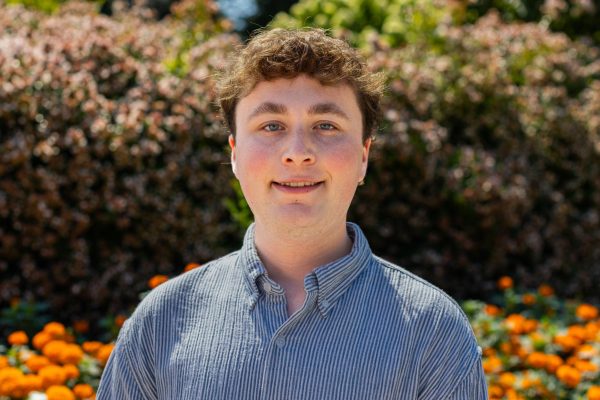
Zach Marano, president of SSTA and junior aerospace engineering major, identified bringing together diverse students as a key goal of the conference.
“There’s a lot of different kinds of students here … we’re all very fragmented,” Marano said. “So if you do a certain kind of rocketry you go to A competition, if you do a different kind of rockets, you go to a B competition, if you do hypersonics, you go to C competition, so it’s like very subjected to what your school has to offer. … We want to bring them back in the room together and say, ‘How can we collaborate?’”
The conference also sought to bring critical networking opportunities to students at UT and across the country pursuing careers in space. Caroline Czarnecki, a first-year graduate student in systems engineering and the association’s conference chair, has long had the goal of advocating for undergraduates.
“It’s been my goal since 2023 when I joined SSTA to expand professional opportunities for all the students in SSTA,” Czarnecki said. “I needed to step out of the box of just having an event specifically catered for events specifically from the University of Tennessee, and I needed to think about how we could get our name out there and a little bit more publicity around the really advanced technical things we’re doing.”
Czarnecki and her conference team of seven worked for 10 months to promote the event, plan logistics and fundraise the capital needed to make this conference affordable for students. Many of SSTA’s leaders repeatedly talked about the inaccessibility of traditional space conferences for students.
“I will say this conference was around $45,000 to put on and thankfully we were able to fundraise for the entire thing. … So a lot of conferences, they pay for the conference by the registration, which is why it’s typically $500 to $1,500, and that is just completely unrealistic for a student. It was crucial we made this conference affordable,” Czarnecki said.
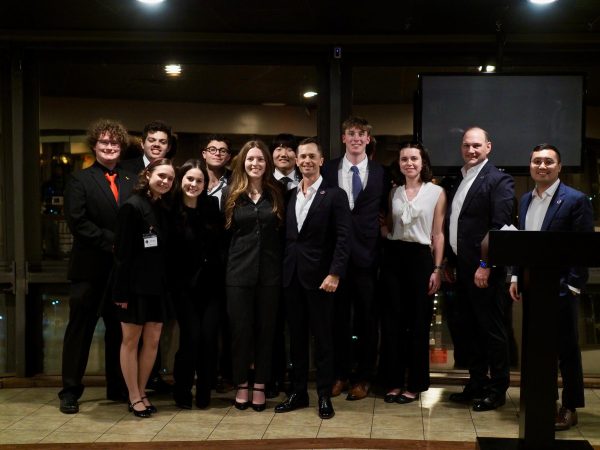
She’s particularly proud that over 20 students from UT alone told her the conference brought them tangibly closer to internship and employment opportunities, which are presently difficult to find in the aerospace industry.
“I think it’s really special that this event was put on solely by students because sometimes professional events like conferences don’t feel like they create a lot of value. … But the fact that this event was made by students, for students, made the entire experience more valuable to every person that attended,” Czarnecki said.
Schools from across the nation were in attendance, including the Nittany Rocket Labs team from Pennsylvania State University. They drove nine hours to attend, even navigating a car breakdown half-way through the journey.
“I think that this conference has been an amazing opportunity, not only for us to be able to meet other student-led engineering teams, but find out what they’re doing,” Roshni O’Connell, finance lead for Nittany Rocket Labs, said. “I found out we all kind of have the same budget, to see how we’re all taking that money and turning it into completely different things.”
John Schmisseur, associate dean and executive director of the UT Space Institute, said the activity of students at the conference impressed him.
“I just want to commend all of you. It’s a Saturday, it’s a pretty day outside. There’s all kinds of things you could be doing. There’s 200 students in this room that decided that they want to invest in their professional development and do something that will not only help them,” Schmisseur said. “I just want to thank you all because we ‘worry about kids today,’ but there’s a pretty good outlook from what I see in this room.”
He elaborated on the conference’s specific impact on UT.
“I cannot understate how impressive this group has been and how they’ve organized themselves and the impact they’re having,” Schmisseur said. “Their efforts actually make all of UT’s profile (better), the degrees of all our engineering students just got a little more valuable as a result of these students’ efforts.”
The criticality of this moment isn’t purely temporal — it’s regional as well. Resources and finances are rolling into the south as U.S. Space Command recently saw a relocation
“With U.S. Spacecom moving from Colorado to Huntsville (Alabama), there’s going to be dollars flowing to the South, so we need this kind of workforce development, and if it takes the students standing up and saying ‘f— it, we’ll do it ourselves,’ then we’ll do it ourselves,” Marano said.
Olson spoke to the national and global elements in motion.
“The president and key leaders in Congress are looking to raise (the defense budget) to $1.5 trillion next year,” Olson said. “That’s an 80% increase in the base-load budget, which is phenomenal, but you put that against the context of the generational challenge — we have economic and national security, we have global competitors in China, Russia, Iran and North Korea, and you saw the events of today and this morning and that’s, I think, going to be another enduring challenge.”
Members of SSTA are already looking forward to setting up an even more impactful conference next year. Czarnecki reflected on what it felt like to see it all in action.
“It felt outstanding to see all of our work pay off. To see everyone so happy to be there, it really did feel amazing,” Czarnecki said. “It’s a special thing to put on an event that you have thought so much about. I mean, I wake up everyday and go to bed every night thinking about how I can make that conference the best for all the students that are coming. It was extremely rewarding to see it all work out.”