
Last week, I caught myself doing something I promised I’d never do: try to be someone I’m not.
I was on Spotify scrolling through songs, trying not to resort to the usual Harry Styles and Olivia Dean discographies. As I kept scrolling, I came across a random playlist titled, “You’re cool.” This playlist also included the caption, “Songs that automatically make you cooler than you already are.”
Intriguing, right?
As I began listening, I realized that these songs were not my typical tunes. I like to say I have a wide range of musical interests, but these were far too different from my norm. Through a mix of grunge, punk and heavy soundscapes in the background, I was immediately caught off guard. Don’t get me wrong, I love the occasional grunge and immersive atmospherics. But the mixture of all three – including the indie voice, where you can’t tell if it’s intentionally artistic or just bad – threw me off.
At first, I thought, maybe this is good — it’s just artistically unique. But this song also consisted of a strange vibrato for a minute straight, while singing the words, “I don’t know.” Well, I didn’t know if I liked the song. However, I stuck with it, trying to convince myself that it’s a “cool” melody and that I’d be “cool” if I listened to it.
But that’s not true.
Pretending to like a song is not going to make me any more interesting than I already am. Sure, there might be a music association that most people believe makes you alluring, such as a niche Blood Orange song or an artist like Mk.gee, but this new wave of indie is having people obsess over their own perceptions. More specifically, they believe the “indier” you are, the cooler you get.
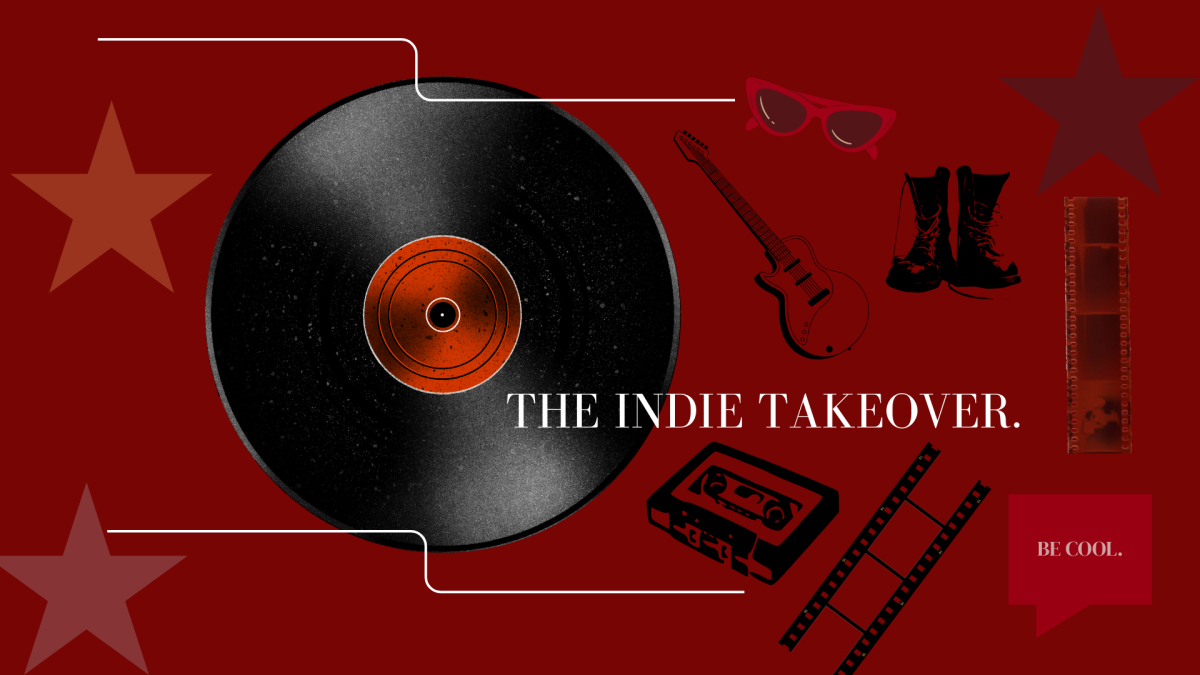
I call this the “indie takeover,” as it seems the genre is not only becoming more magnetic but much more mainstream.
The thing is, it wasn’t always this prevalent.
In fact, the term “indie,” abbreviating “independent,” had only originated in the late 1970s and early 1980s. The term was primarily used to describe music produced by small, independent labels rather than large record companies. Widely versed in the U.K., artists such as The Smiths took off for their synth-pop and jangly guitar sound. Other bands, such as R.E.M. and the Pixies, were similarly adored for pioneering this fresh genre, curating atmospheric, raw melodies. Listeners quickly became intrigued by their heavier production and authentic sound compared with other artists whose tunes were more polished or “perfect.”
Most people, even today, still heavily correlate the term “indie” with musical taste. Later artists, such as the Arctic Monkeys and The Strokes, have contributed to this association by highlighting creative freedom through lower production barriers. Even decades later, core elements like advanced storytelling and un-glossy transitions have stuck to the traditional independent feel. More so, listeners have become attracted to these musical qualities, finding pleasure in rebelling against typical mainstream formulas and corporate forces.
This is now a common theme amongst all things indie.
Not only are people attracted to independent music, but they are also attracted to the core elements of authenticity. Audiences have begun to crave raw art — an art that has been hung in the arms of a true creator. A true lover. Yearner. Dreamer. They’ve gravitated toward pieces that scream vulnerability and humanity. In other words, intimacy is piled amidst this stylistic genre, heightening aspects of relatability and connection.
We can see these values being poured into smaller artists, maybe even more than mainstream creators, as their fame can contribute to becoming manufactured and commercial. There’s something captivating about discovering a piece that was laced with unpolished emotion, an almost guarantee in indie media.
Younger generations have grasped the roots of what it means to embody this modern indie style, whether through musicality, gaming, films or even just plain appearance. The genre has presented itself as cutting edge, unique and anything but conventional.
As I walk the streets of Knoxville, I notice a range of appearances. For instance, the common UT apparel: crewneck, cowboy boots, Aerie leggings and the occasional suit and tie. However, every once in a while, I will see a student rocking the most fashionable, eccentric outfit, including baggy pants, Doc Martens, a chunky belt, a thrifted top and, not to forget, striking jewelry. It’s the kind of outfit that makes you envious — envious that someone could put together that well of a set. What makes it so enthralling is its atypicality and spirit, as if they were wearing their hearts on their sleeves. Literally.
I’m personally obsessed with this resurgence of independent style. It not only elevates confidence but also increases resistance to conformity. Gen Z is especially leaning into this mindset, unafraid to curate a piece through flares of accessories that resonate with their personality and creativity. Whether that be a bedazzled scarf or big sunglasses, I’m all in.
And so are others — maybe a bit too much.
The term “performative” has taken off in relation to this alternative style. In other words, individuals are performing their identities — pretending to be someone they’re not to gain public appeal.
“Performative men” have become prominent in the indie community, a group of men who try to impress audiences with their appearance. These individuals are often stereotyped as reading a classic feminist novel, drinking matcha and blasting Clairo on their AirPods. Through a fictitious approach to authenticity, they are only adding to the appeal of indie perception.
The goal?
Probably to attract women. But to also raise their social status, which is becoming increasingly common. In other words, everyone knows that indie is in, so everyone wants to be indie.
Take Spotify Wrapped, for example.
At the end of the year, many look forward to viewing their top songs and genres on Spotify. The consensus is that most people care about how appealing the list will be to others. It might be embarrassing to have, say, Charlie Puth or Ed Sheeran in your top five songs rather than hipper artists like Adrianne Lenker or Fiona Apple. According to Route Note, 2025 music stats revealed that independent music accounted for 35% in the U.S. – a statistic that will only increase.
For movie lovers, it’s a similar thing.
The app Letterboxd has taken film watching to a new level through its infamous top four feature. In other words, users can list their favorite four movies in their bio. The company recently released the top 250 films with the most fans, revealing top positions as “Interstellar,” “Dead Poets Society” and “La La Land.”
And although these are popular for a reason (“La La Land” is my all-time favorite movie), some consider them basic. They believe it would be more impressive to have a list compiled of lesser-known yet equally artistic films in their profile.
In turn, this media search has led to smaller, indie brands gaining more mainstream recognition.
Take A24, for example. We’re all familiar with this American underdog entertainment company, known for producing films like “Lady Bird,” “Everything Everywhere All at Once” and “Moonlight.” The company is recognized for its artsy, emotional and moving storylines, furthering its intrigue and popularity amongst viewers. Loyal, long-time movie fans have acknowledged A24’s appeal and taken pride in its 2012 startup. What began as an independent brand with little budget turned into a widely renowned film company. A24’s indie scene has bolstered momentum, as we note its recent film “Marty Supreme,” a new staple of the catalogue grossing over $102.3 million worldwide.
Through its eccentric, auteur-driven storytelling, the studio has wowed audiences with its stark indie feel, leading them to believe their admiration will elevate their own cultural standing. In fact, some claim this company to be the “it” film studio.
And it’s not just A24 becoming more mainstream. It’s the popularity of thrifting. Games like Stardew Valley. Leather jackets and chunky boots. Artists like Tame Impala and Lana Del Rey. The list goes on.
Who knows, maybe indie isn’t the counterculture but the culture of the future.
It’s no surprise that everyone is engaging in this media. It’s the obsessiveness that makes it noteworthy.
Just because you post an Instagram note with an “underground” song or convince yourself that one silent German film is in your top four favorites doesn’t mean you’ll become the starlet of society. One reason people love indie is its authenticity, so why not start there?
Be authentic.
The love for media should be felt, not performed. So, you don’t have to try to love everything.
Who can even achieve the ultimate indie status, anyway? Just be you. Don’t try to be someone you’re not.
Charlotte Roselin is a sophomore at UT studying communication studies. She can be reached at [email protected].
Columns and letters of The Daily Beacon are the views of the individual and do not necessarily reflect the views of the Beacon or the Beacon’s editorial staff.



Carolyn Roselin • Feb 19, 2026 at 1:20 pm
Seems music has always had that impact of allowing to feel you are a part of something bigger than yourself. Or it shapes your identity to a certain extent. To the authors point being yourself Indie or not is a smoother ride because tastes change and music evolves.