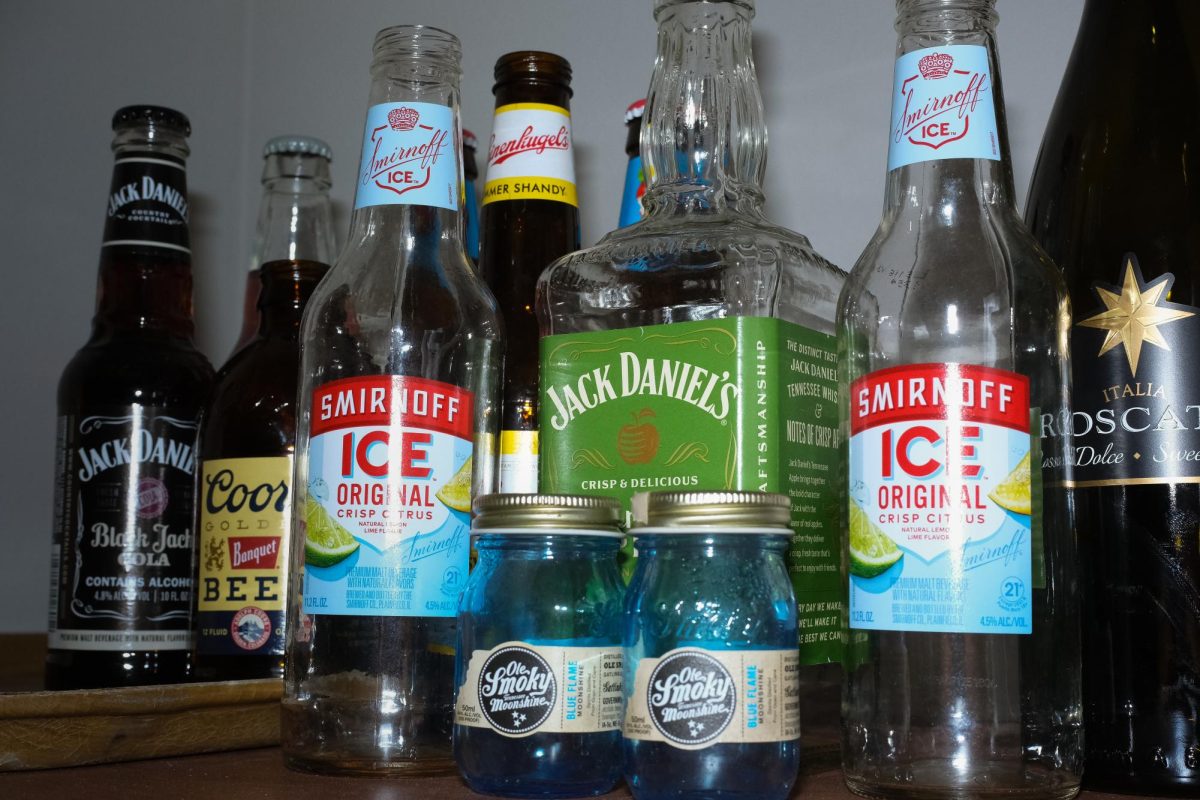
Some college students chose to participate in Dry January, a health trend aimed at cleansing the body and mind by abstaining from alcohol for 31 days.
But what happens to those who suddenly stop drinking?
Evan Basting, a fifth-year clinical psychology doctoral student, said that abruptly cutting out alcohol can be harmful for those who have heavy drinking patterns.
“Alcohol is one of the only substances where severe withdrawal can be life-threatening,” Basting said.
While withdrawal symptoms vary per person and depend on their alcohol use, someone who cuts alcohol “cold turkey” may experience symptoms such as “anxiety, headaches, upset stomach and increased heart rate,” according to Basting.
“In severe cases, people might experience tremors, hallucinations, delirium or seizures,” Basting said. “These symptoms occur over several days or weeks after quitting alcohol if they were using alcohol heavily and frequently, and may coincide with intense craving.”
Basting encourages people to reduce alcohol intake gradually when trying to stop drinking.
“If alcohol is used to self-medicate mental health problems, and someone quits abruptly without having any other adaptive coping strategies to lean on, they might be at higher risk for maladaptive replacement behaviors,” Basting said. “This could include using other substances, binge eating, compulsive sexual behavior, excessive shopping or other compulsive behaviors.”
He said it’s important to have a plan on how to cope with withdrawal symptoms and cravings, “adaptive replacement behaviors such as hobbies, exercise and routines,” and a support system during this process.
Basting recommends anyone concerned about their drinking or wishing to reduce or stop, to do so under healthcare professionals.
Giving up or decreasing alcohol intake can be challenging, especially on a college campus.
Stella Son, a third-year doctoral student in the clinical psychology program, compares UT’s drinking culture to her alma mater, the University of Iowa.
“We were another known ‘party school,’ so I would say it’s pretty similar to other SEC and Big Ten universities,” Son said.
Basting added that an “abstinence-based approach will likely not be very successful or effective on college campuses, because it is so deeply interwoven in drinking culture.”
It can be difficult to distinguish between social use and self-medicating behavior.
Son proposed a hypothetical. Imagine a student passed a class that they nearly failed and that student’s friends suggested going out for drinks to celebrate. Meanwhile, if that student did not pass that class, those same friends might suggest going out for drinks “to make it better,” Son said.
“Now, imagine that this entire semester has been extremely stressful,” Son said. “Are you drinking because you are trying to socialize with others after a stressful semester, or are you trying to cope with the stress?”
Son saw firsthand what some underrepresented people go through because her mother is a retired social worker. Most of these people, some unhoused or immigrants, experienced trauma, ranging from child abuse to intimate partner violence.
“What I noticed, at the time, was that two people can experience the same trauma, but they can have drastically different ways of coping,” Son said.
Son explained that two people with the same background and traumatic childhood could use different coping mechanisms. One person might handle trauma with alcohol and the other may use exercise, indicating “psychosocial factors that can influence people’s behaviors in dealing with difficult events.”
Drinking to cope in a college setting can look like a student who drinks to help with anxiety and numb intrusive thoughts after experiencing sexual violence. Drinking might provide short term relief, leading to a habit of drinking before bed every night, building a dependent relationship with alcohol.
“When we drink, especially in small doses, our body releases dopamine and serotonin, two neurotransmitters known as feel-good chemicals,” Son said. “These are responsible for activating the brain’s reward centers and producing a short-term boost in mood.”
Alcohol is also a central nervous system depressant, meaning that alcohol declines brain activity and ultimately reduces the amount of dopamine and serotonin when repeated.
“Over time, this can lead to lower mood, increased anxiety and depression, memory issues and reliance on alcohol, ultimately leading to worse physical and mental health outcomes,” Son said.
These alcohol-related effects and hypothetical scenarios are not only reflected in Son and Basting’s clinical work, but in research from UT’s Relationship Aggression and Addictive Disorders Lab, where both are active members. The RAAD lab is a clinical psychology research lab that primarily focuses on alcohol use and intimate partner violence.
RAAD members occasionally present their research to courses and meetings, “helping people gain a better understanding of substance use among college students,” Son said.
“A lot of our study data comes from UTK students, meaning the results are at least generalizable to the UTK student population, which makes it all the more exciting and meaningful to deliver to the student body,” Son said.
The Center for Health Education and Wellness’ Alcohol Education Program is an additional resource for students, where they can learn more about their alcohol consumption and assess their level of intake.
If you are experiencing a mental health emergency, do not hesitate to contact the suicide lifeline at 988 or 911.