This past summer, the UT Board of Trustees determined that UT would merge with the UT Institute of Agriculture (UTIA) to become one institute once more. UT is now several months into the reunification process, with even more changes to come.
The University of Tennessee was originally established as an agriculture-based, land-grant university. With time and as UT diversified its academics, the agriculture portion of the school was recognized as a separate campus, yet still part of UT as a whole.
However, in 2011 UTIA established its own chancellor position, held by Joe DiPietro. Because UTIA now had its own chancellor, research expenditure rankings, which rank universities based on the amount of funds spent on research, began to group UTIA and UT separately, automatically lowering each entity’s ranking. For most of their existences, UT and UTIA appeared on research expenditure rankings as one institution.
The decision to reunify the two entities was prompted largely by this research status. As an r1 research institute, the highest category of research intensity a university can be placed in, research is a key part of UT academics. Additionally, UT’s research expenditure rankings are important because foreign universities often select which American universities to send their best students to based on these rankings.
This summer, the UT Board of Trustees, at the suggestion of UT Interim President Randy Boyd, determined that it was worthwhile to merge the two institutions in order to increase research rankings for the entire UT Knoxville campus. The first step in reunification was to remove the title of chancellor from UTIA.
Tim Cross, who was UTIA’s chancellor prior to the reunification, now holds the title of Senior Vice Chancellor and Vice President.
UTIA professor Dr. Bonnie Ownley served on the committee that was assigned to speak to UT System faculty and staff throughout the state about the reunification process as it began.
She explained the Board of Trustees’ decision to reunify the two institutes.
“We’ve been trying to climb in the rankings for a while now, but so were all of our competitors, and this is a way that really boosted the UTK ranking and UTIA, too,” Ownley said.
However, the decision to unite the two campuses was not popular among all. Faculty and staff from UTIA in particular had concerns about the reunification pertaining to UT’s extension campuses.
As a land-grant university, UT is required to have entities throughout the state that provide educational services–such as classes on parenting, financial literacy, agriculture and more–to Tennesseans everywhere. Partially because of UT’s agricultural origins, UTIA has held more of an impact on these extensions than UTK.
Many UTIA faculty and staff were concerned that the extension sites would be harmed by the reunification, Ownley explained.
“I think the biggest fears that we could find were that something negative would happen to extensions and that was never, ever the intention at all, because our extensions serve the people in the state, and it’s very important to maintain them,” Ownley said.
Ownley added that she doesn’t anticipate that the reunification will harm the extensions, and, in fact, she doesn’t currently see any negative side to the reunification process.
UT professor Dr. Misty Anderson served on the same reunification committee as Ownley, and she explained that while speaking to UTIA staff about the process, certain frustrations also stemmed from an apparent lack of communication.
“The goal [for the committee] had been to gather up the best ideas for collaboration, but it took us a while to get there because there were people who were upset that [the reunification] had happened without consultation or without any discussion,” Anderson said.
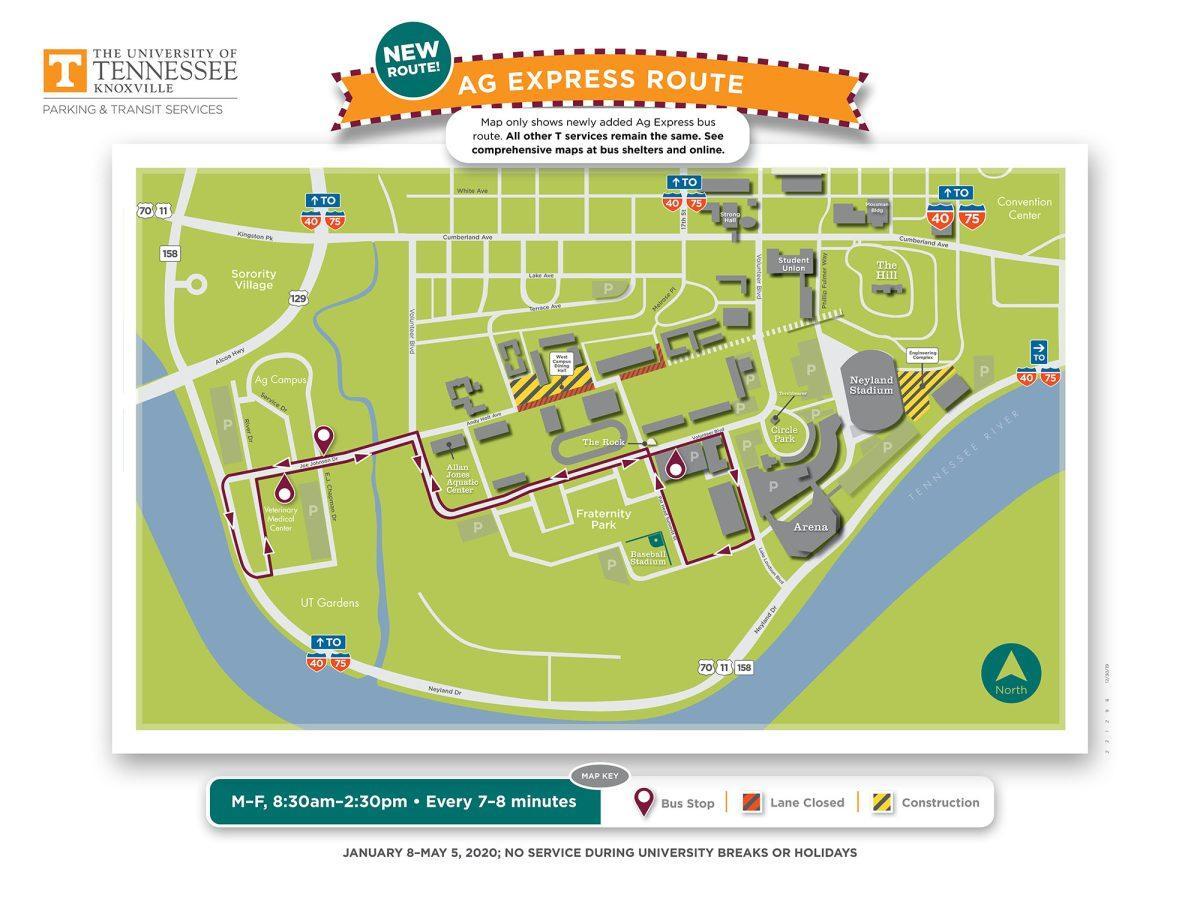
As a result of the reunification, a new bus system, the Ag Express, was created. Beginning at the start of the spring semester, the bus will run from UT’s main campus to the agriculture campus.
The express was created to address complaints about the difficulty of getting from the main campus to the agriculture campus in a timely manner, a problem that plagues both students and faculty. With just 15 minute breaks between most back-to-back classes, students often struggle to get from the main campus to the agriculture campus in that short period of time.
UT is also currently working on establishing a new scheduling system that will allow students to see the location of their classes at the time of registration, as well as more efficiently arrange meet times for agriculture classes.
Aside from Tim Cross’ title change and the Ag Express, few physical changes can be observed from the reunification process.
Anderson explained that UT administration still needs to determine exactly what they want the reunification to physically look like.
“Administrators are going to need to get clear on their organizational structure and what they want to incentivize people to do from here on,” Anderson said.
However, physical changes aside, both Anderson and Ownley emphasized the sentiment of collaboration that has spread among faculty and staff from both UTIA and UT throughout the reunification process. Monthly faculty lunches have been held with faculty from both institutes in order to encourage collaborative projects across campus.
Anderson is excited about the new collaborative efforts, and she explained that some faculty have already planned new projects as a result of simply talking over lunch.
“Sometimes you can change the world by ordering some sandwiches and getting people at the table,” Anderson said. “Just the simple act of breaking bread together and talking.”
An in-depth report on the reunification is available on the UT Transparency website.