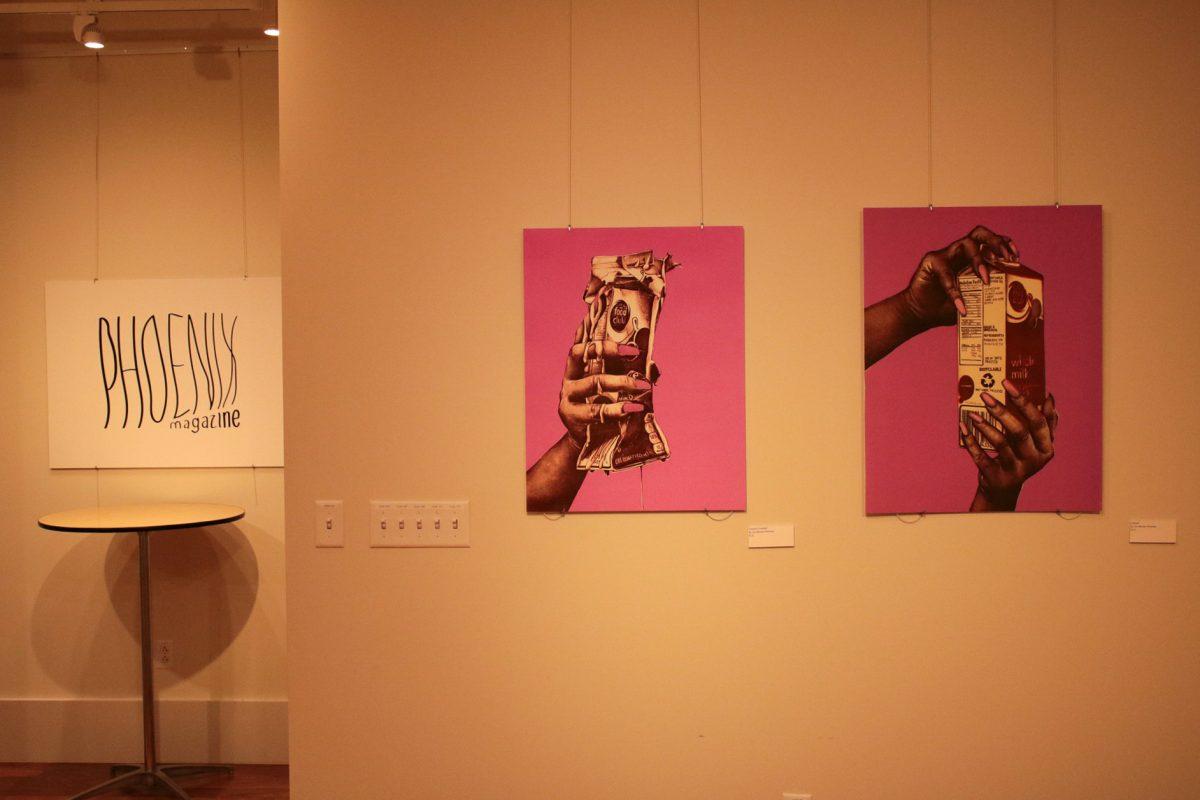
For the very first time, the student-run Phoenix Literary Magazine has produced a public pop-up exhibit of student artwork from its upcoming spring edition. The exhibit, running until March 15 in the Student Union gallery, features mixed media pieces including poetry, photography, paintings and prints, all of which depict the deconstruction and decay of 2020 in unique ways.
Ben Hurst, editor-in-chief of the Phoenix, said this is the first year that the magazine has selected a theme for its submissions.
“When I thought of the theme, 2020 had so much potential, and we got some great works from it,” Hurst said. “2020 was very complicated and it was more than corona, and I think our pieces this year kind of accomplish what I was looking to do with that theme.”
Hurst said that the exhibit is part of a broader effort to reinvigorate the publication during a time when COVID-19 threatens to make it stagnant.
“We didn’t want to stand still during corona, we wanted to expand,” Hurst said. “We’ve been raising money, we’ve been doing stuff with the website, we’ve been getting more involved on campus. And so part of being on campus is giving people a chance to meet the staff because we are the Phoenix, but at the same time we’re all part of the Phoenix.”
Victoria Mullins, poetry editor for the Phoenix, says that it has been challenging for the magazine to make connections with students over the past year.
“People feel disconnected in general, so it’s hard to get excited about things when you’re so far away from it,” Mullins said. “I think that also kind of hurts us with trying to find submissions. People don’t feel as connected to it.”
The pop-up exhibit is a way for the public to be able to see up close the diversity and talent of student artists on campus.
Phoenix staff member Sadie Kimbrough says that the magazine has been pleased with the breadth and quality of submissions, especially during a year when getting submissions has been difficult.
“You’re trying to get full-time students to take part out of their lives to submit something, whether they feel good about it, nervous about it, and doing that is a really scary thing,” Kimbrough said. “Getting people to do that when everything feels so chaotic and overwhelming as it is a really hard thing.”
Despite the difficulties of connecting with students during the pandemic, the Phoenix plans to continue expanding its website and its in-person experiences. According to Hurst, the pandemic may even have been the inspiration the staff needed to further cultivate the magazine.
“This year was a lot of sitting at home with nothing else to do other than stare at four walls and think what we can do to grow,” Hurst said. “It was kind of good in a way that it kind of forces us to be … more creative, and forces the Phoenix to be bigger than what it was.”