In 1961, Theotis Robinson, Jr. became the first African American undergraduate student to attend the University of Tennessee. On Tuesday evening, he returned to campus to share the story of his journey to integration.
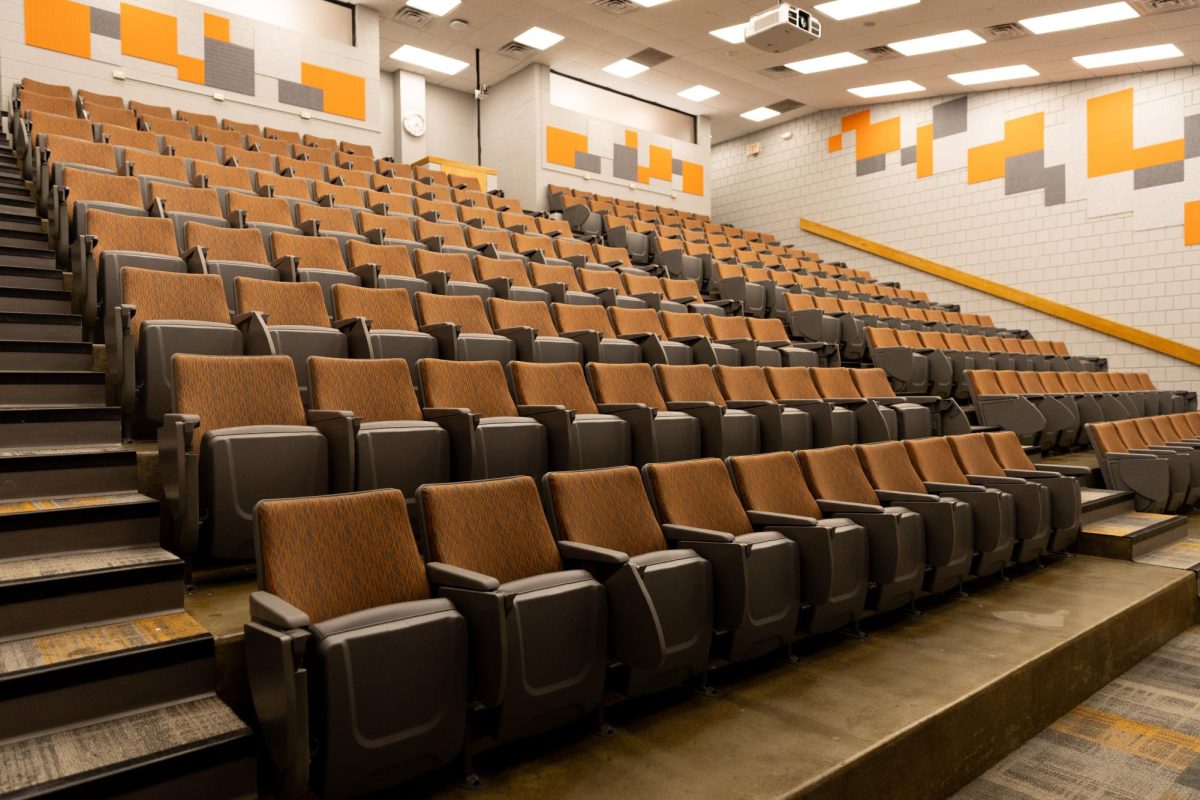
The talk was held in Scripps Lab, and the small venue was packed wall to wall; dozens of students who arrived too late to grab a seat stood around the room just to hear Robinson speak. The event was organized by the College of Communication and Information and Diversity Student Leader Society (DSLS).
A Tennessee native, Robinson was born in Chattanooga and raised in Knoxville. He was fascinated by politics since a young age, and he recalls being intrigued by the results of the 1948 presidential election—Robinson was less than 10 years old at the time.
As a teenager, Robinson was a student at Austin High School, an all-black public school in Knoxville. Although the landmark Supreme Court case “Brown vs. Board of Education”had technically desegregated schools throughout the country, many southern states had failed to put the policies into effect.
In response, the NAACP attempted to take matters into their own hands. The Knoxville chapter selected 17 students from all-black high schools to be placed into white schools, Robinson being one of such students.
Robinson was placed in East High School. However, despite the judiciary backing behind integration and the insistence of the NAACP, East High’s principal, a Mr. Bible, adamantly supported segregation and refused Robinson admittance to the school. Robinson subsequently sued East High.
After graduating from high school in 1960, Robinson was set to attend Knoxville College with a scholarship. The summer before his freshman year of college, news began to break that UT’s law school and graduate school had been integrated. Robinson realized that if such was the case, there was no reason why the undergraduate school shouldn’t be integrated as well.
That summer, Robinson applied to UT; in his application, he didn’t include his race or the name of the all-black high school that he attended, yet somehow, Robinson was still denied admission to the university based on his race. Robinson and his parents then met with UT’s Dean of Admissions for the graduate school alongside the Dean of Admissions for the undergraduate school. They were told to meet with President Andy Holt, who then asked Robinson why he wanted to attend UT.
Robinson explained that he responded with the obvious: he was a taxpaying citizen in the state of Tennessee.
“I was born here. I live here,” Robinson said. “I have a right to come to the University of Tennessee.”
Holt then instructed the Robinsons to meet with the Board of Trustees, the only entity with the power to fully desegregate UT. At that point, Robinson made it clear that if he was not offered admission, he planned to sue the university.
UT’s lawyer admitted that based on the political climate of the time and the judicial decisions being made around the country regarding segregation, UT would not win the case if Robinson did sue. In response, the Board of Trustees finally voted to integrate the university, and Robinson became the first African American student admitted to UT’s undergraduate school.
In January of 1961, Robinson, alongside Willie Mae Gillespie and Charles Blair, became one of the first African American students at UT. Robinson stated that during his time at UT, he experienced little discrimination, and the process of integration was very peaceful.
After graduation, Robinson went on to work at UT for 25 years before his retirement, and he served as UT’s President of Equity and Diversity for 14 years. Robinson has been the recipient of numerous awards, including being recognized as a Distinguished Alumnus, the highest honor a UT alumnus can receive.
Robinson emphasized to the crowd that he would not have become the activist he was and continues to be—Robinson was sporting a “RESIST!” hat during the presentation—without several key role models in his life. The advice and accomplishments of his teachers, his parents and Martin Luther King, Jr. served as great inspirations to him.
Robinson explained that it is necessary for college students nowadays to be thinking about the ways that they can become role models for those who will follow in their footsteps. It is necessary that the youth of today are thankful for the foundation that has been laid for them and attempt to lay it for those who will follow, he explained.
Robinson urged the audience to consider what they are doing to better the lives of generations to come.
“What is going to be the strength, what’s going to be the breadth of the shoulders that you build for your children and your grandchildren and those coming behind you to stand on?” Robinson said. “That’s the challenge, to think about your life not just as for your own individual wanting to do for me, but what are you going to do for others? What are you going to do for people?”
Annie Ankamah, the Co-President of DSLS, gave some closing remarks about the importance of integration and diversity.
The crowd was filled with people of all races and ages, and Ankamah noted how thrilled she was to see the diverse group of attendees.
“I really am so impressed by seeing this diversity. It’s just beautiful,” Ankamah said.
She elaborated to explain the value of a unified student body, and she called on students to be activists and stand up against unfair situations and discrimination at UT.
“At the end of the day, the importance of us all being here is that we’re all one,” Ankamah said. “No matter what it is, we’re all one, and if it wasn’t for Mr. Theotis Robinson, we wouldn’t be here today.”