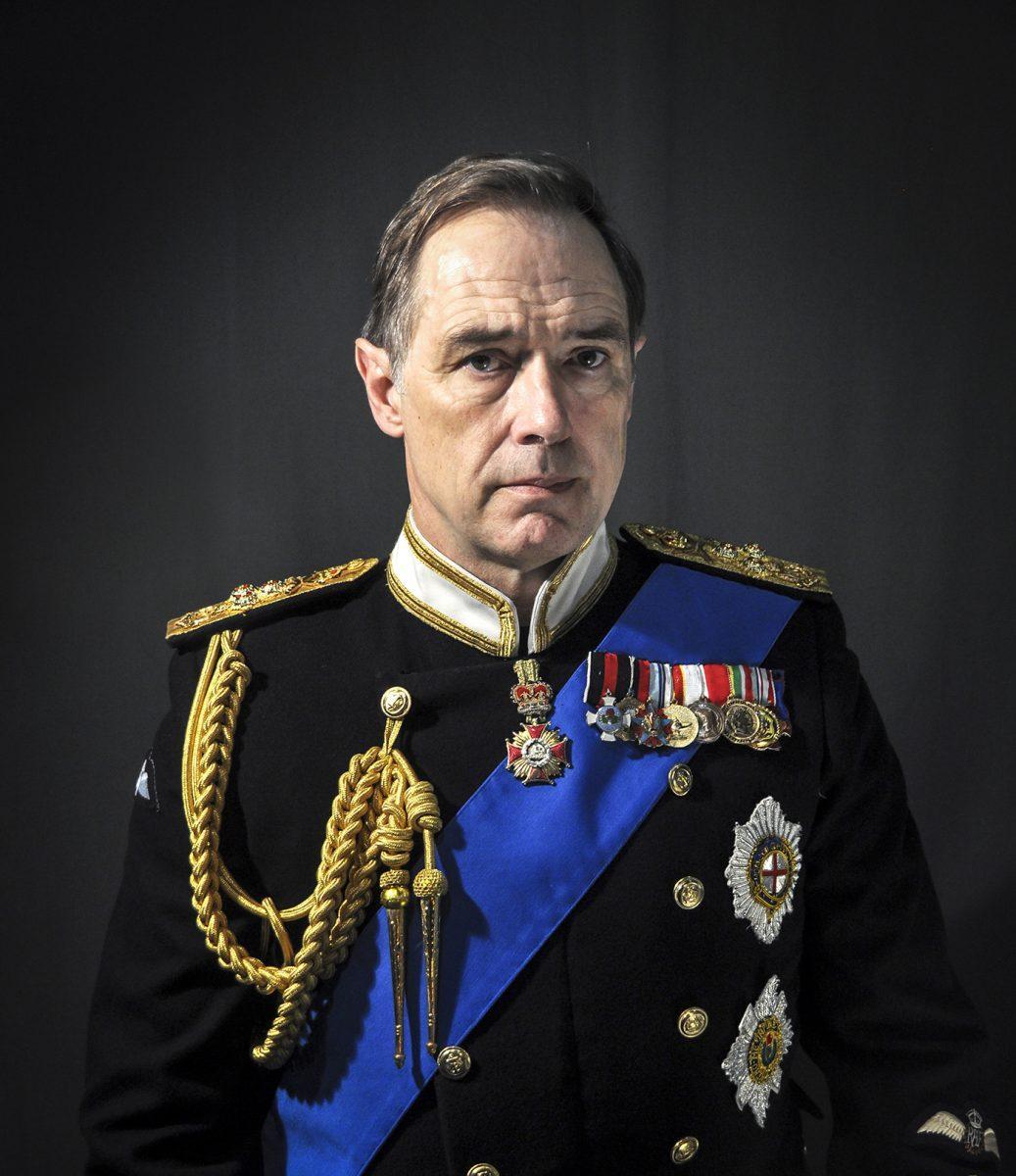
In perhaps the boldest move in 21st-century political drama, one playwright killed the Queen.
Kings, crowds and the press clash after the death of Queen Elizabeth in “King Charles III” — a modern drama with Shakespearean influences. The production shows at UT’s Clarence Brown Theatre until Feb. 24.
“Shakespearean” is a heavy descriptor for any performance to carry. In the hundreds of years since the Bard first built the Globe, Western theatrical traditions and even language have grown to accommodate his plays’ heavy cultural significance.
No wonder some have gotten sick of it. Ask any high school student — many will tell you that Romeo and Juliet is overrated and that it’s time to move on. The beautiful but old-fashioned language, themes and settings of Shakespeare’s plays are sometimes found inaccessible or even outdated.
So with all that cultural baggage, it’s a bold move to follow in Shakespeare’s footsteps with a political tragedy in verse. Does it work?
Unlike Shakespeare’s history plays, “King Charles III” is billed as a “future history play” — a possible chain of events that could follow Queen Elizabeth’s death. Charles, the real-world Prince of Wales, takes the throne and refuses to play nice. When a proposed law threatens the freedom of the press, he refuses to sign the bill and officially make it law.
There’s political intrigue. There’s forbidden love. There’s even a ghost — Princess Diana, whose tragic early death still haunts the public view of the Royal Family. “King Charles III” checks off item after item in a list of Shakespeare’s favorite tricks — and it works. The plot manages to be both timely and grandiose.
Unlike Shakespeare’s famous iambic pentameter, “King Charles III” is written in blank verse. And unlike the sometimes-unfamiliar language of Shakespeare’s time, the play’s dialogue is strictly modern English. The accessible verse is a refreshing blend of Renaissance influences and modern drama. Also, there’s some killer lines.
Actors both borrowed and local appear as real political figures. Performances ranged from “good” to “extremely good.” Perhaps the brightest performance came from Abby Siegworth as duchess, fashion icon and humanitarian Catherine of Cambridge — formerly known as “Kate Middleton.” Her fiery speeches take the audience by surprise as her character tries behind the scenes to preserve the monarchy.
The one problem with the performances was that some actors fumbled with their British accents. Actor Michael Elichs, who acts as “Prime Minister Tristan Evans,” lost his accent midway through some speeches in the beginning of the play, however, as the action progressed he seemed to get it under control.
As with many plays at the CBT, director John Sipes opted for a minimalist set of looming, rotatable panels to form the backdrop, with lights, images and video occasionally projected.
The production’s usage of lighting was ideal at some points but distracting at others. The projected images were sometimes integral to the scene. For instance, the veiled ghost of Princess Diana haunts the main characters as a gauzy, ethereal projection. During public appearances, videos of some characters are projected as if they were addressing a television audience during a broadcast.
Most lighting and projection strategies perfectly highlighted the actors’ performances. At times, however, the occasional usage of moody blue lighting was just plain distracting. There were also some projections that really weren’t necessary.
Lighting and accent issues aside this was an amazing production. While the free previews are over, UT students are eligible for $5 tickets — and it’s well worth that. I would recommend this play for Shakespeare lovers, Shakespeare haters and anyone who just can’t pick a side.