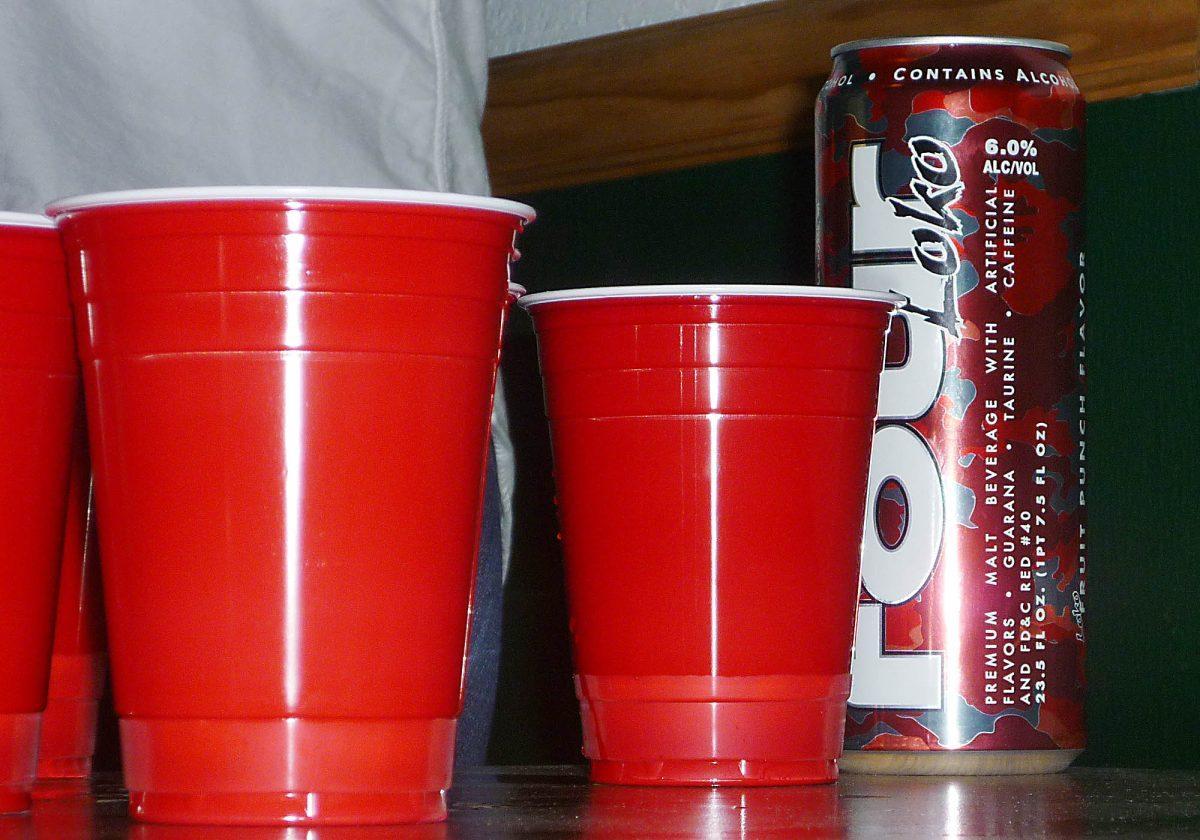
Alcoholic energy drinks, like Four Loko, Sparks and Joose, have recently come into the spotlight following several hospitalizations on college campuses.
Washington state, where nine Central Washington students were hospitalized after consuming large amounts of Four Loko, will temporarily ban alcoholic energy drinks.
During the 120-day ban, the state may join Michigan, Utah and Oklahoma — who all currently have emergency bans in place — in discussions on totally banning alcoholic energy drinks.
“The alcoholic energy drink ban in Washington is a complicated subject,” Will Cummings, senior in economics, said. “The state is seeking to ban alcoholic energy drinks, but the real problem is stopping underage drinking. It seems unfair to single out a particular category.”
Drinks like Four Loko, which has been called “black out in a can” and “liquid cocaine,” have become more and more popular among college students.
“If you go to a party, a lot of people are drinking things like Four Loko or Sparks,” Caleb Davis, freshman in political science, said. “The alcohol content of energy drinks in Tennessee is only 6 percent. When I am home, I usually go to Georgia to get the 12-percent drinks.”
The laws in the state of Tennessee require malted beverages to be 6-percent alcohol by volume ,and since drinks like Four Loko are malt liquor, they are held to this law.
“I think 6 percent is a reasonable amount of alcohol for the energy drinks,” Cummings said. “In order to have receive the 12-percent content, a person would have to drink two 24-ounce drinks. In the time it would take them to do this, the first drink would have more time to process through their system, as opposed to being hit all at once by 12 percent in 24 ounces.”
Another persuasive factor for students drinking these alcoholic energy drinks is the price. At most gas stations, a 12-pack of Natural Light runs between $7 or $8, whereas a single can of Four Loko is $2.50 and provides the same alcohol content.
A 23.5-ounce can of Four Loko, which is 12-percent alcohol by volume, is comparable to drinking five or six beers.
Students say the experience of drinking the two is very different.
“It is definitely a much different feeling than drinking beer,” Cummings said. “The alcoholic content is higher than that of beer, and it also is more of a sugary kind of fruit drink, and so they are easier to drink faster. This leads to the alcohol hitting your system harder and gives you a sugar rush feeling. This results in a very different experience.”
Though these drinks are cheaper, consuming these drinks comes with health risks.
“The combination of caffeine and alcohol is nothing to toy with,” Dr. Spencer Gregg, who works at the Student Health Center, said. “The caffeine and the alcohol work in two different ways. The alcohol makes you inebriated, and the caffeine cancels out the effects.”
Gregg went on to say that people lose their inhibitions and attempt more things they regularly would not.
“People who drink these beverages are more likely to do things such as drink and drive or participate in other risky behaviors,” he said.
A report by the Centers for Disease Control and Prevention states that drinkers who consume alcohol with energy drinks are twice as likely as people who do not mix alcohol with energy drinks to be taken advantage of sexually, take advantage of someone else sexually or drive under the influence.
The interaction between the two substances can also lead to heavy drinking, which has hospitalized people across the country.
“Generally, when someone drinks, the alcohol acts as a depressant, and they will eventually get tired and want to sleep,” Gregg said. “Alcohol combined with caffeine has the opposite effect. The person feels more alert and tends to drink more. This can lead to blacking out, alcohol poisoning and, even worse, possible death.”
People who consume alcohol with energy drinks are three times more likely to binge drink, the report says. The gratuitous amounts of caffeine that students can intake by drinking multiple energy drinks can lead to heart dysrhythmia and even seizures.
“Whenever I drink alcoholic energy drinks, I have more than one, because I don’t feel the effects as much,” Davis said. “When I start to feel it, it hits all at once.”
The students who were hospitalized at Central Washington University were reported to have blood alcohol levels of between .123 and .35. A BAC of .08 is the legal limit for operating a motor vehicle and a .3 BAC is considered lethal.
Studies have shown that the caffeine mixed with alcohol has no abnormal effects on the consumer the morning after drinking.
The lower alcohol content in energy drinks in the state of Tennessee allows them to be sold in gas stations. These drinks seem to be marketed towards youth because of the colorful cans, low price, fruity flavors and alcohol content.
Gregg said this this could be a reason for the bans.
“I think that the bans on alcoholic energy drinks is partly due to consumption by minors,” Gregg said. “People are always going to mix caffeine and alcohol but having this pre-mixed drink just makes it easier.”
Some states, like Montana, have limited alcoholic energy drinks to be sold only in liquor stores.
Many states are considering banning the sale of alcoholic energy drinks.
“I wouldn’t be surprised if more states followed suit in banning these drinks,” Gregg said. “The mix of the two substances, alcohol and caffeine, just seems to be too dangerous of a combination.”