When discussing or — more likely — arguing over religion, it seems that secularism isn’t a hot topic.
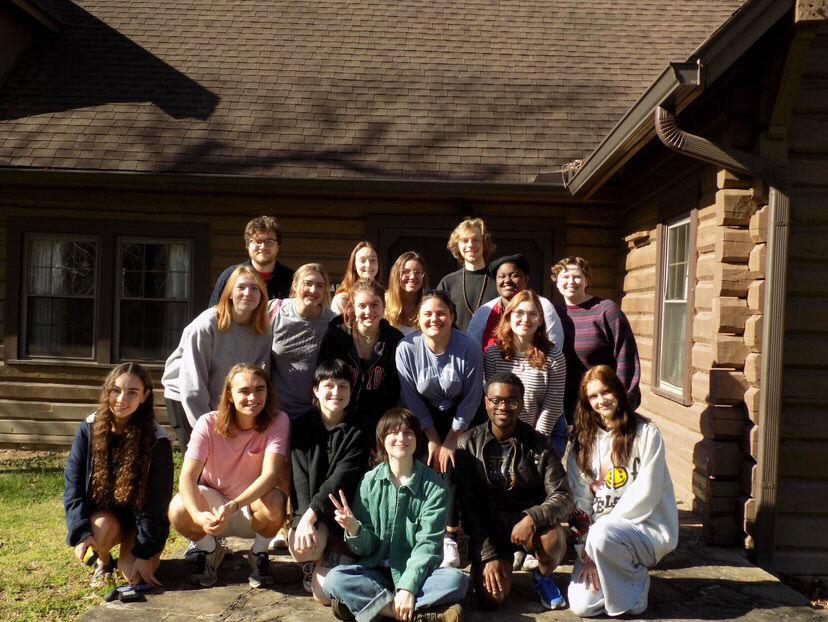
Therrin Wilson, junior in pre-optometry, knows this, and that’s one reason he started the Secular Student Alliance (SSA) in 2015 and serves as its chapter’s president.
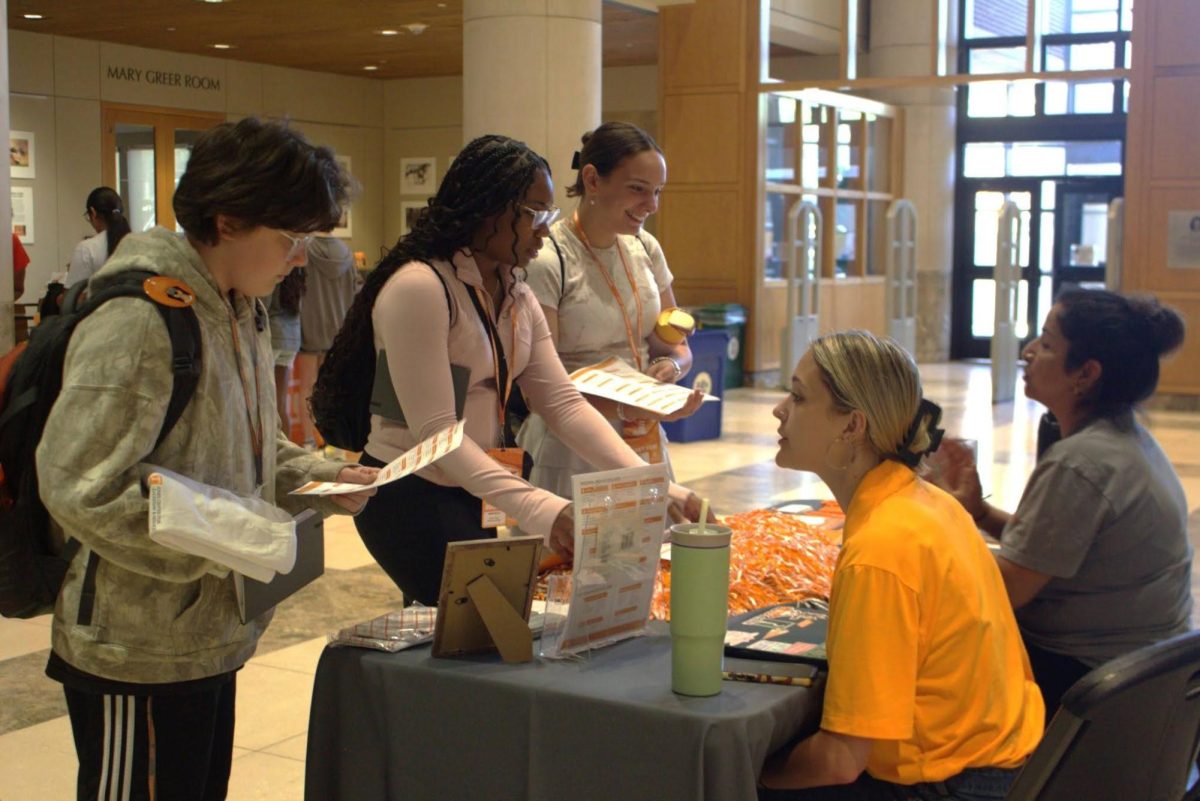
“When I got here (UT), and it was orientation day and all these tables for different organizations, like Christian organizations, Islamic (and) all different types, and I did not see one atheist organization,” said Wilson. “So I just took it upon myself to say, ‘Why don’t I just found a chapter of this atheist organization?’”
SSA is a national organization with 231 affiliate organizations in universities, colleges and high schools, according to its website. On a national level, the organization exists to help secular students create environments welcoming to nonreligious students and promote secular ideas.
The UT chapter’s three main goals are to foster a home for secular students, spread awareness of the organization and remove stigmas about secular societies, Wilson said.
Josh Mendez, sophomore in accounting and SSA fundraising chair, said the third point is often the most difficult as many believe that SSA members are trying to push their beliefs onto others.
“We’re not trying to change anyone’s opinion. We really value the right to have your own beliefs, so we just wanna remain neutral, but we also want to put our name out there,” Mendez said. “We respect your (religious) beliefs, and you will respect ours.”
Despite the fact that the number of secularists is low compared to religious people, Wilson said that the organization mostly receives respect from the public.
“We are in the Bible Belt, so it’s a tremendous amount of religious people, and we haven’t always received good feedback. We have had our hard times, but for the most part, people respect our opinion, and we always respect other people’s opinions.”
The organization does not have restrictions on who can join. Instead, SSA leaders encourage intellectual diversity and have seen religious people attend meetings.
“We accept all diversity aspects. So if you’re Islamic or Christian or Buddhist, you’re welcome to join the organization for whatever values you wanna join it for,” said Wilson. “There was a girl who came, and she was Christian. She just wanted to see what our organization was about, and I guess how it was to be around a bunch of atheists and agnostics or whatnot, but she’s no longer a member.”
Both Wilson’s and Mendez’s parents grew up in Christian households. Wilson’s mother is a practicing Baptist, but he went through the process of thinking critically about his beliefs and found he did not agree with hers.
“My mom was definitely trying to indoctrinate me with it, but at some point, I just started thinking for myself. It wasn’t like a day where my eyes opened and the sun rained down on me and I was an atheist or anything, it was just kind of a process of thinking and logic,” Wilson said. “She (Wilson’s mother) was like, ‘Oh my God, you’re going to hell. How could you not believe?’, but eventually she got used to it because I’m her son. She was like, ‘I’m gonna love you regardless, even though you don’t go with the family values.’”
Mendez, who was raised in a Pentecostal house, said he began the process of leaving his religion after graduating high school.
“I was raised in a Pentecostal household … It was a gradual process of becoming an atheist/agnostic. I would say that around age 18 is when I started changing because I started heavily reading the Bible. Like, I read it cover to cover three times, and I just found it to be weird after actually sitting down and reading it,” Mendez said. “Some of the stuff is just crazy, like talking donkeys and oceans splitting. I dunno, it just sounds mythical to me much like Roman myths and Greek myths.”