There are two types of attitudes that people have when going out to eat.
Half of the time, people go out simply to get some food, regardless of whether or not they could have made it at home. These people go to restaurants not because of some flash or flair that the place offers, but rather due to the convenience it can give.
For the other half, going out to eat means so much more than just convenience. Instead, for these people who are not motivated by the ease of getting food, eating out at a restaurant is supposed to be an experience. It is something special, where one absorbs the sights, sounds, smells and tastes that he or she cannot get anywhere else. For these people who look for a unique experience in their dining, Gosh Ethiopian Restaurant is a prime destination.
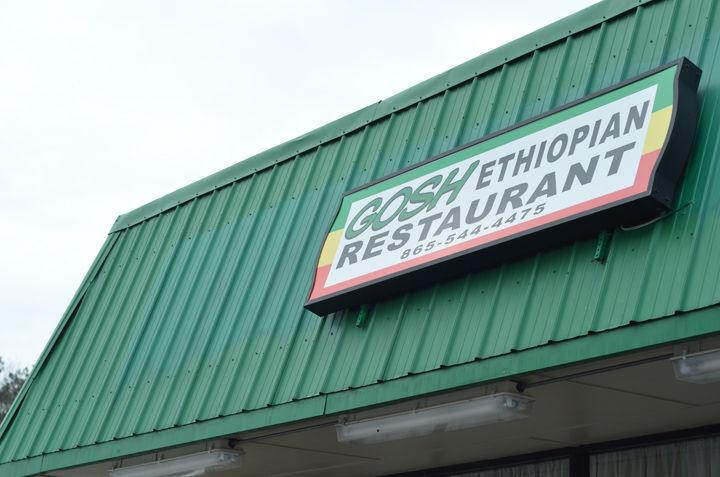
Nestled on Southerland Avenue, next to the Holy Land Market and before Dead End BBQ, Gosh has been serving up traditional Ethiopian food for nearly a year. And their success follows a simple formula: keeping things simple and comfortable.
Upon entering the restaurant, there is an immediate feel of ease. With a thick set of blinds blocking the view to the busy street that Gosh rests on, shielding visitors from the light and sights of Southerland, every patron of Gosh is treated to subdued lighting and pleasant authentic decorations adorning the wall. On the surround-sound speakers, music plays lightly, accenting the sounds of the kitchen but not blocking the voices of table conversations. In fact, the one traditional restaurant sound not heard in Gosh is the clinking of silverware. That is because at Gosh almost all of the food is eaten by hand.
For first-time visitors, Gosh’s finger food appeal may seem a little intimidating, but the results are rewarding. With the exception of the appetizers and the desserts, most dishes are served on a platter injera, a traditional sourdough bread, and also accompanied with a basket of injera rolls. The means of eating are simple. Tear off a piece of injera and use it to pick up your entree, roll up the pocket of food and enjoy. While at first this way of dining may seem crude, after a few bites not only does one get the hang of it, but soon it becomes a natural movement. By the end of the meal, all that is left on the plate seems to be the remnants of the injera the food was resting on, which, having soaked up much of the juices from the food, serves as a nice continuation of the meal.
The menu, like most attributes of Gosh, is simple. Encased in regular lamination and covering only the front and back of one printed of piece of paper, Gosh offers a variety of tastes from Ethiopia. There are three appetizers (of which the server suggested the vegetarian sambbussa, and it was amazing), four categories of entrees — poultry, beef, lamb and vegetarian — a small kid’s menu and a dessert section. Most of the meals involving meat hover around the $10-12 range, with the vegetarian dishes being $8-9. But when going to a place like Gosh, the price is not what matters. What is important is the experience you get from going there.
Gosh is more than just a place to grab a bite to eat. And if that is all that someone is looking for, then Gosh is not the place to go. But if you want to eat at a location that is unique and original — where the topic of conversation is more than just the taste, but also the presentation and the way you eat it — then Gosh is the place for you. It is a place special to Knoxville in more than one way. In a town like this, where every new restaurant seems to be just a drop in an ocean, Gosh transcends the label of restaurant and the space of 15-20 tables that occupy it; it is a window into Ethiopian cuisine and culture, and for that it stands out as more than just an eatery.