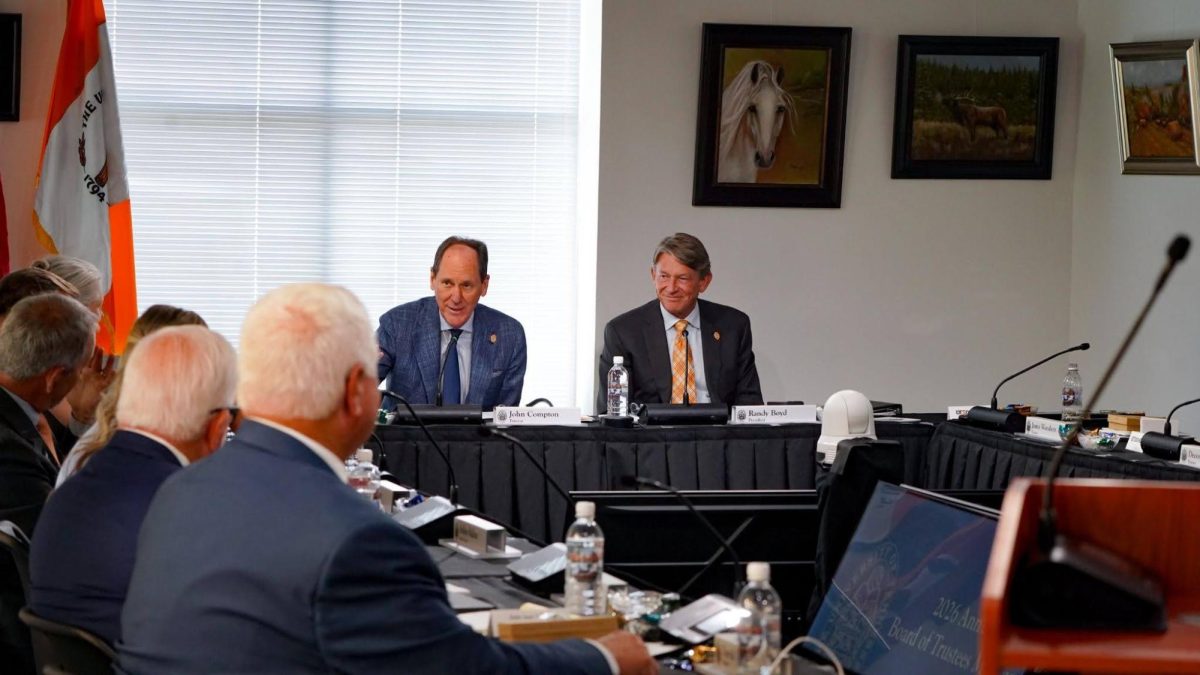
Honors students curious to hear about the future of the Chancellor’s Honors Program (CHP) gathered with Chancellor Cheek on Tuesday evening to open lines of communication.
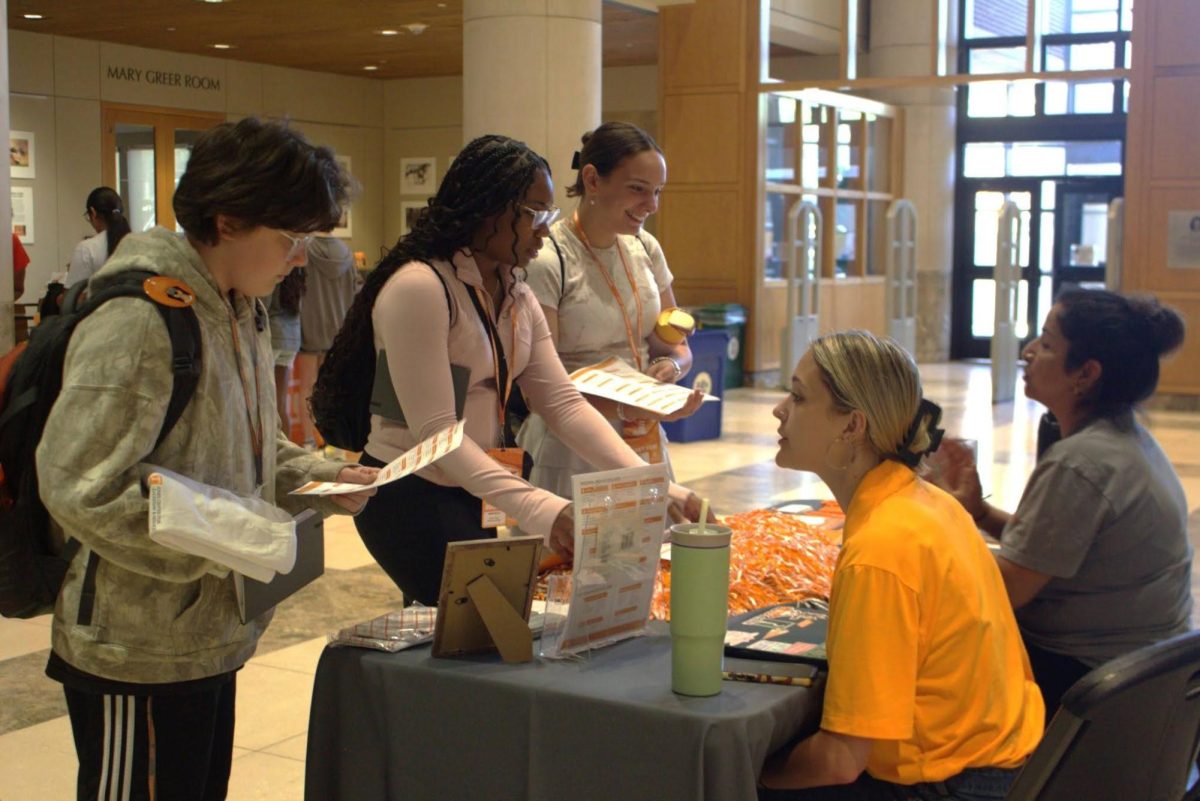
Representatives from the Honors Council hosted a reception for CHP students to dialogue about Cheek’s vision for the program. After a short opportunity to mingle with the chancellor in the Baker Center rotunda, students retired to the auditorium to hear some of his remarks. Participants were interested in specifically learning about his vision for honors at UT.
Cheek focused his address on the Top 25 initiative. He highlighted the importance of increasing retention rates and four-year graduation rates.
“Our goal is to maintain 90 percent of the freshmen that come,” Cheek said. “We are the furthest off from everyone in four-year graduation rates. This year ours is 63 percent. Our initial goal is 75 percent — the bottom of the rest of the top 25.”
The chancellor encouraged setting high goals for the university and its students.
“If we benchmark ourselves against the best, we will become better,” Cheek said. “You identify gaps, and you try to narrow those gaps … we want to be the very best we can be.”
He elaborated on his plans for the university.
“We need to make our research and scholarship enterprise better,” Cheek said. “Two major things make a difference at a university: students that come, and the faculty that work with them.”
The chancellor went on to address questions about honors housing, the growth of the honors program and the importance of private endowment. He remarked on the quality of UT’s student body.
“Our aspirations are to be greater than we are today, in two years, five years, 10 years,” Cheek said. “The first thing most universities have to do is improve their student body, but we don’t have to do that. We just need to maintain ours.”
Daniel Aycock, president of Honors Council, moderated the event for around 60 attendees. He posed various questions to the chancellor to facilitate discussion.
“We are called the Chancellor’s Honors Program,” Aycock said. “We need to know that we are a priority for the administration … we are invested in our experience, and ready to be engaged stakeholders in this university.”
Students were curious to hear more about the development of the university’s new brand.
“Every major university has a branding campaign under way in some way or another,” Cheek said. “A lot of people in the nation and the state didn’t really know a lot about the university. The branding effort is much greater than the tagline. What I’m concerned with is that we identify ourselves as the University of Tennessee.”
Cheek reflected on the importance of honors courses and programs for UT’s future, calling for increased private endowment for honors initiatives. He spoke of the importance he places on faculty engagement with the student body.
“Students are the reason we’re in business, so invest your time with students,” Cheek said.