Every student regardless of major is required to take a specific set of general education courses. Common with universities, this policy is implemented with the intention of creating more well-rounded individuals.
However, Jackson Bogach, sophomore in environmental studies, felt a critical component was missing: environmental literacy.
“I took an environmental sociology class, and it really opened my eyes about topics like hunger and American resource depletion,” Bogach said. “So I got this idea and went to Erica Davis, co-director of the Environment and Sustainability Committee in (Student Government Association), and we got the ball rolling.”
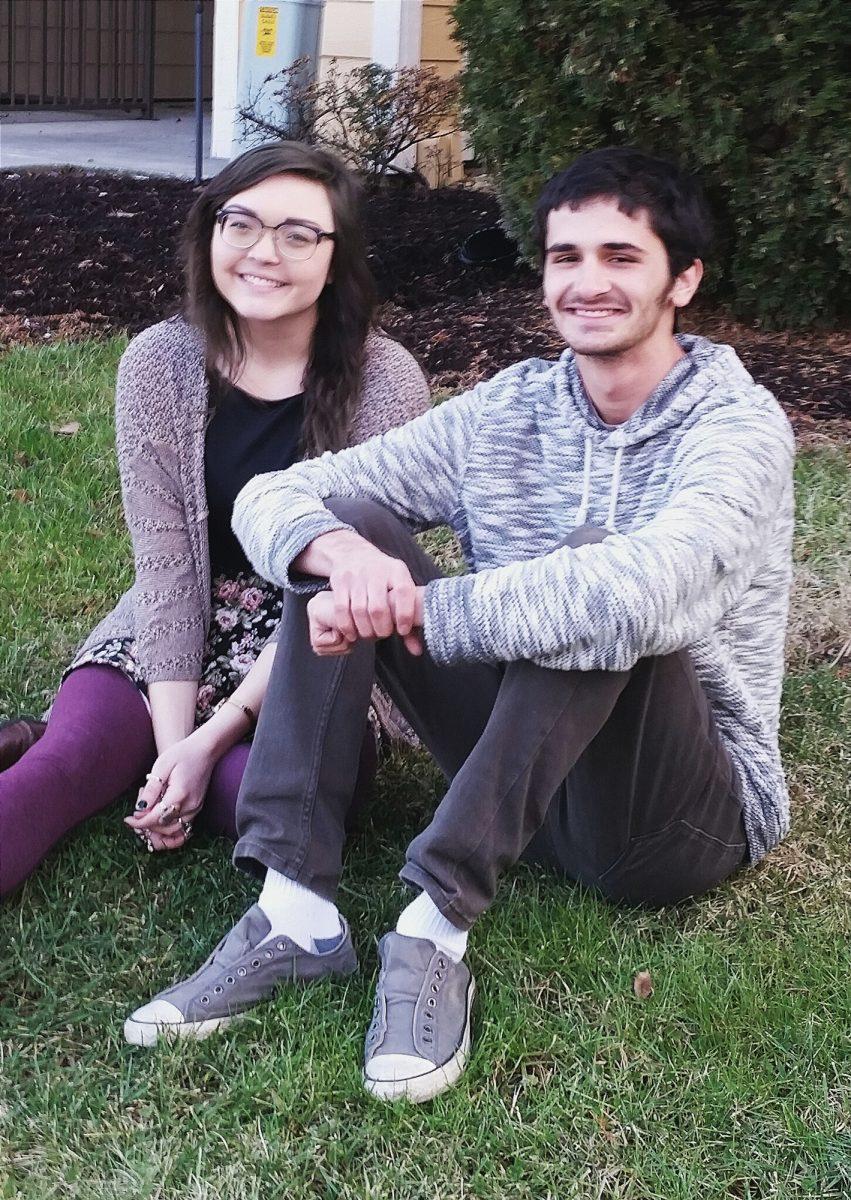
Bogach and Davis, a junior in sociology, drew inspiration from other campuses that have done similar things with their curriculum like the University of Georgia. Over winter break, Davis and Bogach began drawing up a proposal and started talking to faculty members, ultimately setting up a meeting with Provost Susan Martin to discuss passing it through the Undergraduate Council and the General Education Committee.
As it currently stands, the social sciences portion of the general education requirements is two classes chosen from a single list. Davis and Bogach are proposing the list be split in two, where any current social sciences course would be chosen from a “List A,” and any course deemed acceptable for environmental literacy would be chosen from a “List B.” This way, no extra hours are added on to the curriculum.
“There’s already enough courses, teachers and spaces for this to happen,” Bogach said. “People would have options like sociology, philosophy, anthropology, geography and several more; students would have freedom of choice in what discipline they can have the class in. The logistics make sense, it will all come down to the decision makers.”
After talking with several professors and Martin, Davis and Bogach are convinced that the change is feasible.
“The faculty is really excited that this idea is coming from students,” Davis said. “It’s been tried in the past, but it wasn’t very successful. It’s been well received so far, and people are very excited about it. We hope students will support it as well.”
Davis said she thinks making changes like these are especially important in today’s society in which the environment is an increasing concern.
“Only a third of Americans today can pass basic tests about environmental problems,” Davis said. “This means our educational system is basically pumping out environmental illiterates, and we want to change that. We see this as an important step for grooming UT students into well-rounded world citizens.”
For Davis, this is a chance to influence a small change that could potentially have a huge impact.
“I’m proud of what UT has done as far as improving sustainability initiatives,” she said. “However, greening the campus without greening the curriculum is a missed opportunity. As decision makers make choices that affect the future world that we, as students, will inherit, it’s their responsibility to give us every opportunity to gain the knowledge necessary to be well-rounded world citizens.
“This is simply one more way UT can bear the torch for students and other universities.”