While the Great Smoky Mountain National Park is chock-full of stunning vistas, the untouched land is more than just a pretty face and UT’s neighbor.
Faculty, students and alumni have used the neighboring park for recreation, retreat and research.
Supervisory fishery biologist Matt Kulp has worked at the park since 1994. For the past 21 years, he has worked with students and faculty from the UT Civil and Environmental Engineering Department to monitor water quality and fish populations.
“Researching in the Smoky Mountains is an excellent opportunity,” Kulp said. “Relatively unimpacted by people, it’s a natural laboratory unimpaired by roads and sediment runoff. It provides the chance to look at things in a natural environment, which is tough to find these days.”
The Smokies’ monitoring of water quality has turned up valuable results in the last 20 years, yielding long term trends and revealing areas at risk for acidification from acid rain.
Information from this project and others like it not only assist the park in its research but also in similar research projects across the nation.
“One project is helping us to determine critical air pollutant loads, so we can bring the data to legislators and say, ‘Here’s how much you need to reduce these pollutants so we can protect park resources in the future,’” Kulp said. “The foundational work done by university researchers here has provided great data for other people across the country to build off of.”
Kulp’s work with water quality monitoring is only one of hundreds of projects that take place at the national park every year.
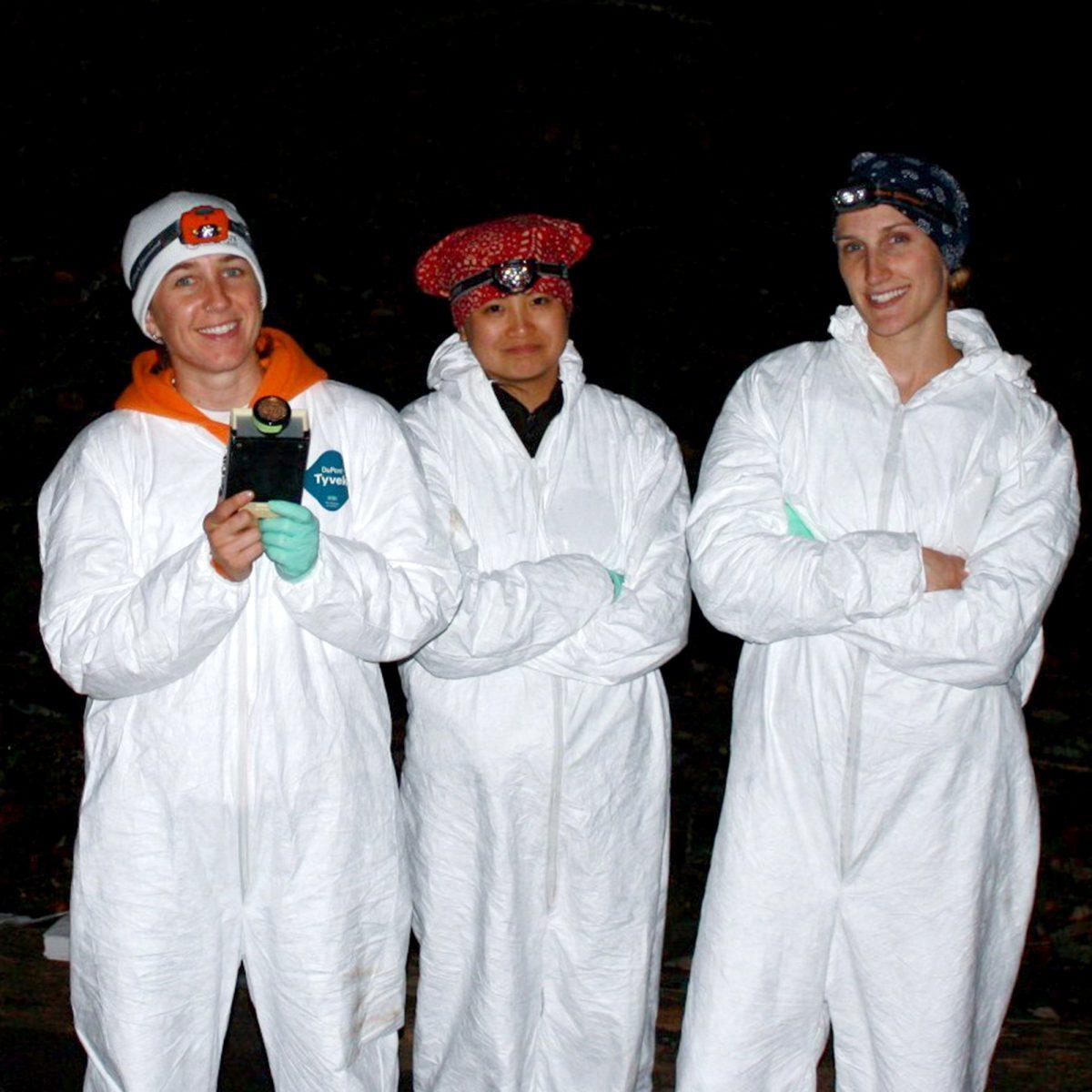
Riley Bernard, UT doctoral graduate in ecology and evolutionary biology, has been researching the impact of white-nose syndrome on bat populations in the park for several years now. The fungal disease has killed millions of bats in the northeast over the past few years and has rapidly spread down south. The Little brown bat and the endangered Indiana bat have been hit the hardest, with some caves reporting mortality rates as high as 90 to 100 percent.
The first bat sighted in Tennessee with white-nose syndrome, responsible for 5.7 million bat deaths in eastern North America, was confirmed in 2010. Since this sighting, Bernard also reported an 80 percent decline in the Indiana bat population in the same area.
“It’s quite sad, really, because bats are such amazing and beneficial little creatures,” Bernard said. “Not only are they the top predator of nighttime pests like the mosquito, bats will also gladly snap up would-be crop pests — saving time, money and preventing the need for dangerous insecticides.”
Bernard hopes her research will help to alleviate the spread of the disease and educate the public on ways they can help protect our flying friends of the night.
“Bats need all the help they can get,” Bernard said. “They have very low reproductive rates, usually just one per year; and once a cave is infected with the fungus, it stays infected. A big way we can help is to put up bat boxes during the summer, even in your backyard.
“If you have Christmas lights set up outside, you’ll be able to see them swooping around catching insects.”
Paul Super, the research coordinator for the Smokies and the Appalachian Highland Science Learning Center, helps to facilitate not only Bernard’s research but all of the research that occurs at the national park.
“What I’m most interested in here is not only taking part in and facilitating the research here but also the education side of it all,” Super said. “I very much enjoy getting the info out to the public in as many different ways as possible, and the national parks offer a great opportunity for that.”
Super claims that one of the biggest benefits offered by university researchers is their ability to relate the information to the public.
“A lot of the researchers, including Riley Bernard, are very good at interacting with the general public,” Super said. “They showcase not just the information from their research but also what makes it cool. Mentoring of the public, of interested young people, is something that’s very important here in the Smokies, and our researchers both enjoy and excel in that area.”
Super said the university’s long-standing academic relationship and the research conducted by Bernard and other UT colleagues remains a huge benefit to the park and for public knowledge.
“There are so many disciplines at UT we seldom (that) have to go further than there to answer our research problems,” Super said. “We have adjunct faculty and people serving on graduate committees at UT, which has helped foster a great working relationship.
“It’s a luxury for us to have such a large, prestigious university at our doorstep.”