If you had the chance to change one aspect of Knoxville or UT, what would it be?
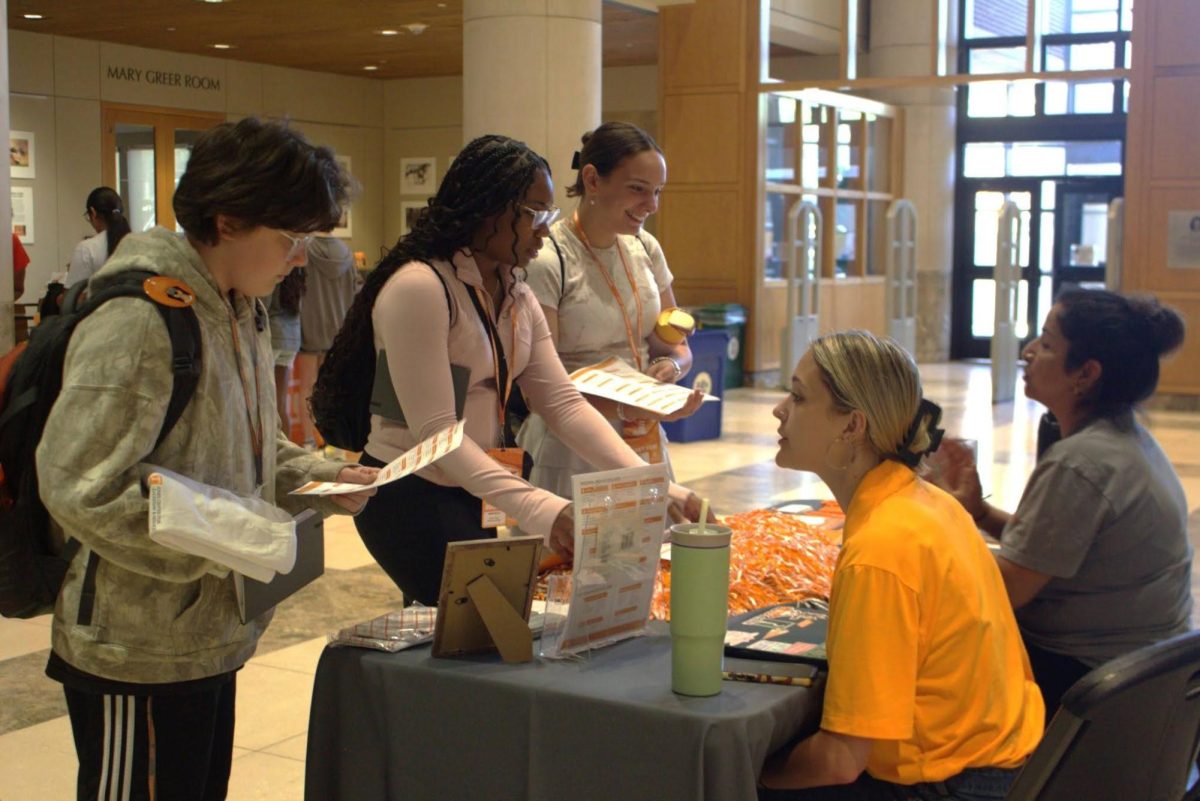
Thirteen groups of students had the opportunity to do just that, competing in the second Howard H. Baker Center Public Policy Challenge.
Beginning last semester, each group was given the task of identifying a need in the Knoxville community and designing legislation to address that specific issue.
Nissa Dahlin-Brown, the associate director of the Baker Center and primary organizer of the policy challenge, said that the competition was designed to help students with diverse passions and experience levels create change in their community.
“Everybody can have an impact,” Dahlin-Brown said. “It just takes some work.”
With topics ranging from education equality for undocumented immigrants to the elimination of plastic bags on campus, students from various majors rose to the challenge.
The teams were evaluated by five judges from the Knoxville area in seven categories, each used to determine whether or not the team’s policy was practical and worth pursuing on a larger scale.
Ultimately, “Pay Now Pay Later,” a policy project designed to require mental health screenings in all Tennessee juvenile detention centers, took home the first place prize of $3,000 and the ability to help implement their policy initiative.
The policy, explained Hannah Jones, the leader of the team and a graduate student in social work, would help identify kids with mental health problems after they are taken to a juvenile detention center. Jones said that they hope these screenings will help get kids the psychiatric and community help they need so that they aren’t incarcerated multiple times.
“We hope the discussion will continue to raise awareness of delinquent youth’s needs for therapeutic interventions rather than imprisonment,” Jones said. “This type of support can strengthen families and allow youth to overcome many obstacles that stand in their way of becoming successful and productive adults for our community.”
The “Pay Now Pay Later” team will be working with Senator Doug Overby from District two to use the $3,000 to begin implementing the program in two Smoky Mountain youth detention centers.
Dahlin-Brown said she saw “Pay Now Pay Later” as a primary example of how the competition can be beneficial through allowing students to get real world experience in a field they are passionate about while making contacts and making meaningful change.
“You learn research techniques, you get to learn from people who are interested in the same things you’re interested in, and you get to make contacts, whether it’s a person who is working in that field or someone who can help you continue to learn more, and make a change that is going to make this campus better,”Dahlin-Brown said.
Dahlin-Brown added that while the policy challenge spanned two semesters, in the following years they will restrict it to one semester so professors can include it in their curriculum.