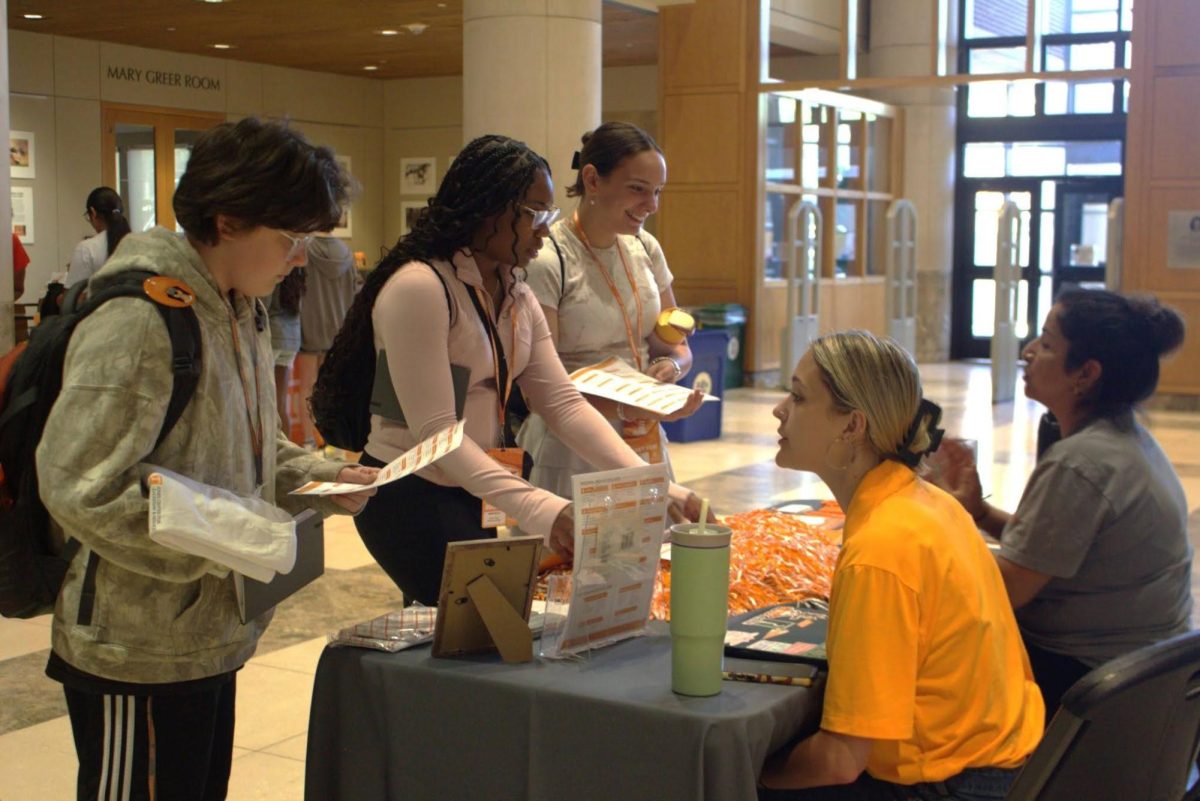
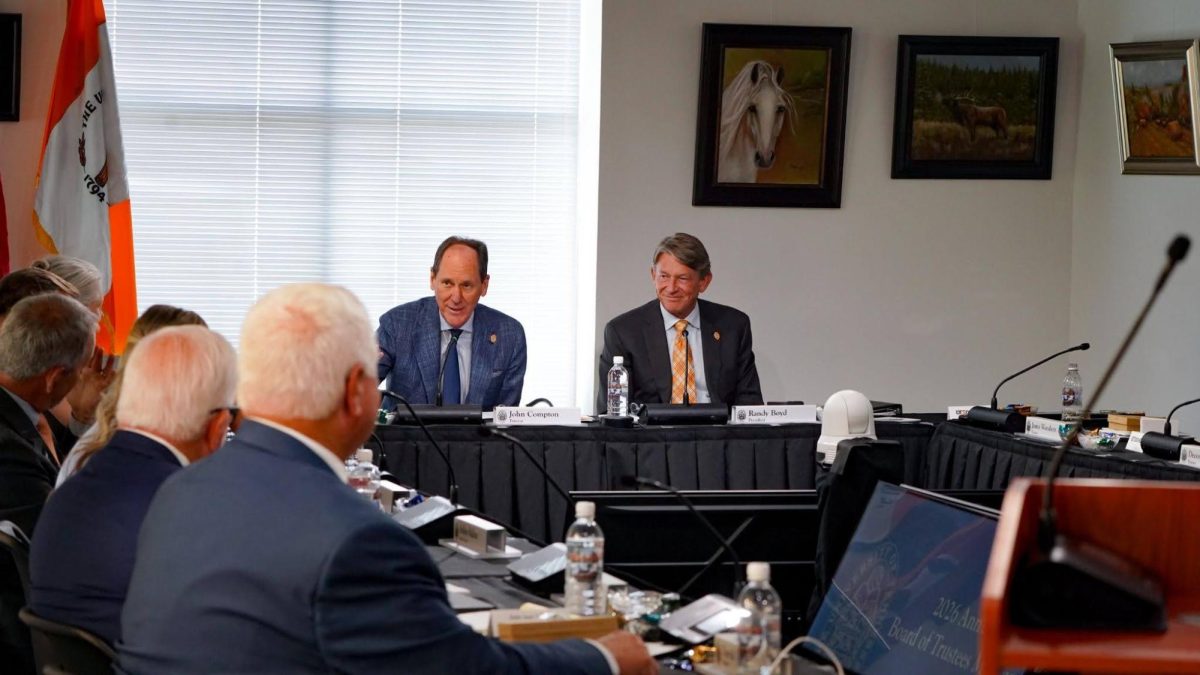
The Student Government Association’s new executives held an open Q&A Monday evening with several top university officials, including Chris Cimino, Vincent Carilli, Taylor Eighmy, Carolyn Hodges and Rickey Hall.
The floor was open for discussion, and for one hour, both graduate and undergraduate students presented their concerns to the panel.
Below are a few of the diverse topics they covered:
URSA Fees
When asked about the progress being made on a request for a $5 undergraduate research fee to support URSA, Taylor Eighmy, the vice chancellor of Research and Engagement, responded by saying that the fee is a top priority for university officials not only because of the positive benefits for individual students, but for overall university retention rates as well.
Eighmy said that when the university was re-accredited last week, one of primary comments from the organization conducting the re-accreditation investigation was that UT should expand its undergraduate research opportunities.
“If you look at the effect that undergraduate research can have on experiential learning,” Eighmy said, “it is a profoundly positive impact relative to retention, graduation, happiness in college and all of those things.”
Experiential Learning Initiative
Some students present questioned the panel about the Experiential Learning Initiative that formed the foundation of UT’s Quality Enhancement Plan for re-accreditation. Carilli, the vice chancellor of Student Life, and Eighmy both maintained that the inclusion of more experiential learning opportunities will allow students to have a more well-rounded and engaging undergraduate experience, something they said administrators have been pushing for since the early ’90s.
Carilli noted that he hopes to see Career Services take a more active role in undergraduate students’ search for internships, making more opportunities available for students to get real world experiences.
Carilli and Eighmy added that one good example of how they hope the program will evolve is the current “smart cities” program, which allows students from various disciplines go out into nearby communities where they are provided with service opportunities that apply to their courses while also benefiting and developing the town they visit.
“I think (experiential learning) has a profound impact on how you learn and what you experience that you will carry with you for the rest of your life, as I have,” Eighmy said.
Freshman Class Diversity
While Carilli cited that 14.5 percent of current applicants they are tracking come from underrepresented backgrounds, he added that these are tentative numbers that won’t be finalized until May.
Hall, vice chancellor for diversity, expressed concerns about the impact of the Tennessee Promise on both economic and racial diversity in the upcoming class, but said he sees the diversity on campus trending up.
“I’m really concerned about the economic diversity as well as the racial diversity with the impact of the Promise,” Hall said. “But right now, our applications look good as far as racial diversity goes.”
Faculty Diversity
One student expressed his dissatisfaction with faculty diversity on campus, saying that he has noticed that the majority of his professors are white.
Carolyn R. Hodges, the vice provost and dean of the graduate school, said the university has started actively recruiting Ph.D. candidates and attempting to start the hiring process much sooner than usual to make sure that they have a diverse pool of applicants to choose from.
Hall, however, said that while his office receives complaints about faculty diversity, he said he is not the one responsible for hiring; the current faculty is.
“This is a problem for most higher education institutions,” Hall said. “But it’s all of our responsibility. We tell faculty, if they see someone, ask them if they would consider coming to UT. Because if you start looking once you have an opening, it’s too late. You need to have relationships.”
Green UT
Cimino said that UT is currently the number one school in the SEC for recycling, and the second in the nation for zero-waste game days.
After citing these admirable efforts, Cimino took the opportunity to announce that UT has officially made one change that will have lasting effects on UT’s environmental impact.
“As of last month, we are coal free,” Cimino said. “We went ahead and stopped burning any coal and we have no plans to go back. By the fall, we will have completely converted all the boilers to natural gas.”
Cimino added that as a direct result of this change, UT will have reduced its carbon footprint by roughly 80-85 percent.