Since the last visitor left the 1982 World’s Fair, the six-month event has become part of Knoxville’s identity.
The Sunsphere, created for the fair, now symbolizes the city itself, and World’s Fair Park can nearly always be found full of visitors on summer days.
But what many Knoxvillians may not remember is a mummy.
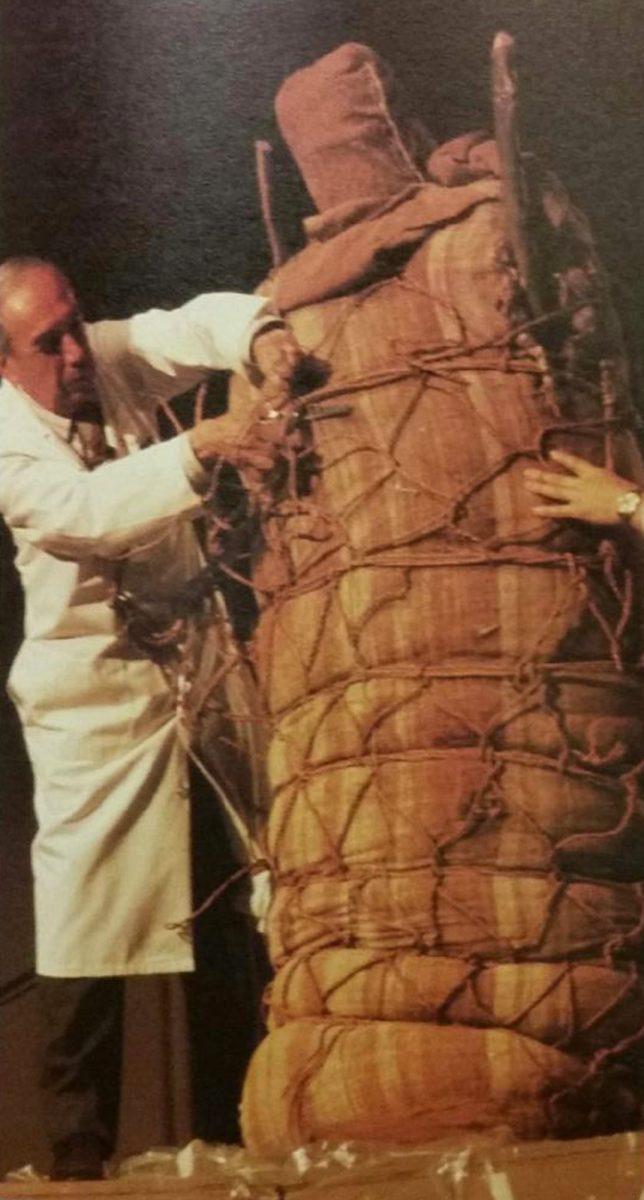
On July 29, 1982, a mummy dating to before Incan civilization was unwrapped slowly by 13 scientists on the stage of the Tennessee Amphitheatre in a ceremony attended by the Peruvian ambassador to the U.S. and nearly 450 onlookers.
Inside the mummy wrap was a 2-year-old Native American child, buried with a jewel on their forehead, along with three tunics, jewelry and small figurines. An Associated Press article from July 30, 1982 quotes a Peruvian archaeologist, Arturo Jiménez, as saying the child likely died about 600 to 800 years prior.
Many Native American groups and archaeologists expressed outrage before the event, saying the remains were being deliberately disrespected.
While the National Congress of American Indians did not follow through with a threat to protest the event, news reports prior to the unwrapping quote the then-director, Ronald Andrade, saying the event was in “very, very, very poor manners.”
“I don’t think they would find a body in white civilization and put it on display,” Andrade said at the time. “I’d like to see the burial remains of Wild Bill Hickok or George Custer on display.”
“They are doing this just for the pure publicity sake of it,” Andrade said. “This is nothing but a sideshow.”
Much of the criticism against the unwrapping the mummy, which was returned to Peru at the fair’s conclusion, was that the process was unscientific and done merely to attract visitors.
“It wasn’t research, it was kind of a carnival show,” said Steve Cotham, McClung Museum Collection manager and a historian at the East Tennessee Historical Society. Cotham visited the fair several times that year and remembers the unwrapping of the mummy as “bizarre.”
“It was probably not a good idea to start with,” he said.
“It’s the same thing as Native Americans in this country not wanting their ancestor’s bones on display.”