Deep within the recesses of the James D. Hoskins Library is a trove of Old Hollywood memorabilia so vast and yet so forgotten, it would make Indiana Jones salivate.
Meet the Clarence Brown collection.
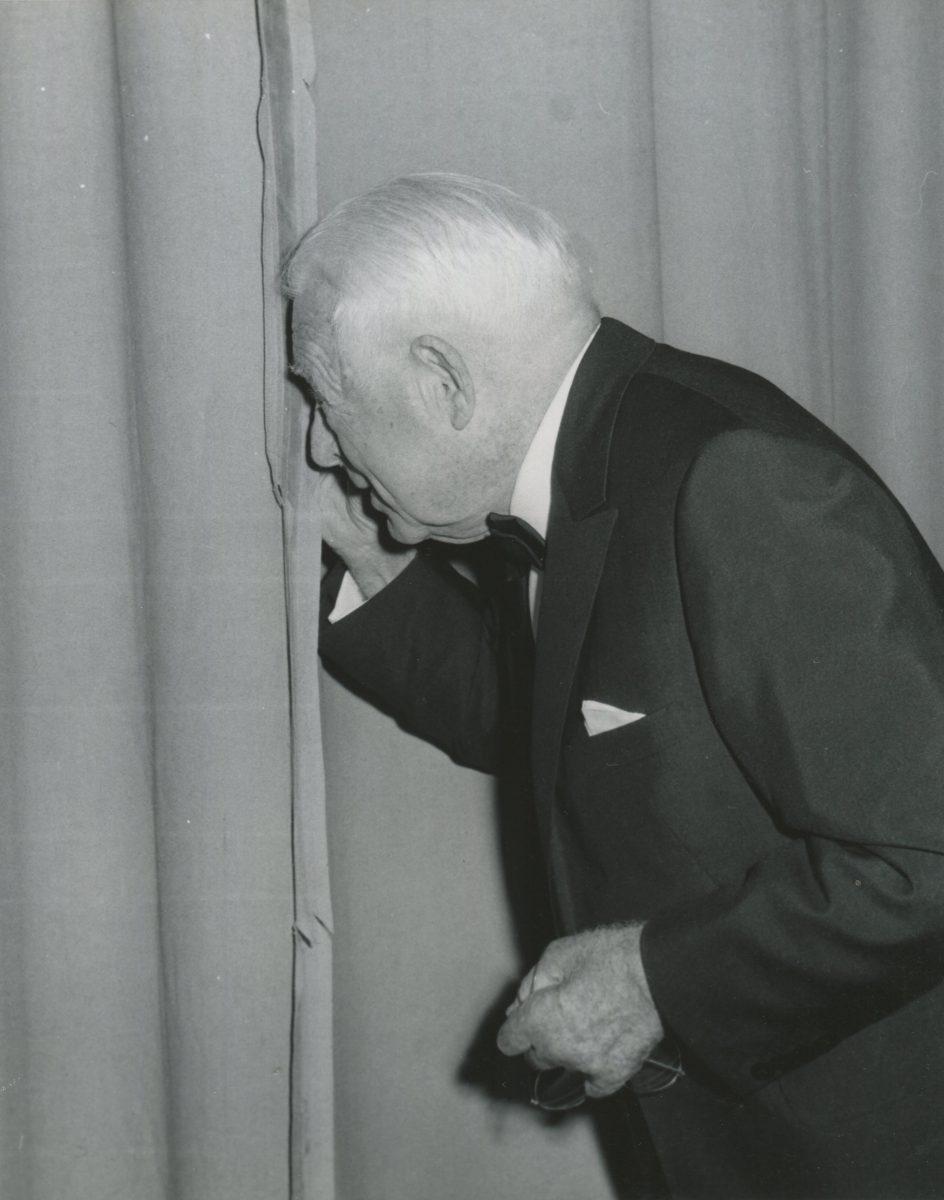
Most remembered for being the namesake benefactor of UT’s acclaimed theater company, Clarence Brown’s life story is as rich and complex as the assortment of scripts, photographs and mementos he donated to the university upon his death in 1987 at the age of 97.
Before he was a legendary film director who Greta Garbo dubbed her personal favorite, and before he became UT’s second largest benefactor after the Haslams, Clarence Brown was just a kid growing up in Knoxville at the turn of the 20th century.
“He was a short, sweet little guy and they called him ‘Shorty’ or something like that,” Charlie Brakebill, a 90-year-old former director of grants and gifts, said. “He was brighter than most; he wouldn’t say that, but you can conclude. He graduated old Knoxville High School and was given special permission to come to UT at 15.”
After graduating from UT at 19 years old with two engineering degrees, one in electrical and one in mechanical, he moved to Birmingham, Alabama to work for a car dealership.
Suddenly, as if overnight, the chameleon-like Brown channeled his engineering abilities into film production around 1913, and one of the only directors to successfully transition from silent films to talkies emerged.
He led an esteemed career, directing the likes of Garbo, Elizabeth Taylor, Joan Crawford, Clark Gable, Jimmy Stewart and more. His films garnered a total of 38 Academy Award nominations, winning nine, and Brown himself receiving six nominations.
“He was ahead of his time in so many ways, and he said that a lot of what he was able to accomplish was because of his engineering degrees from UT and what he learned about working with people in East Tennessee,” said Brakebill, who came to know Brown as an intimate friend later in life.
It was partially because of his fond memories of Tennessee that Brown came to gift UT with not only the $11 million needed for the theater’s creation, but also piles of material documenting his personal and professional life.
“We’ve got one of the greatest collections in the world of the movie (business),” Brakebill said. “If someone put a gun to my head, I’d probably say the collection should have gone to UCLA because of their major programs in film.
“It probably doesn’t deserve to be at the University of Tennessee, but it’s there.”
UT Special Collections Research Specialist Bill Eigelsbach said a collection of Clarence Brown’s size and caliber is rare among universities.
“It’s a very large collection, probably 100 or something boxes total,” Eigelsbach said. “There are few universities that have a large collection relating to a major Hollywood film director. Most of it ends up in California.”
The contents of the collection range from Brown’s self-annotated movie scripts and birth certificate to personalized ashtrays from Louis B. Mayer’s wife, Lorena.
Personal tokens, like two scrapbooks of photos taken at his California ranch, show glimpses into the often-enigmatic man’s private life.
“You can see the interior of the house and the way it looked when he lived there, and that’s one thing you really don’t think about when you think of directors,” he said. “You think about their films, not their personal things.”
Other items hint at Brown’s unexpectedly eclectic interests outside of film. A small Deputy Flight logbook, for instance, details several years’ worth of flights he underwent as a member of the civil air patrol in the 1930s.
“If you got lost in the mountains, they’d call the civil air patrol and he was one of the people who would be flying and searching for people,” Eigelsbach said. “You don’t think of a guy who was probably a multimillionaire at that time being the one to fly the plane and search for people.”
Some of the documents attest to his time in the air force in World War I. Other items, like an artist’s rendering of Brown done on black velvet in 1937, posses a quirkier personality, while casting directories and personal correspondence provide a wealth of information about the Golden Age of cinema.
As surprising as Brown’s own personality and interests often were, Eigelsbach believes many students would be equally surprised to learn of the collection’s existence at the library.
“I feel like people might be surprised, but people are always surprised when they hear who directed ‘Anna Karenina,’ ‘National Velvet’ and all these other big movies,” he said. “Brown himself is relatively unknown to a degree, as compared to other directors who directed lesser important films than he did. He was so private.”