Just before kickoff, a tornado strikes a packed Neyland Stadium. Mass casualties and debris lie everywhere, and it’s up to the paramedics to help the injured.
This was the scenario recreated last Friday morning as a part of UT’s Office of Emergency Management emergency drill event. More than 300 people were involved, including members of four different law enforcement agencies, the Knoxville Fire Department, Knox County Rescue, EMS and students in the College of Nursing.
And the goal of the morning was simple: simulate a mass casualty disaster to the highest degree that safety would allow.
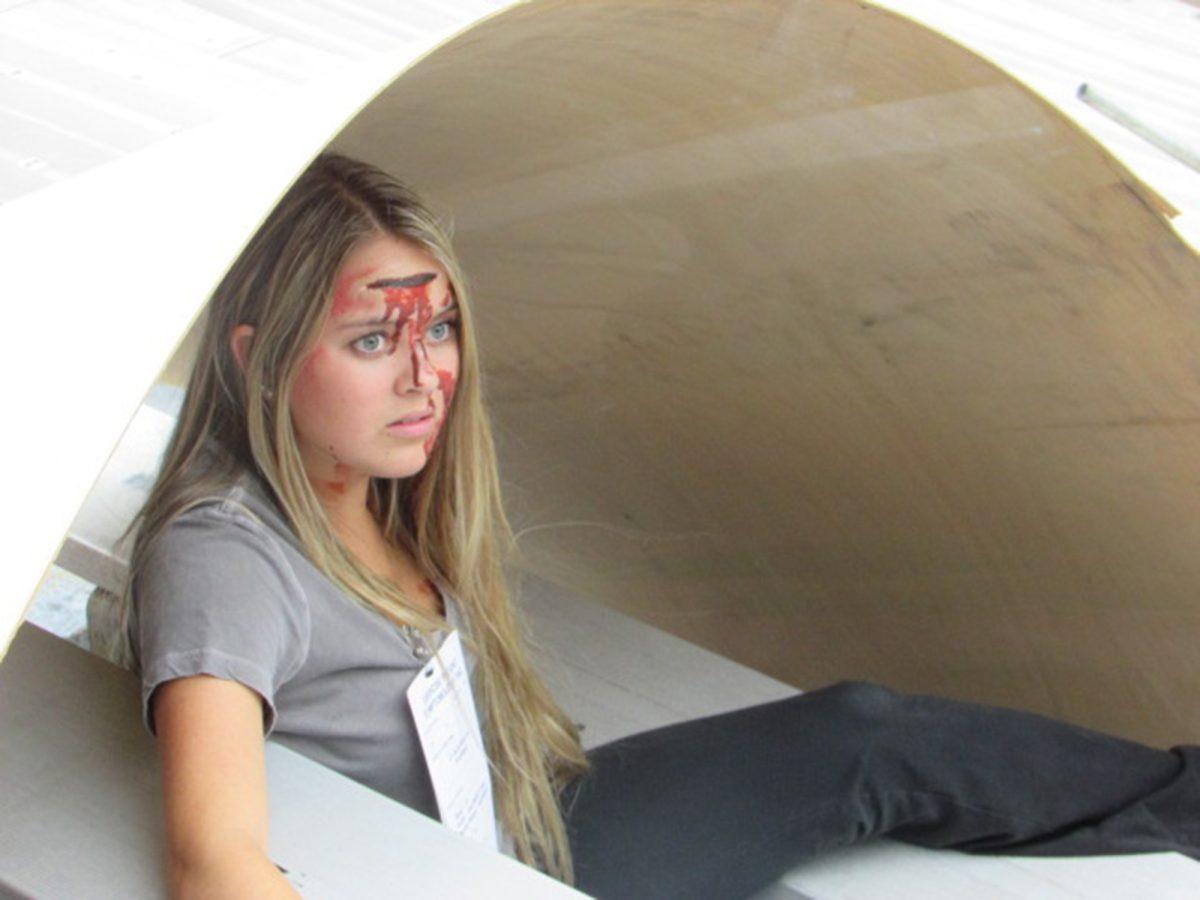
Across bleachers littered with debris, student participants — many of whom were painted with red makeup and had props meant to simulate fatal and near fatal injuries — screamed out in mock pain to test the ability and resolve of the medical officials participating in the event. Even students not painted red or feigning injury were encouraged to scream and yell in order to create a sense of panic that would most likely ensue from a disaster situation.
Polly McArthur, clinical assistant professor in the College of Nursing, oversaw the 104 students acting as victims during the drill. In a field that involves saving lives in dire situations, McArthur noted that field experience, while hard to come by, is irreplaceable when it comes to the education of rising nurses.
“(The students) are going to learn what key things are needing to happen, particularly who assumes command, who’s giving directions and who’s preventing what already is a chaotic situation form getting worse,” McArthur said. “They’ll be able to understand when they’re a professional nurse why all that emergency disaster training from the hospital is so important.”
For UT Police Chief Troy Lane, the importance of the elaborate emergency drill lies in the feedback such an exercise will generate; feedback that will hopefully go towards preventing future casualties in the event of a real disaster. As an event planned for months, Lane remarked that while there’s no substitute for experience, the drill acted as the next best thing.
“It’s really more an exercise for us,” Lane said. “It’s never as good as the actual experience, but this is why we practice. We need to kind of coordinate how people will work with a disaster, what preparations they can take, what actions they can take before and during an event.”
Sporting a fake head wound and covered with debris, nursing student Peyton Lee joined in the chorus of screams that greeted medical officials tending to make-believe wounds.
“You really have to get into character,” Lee said. “I feel like in one of these situations, it would be pretty hectic, so having some experience like this and practice like this is definitely worthwhile.”
Echoing that sentiment, fellow nursing student and participating victim Anna Becraft said she sees the experience as preparation for the worst should tragedy befall Rocky Top.
“Especially on a gameday,” she said, “when there’s a hundred thousand people here, and everyone’s drunk and nobody knows where to go or what to do, it’s good to get this practice.”