“My name is Reba Sikder, and I am a garment worker, and I am a Rana Plaza survivor.”
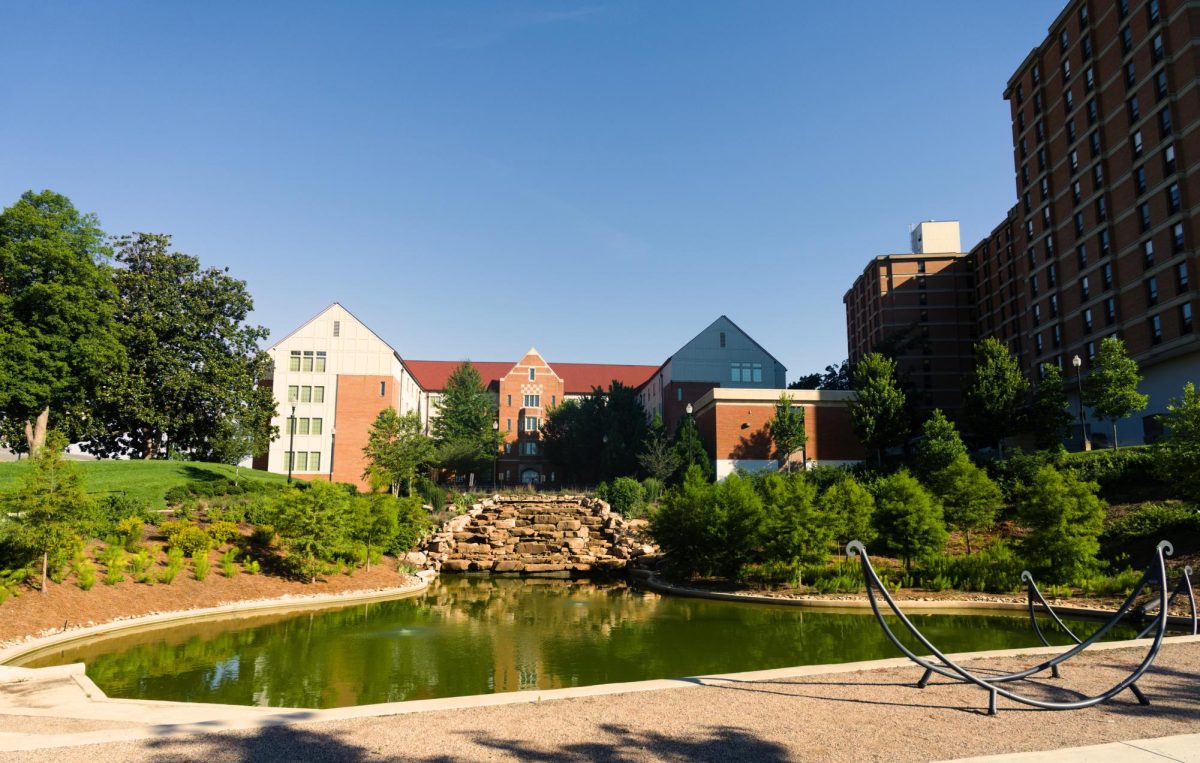
Sikder, a petite woman speaking with the aid of a translator, and Aleya Akte, a labor organizer, traveled more than 8,000 miles from Bangladesh to Knoxville to share their stories with a group of students in the UC Shiloh Room last week.
Sikder worked in a factory called Rana Plaza for two years, working from 8 a.m. to 7 p.m. seven days a week, with “barely any time off,” she said.
And on Wednesday, April 24, 2013, her world came – quite literally – crumbling down.
On the evening of April 23, Sikder and her fellow garment workers could sense something was amiss. A beam fell from the roof and they noticed cracks forming in the walls of the factory.
They were asked to leave that night, but “ordered” to come back the next day to start working again, Sikder said.
“On the 24th, we came back to work but didn’t want to go in because we were very scared,” she said. “We saw that things were not right.”
Within the first half hour of work, their suspicions were confirmed. The electricity in the factory went out, and when the back-up generator came on, the building immediately collapsed.
“I tried to run, but a machine fell on me and a beam fell on the person working in front of me,” Sikder said.
Sikder lost feeling in the right side of her body, but managed to drag herself to an area where four other women were stuck. They were trapped for hours in the unbearable heat, drinking urine to survive the thirst. After days of being stuck, the women were able to stick a pole into an opening to signal for help from an army official.
When the search ended, a total of 1,129 people were found dead and about 2,515 were alive, but injured. In the aftermath of the collapse, the owners of the eight-story building came under fire for building on unstable land and adding three stories without authorization.
Sikder was in the hospital for a month and a half after the disaster and said she never received compensation from the company she worked for.
“I don’t want any factories to ever face something like what my factory faced,” Sikder said. “I have seen too many people die in front of me in those two days, and I never want to see this again.”
To prevent the unsafe working conditions and inhumane treatment that Sikder and thousands of other Bangladeshi garment workers have experienced, the Bangladesh Accord on Fire and Building Safety was created to hold factory owners accountable. The accord is legally binding and requires thorough safety inspections of factories.
Sikder and Akte have been traveling to universities around the U.S., entreating students to put pressure on their administrations to only license with companies with ethical labor practices that have signed the Accord on Fire and Building Safety.
At UT, the chapters of United Students Against Sweatshops and the Progressive Student Alliance have been campaigning specifically for Vanity Fair Corporation to sign the accord.
JT Taylor, president of PSA, said UT carries Jansport products in its VolShop, one brand within Vanity Fair, which also owns popular brands such as Columbia, North Face and Wrangler Jeans.
“What we’re asking UT to do is get into contact with VF … ask them to sign the Accord on Fire and Building Safety, ask them to be the first university in the SEC to sign the accord,” Taylor said. “If they say no, we need to cut our contract with them. Cut it so we can put a dent in their pocket, along with all the other universities inside of the USAS network that have done so.”
For Julia Wang, a national leader of United Students Against Sweatshops who has been traveling with the Bangladeshi workers, it is important for students to know just how much sway they have.
“Students line the pocketbooks of their administrators,” she said. “They pay an arm and a leg in tuition every year and because of that we should have a say in how our universities function … Students have leverage and should utilize it to work in solidarity with the rest of the world.”
In this fight, students have the support of UT’s Faculty Senate, which has drafted a letter to the administration, urging them to ask Vanity Fair to sign the accord.
Akte, who works in Bangladesh as a labor organizer, said building a coalition of supporters makes it more difficult for corporations to run from the issue.
“I’ve come very far here with Reba because we believe and have full confidence in all of you that we can work together,” Akte said. “We’re doing all that we can do from our end, but we need your support.”
More than 20 other universities, including Penn State and NYU, have required licensees to sign the accord, according to United Students Against Sweatshops. Sikder also said student support is vital in putting pressure on Vanity Fair Corporation.
“We hope that you are with us in this,” Sikder said. “I am confident that you do not want to wear the blood-stained clothes that we make for you.”