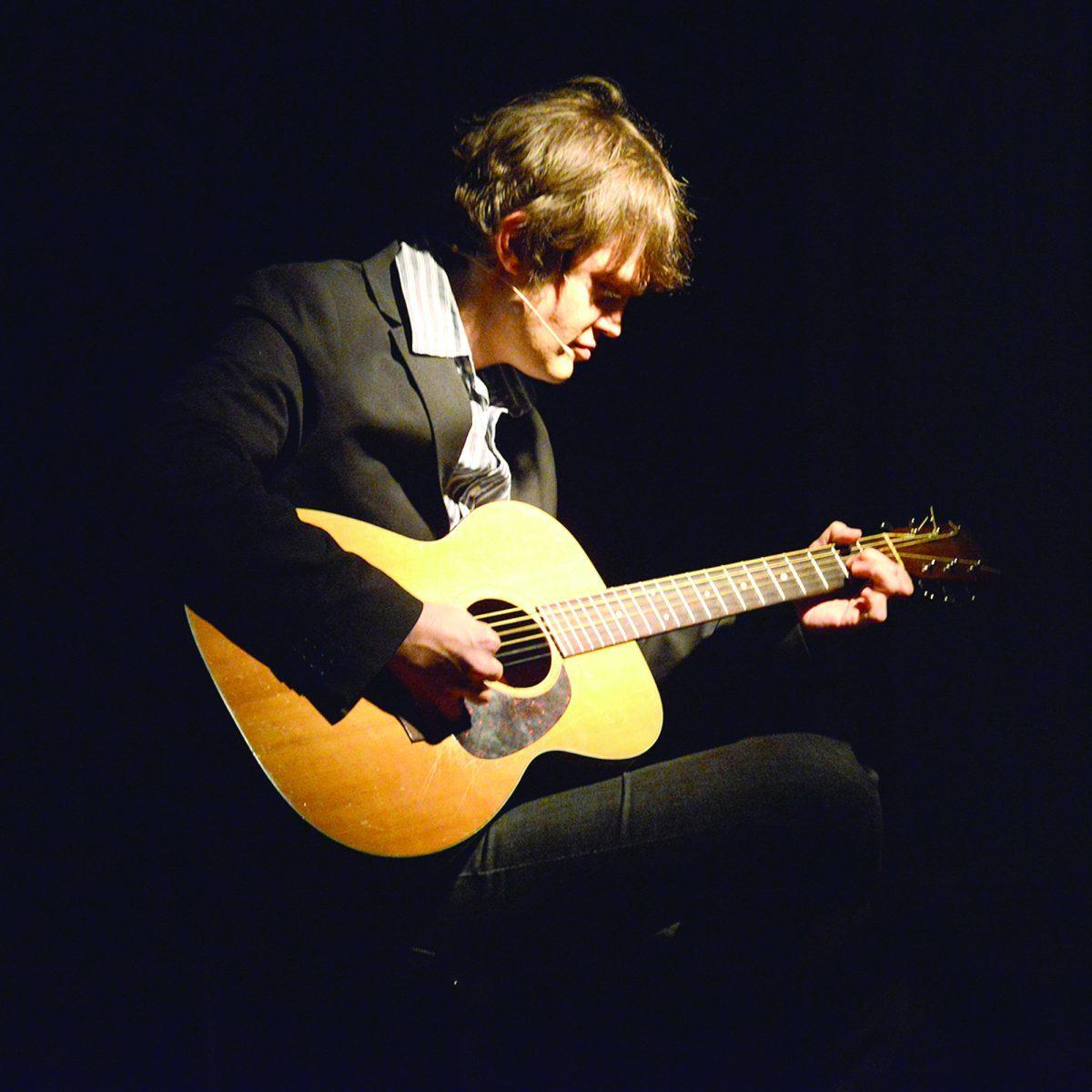
Over the past five years, Nashvillian William Tyler has become an acclaimed guitarist, performing completely instrumental songs that have captivated listeners. With the help of Duke University, Tyler took his performance to the next level, adding the university’s archived Civil War photographs to his performance, entitled “Corduroy Roads.” Here, Tyler discusses the process of creating that show, his influences and his top choice for UT’s next basketball coach.
DB: What’s your experience with the Big Ears Festival been like?
WT: This is my second visit. I came back in 2010, and it’s just a great festival. It’s really, really amazing and surreal that it’s here in Knoxville. I think that shows the love and respect AC Entertainment has for their hometown. There’s such a wide range of stuff happening here, both immediately accessible and not. It’s presented in a friendly, curatorial way.
DB: Your work with the “Corduroy Roads” show is very interesting. How did that opportunity take shape? How helpful was Duke University during the process of creating the show?
WT: It was Duke’s idea. Aaron Greenwald, who basically runs Duke Performances, approached me about doing something, and I essentially agreed to whatever he wanted to do. They had just acquired some iconic Civil War photographs and wanted me to perform along with them. It took the better part of a year to create, simply because we needed to figure out how to make it a little more interesting than just a slideshow.
DB: Has your parents’ work in songwriting influenced your work at all in terms of growing up in a musical household?
WT: My parents were and are a huge influence. They’ve been unbelievably supportive of this as soon as they saw it was something I really wanted to do. They were a bit cautious since my dad especially knew the highs and lows of the music industry, but still very supportive. Growing up with music in the household was super influential too.
DB: How did you get involved with groups like Lambchop and Silver Jews?
WT: Essentially, living in Nashville. I met the Lambchop guys from having similar circles of friends. Silver Jews was more of a chance – David (Berman) did a record with the guy who produced Lambchop’s records, and he needed a guitar player to fill in. We did a good bit of work together through an on and off working relationship.
DB: What’s it like co-owning a venue (The Stone Fox) in Nashville with your sister, Elise?
WT: Owning a venue is challenging. Nashville’s a very competitive place for venues and bars, but we built a really special place. It’s very hard to be an artist and run a business. My sister and I are both very creative people, and you have to use a different part of your brain and soul. You can’t run it the way you would run an artistic project.
DB: Who should Tennessee hire for the men’s basketball head coach position?
WT: To be honest, they never should have fired Bruce Pearl (laughs). I mean, there are plenty of options … I think they should go to Shaka Smart and give him an offer he can’t refuse. There’s good in-state options, too – Will Wade, Rick Byrd, etc.