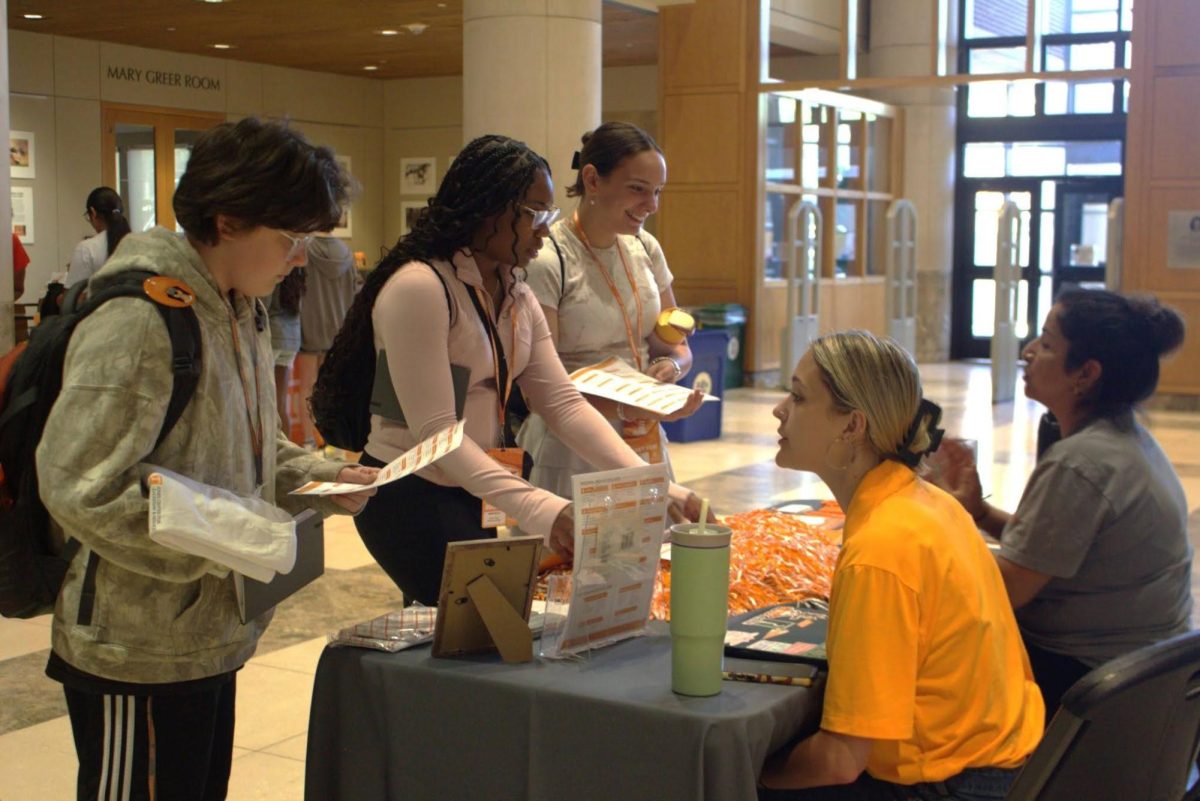
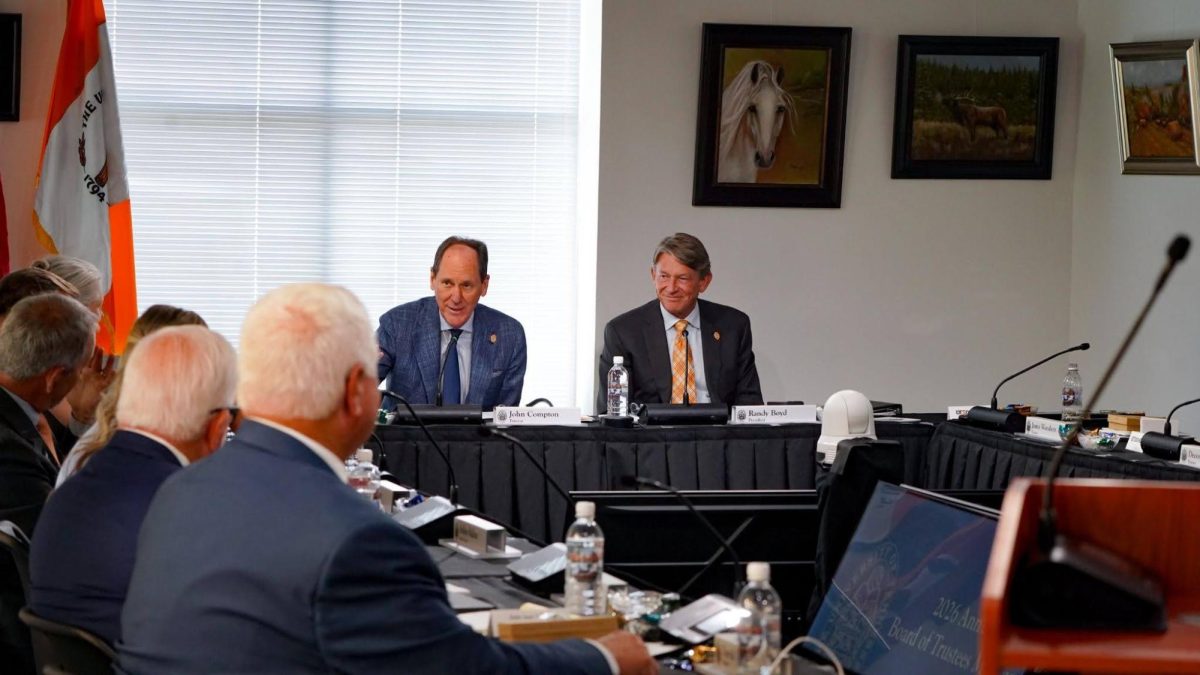
At this semester’s “Cheek Speak” forum, students had the unique opportunity to sit down with Chancellor Jimmy Cheek and ask him about any subject that came to mind, like the inclement weather policy, changes to housing and construction and the effects of the Tennessee Promise.
Budget
Chancellor Cheek kicked off the night with an update on the pending budget, which will allot $6 million to UT on top of the current budget. This increase will allow UT to provide a 2 percent increase in faculty salaries, as well as partially paying for the two science buildings next to Jesse Harris, which will cost an estimated $7.5 million. Cheek also predicted that UT will receive an estimated total of $200 million in private money to put toward academics.
The chancellor expressed his concerns that the increasing cost of Medicare at the state level will lead to more cuts in higher education. However, he reaffirmed his faith in the governor’s understanding of the importance of higher education, citing funding for the business building and gift money for the new engineering building planned to be built across from the existing Tickle Engineering Building.
Cheek stated that he has no plans of eliminating majors in order to function within potential budget cuts, but instead has advocated for the reallocation of funds between departments.
Inclement Weather
Cheek, with the help of Chris Cimino, vice chancellor of finance and administration, was asked to explain UT’s inclement weather policy in detail, addressing concerns about how UT decides to close or remain open and which dining halls are available.
Cimino said that he oftentimes looks at the National Weather Service days in advance to allow the university to make the proper arrangements before a snow or ice storm is expected. These arrangements include having maintenance and dining workers stay overnight to ensure that UT will open if the roads are decent.
Cimino added that UT does not close whenever Knox County closes because the county covers a larger area of Knoxville and will close with the slightest amount of snow. The university, however, has a responsibility to remain open for its faculty and students.
Should UT delay, Cimino said, the buses will begin running 30 minutes early to ensure students can get to class.
TN Promise
While some have expressed concerns over the Tennessee Promise, a scholarship allowing high school students to attend community colleges for their first two years for free, Cheek said he intends to use this system to create a pipeline from the community colleges to the university, recruiting students with a GPA of 3.0 or higher who meet the prerequisites of their intended major.
“There is a rumor out there that we aren’t interested in transfer students,” Cheek said. “We are interested, but only if they’re high quality.”
UT’s Community College Coordinators are stationed in Memphis, Nashville and Knoxville, each sponsoring programs and reaching out to Tennessee Promise students in their area of the state.
Cheek said UT has similar coordinators for high schools across the state and is planning to expand the number of out of state high school coordinators the university sends out.
Housing Deficit
While student recruitment is up, many are concerned about the lack of housing to accommodate the large influx of students, mentioning how many students will be displaced with the demolition of Apartment Residence Hall and the imminent destruction of Presidential Court.
While UT currently has around 7,000 beds, Cheek said the university will not be able to house that many students again until 2019.
Cimino also said UT is working on providing two new parking garages in order to meet increased commuter needs. These “smart garages” will have LED screens indicating which spaces are taken and which are available and will come with a phone app so students can instantly see which garages are at capacity and find parking faster.
Cheek added that with several new apartment complexes near campus, students should be able to find housing, even if it is not necessarily on campus. Cheek also cited increased four-year graduation rates as a factor when considering housing, saying that with 43 percent of students graduating within four years, housing will be opening up more quickly than in recent years.
Mandatory Meal Plan
While meal plans may be mandatory, Cimino explained that they do not come without added benefits. Many vendors along the strip will be able to accept dining dollars beginning this May. UT will also be providing a “Flex Plan,” in which students would get a $300 meal plan and still be able to claim any unused dining dollars at the end of the year.
When asked why this is necessary in the first place, Cimino explained that the campus food provider Aramark’s business plan depends on estimates of how many students are buying and how much they will spend. In order to allow for more flexibility with dining dollars the university must meet Aramark in their existing business model, Cimino said.
Lady Vols
While Cheek confirmed that the famous Lady Vols basketball logo will remain unchanged, he said that many female athletes and coaches prefer the solidarity that comes with the “power T” and the immediate recognition it brings. Cheek said these changes were brought on partially by a brand audit by Nike, who suggested moving to one logo.
“We think it’s best for the long term future of the university that we need to use it,” Cheek said. “We’ve been looking at how we brand ourselves better.”
Cheek appeared to be in favor of the simplified design, saying that it will not only brand our athletic teams but serve as a way of building the reputation of the University of Tennessee under one consistently recognizable symbol. For Cheek, the transition is less about losing our identity but solidifying who we are and what we stand for under one image and one color — orange.