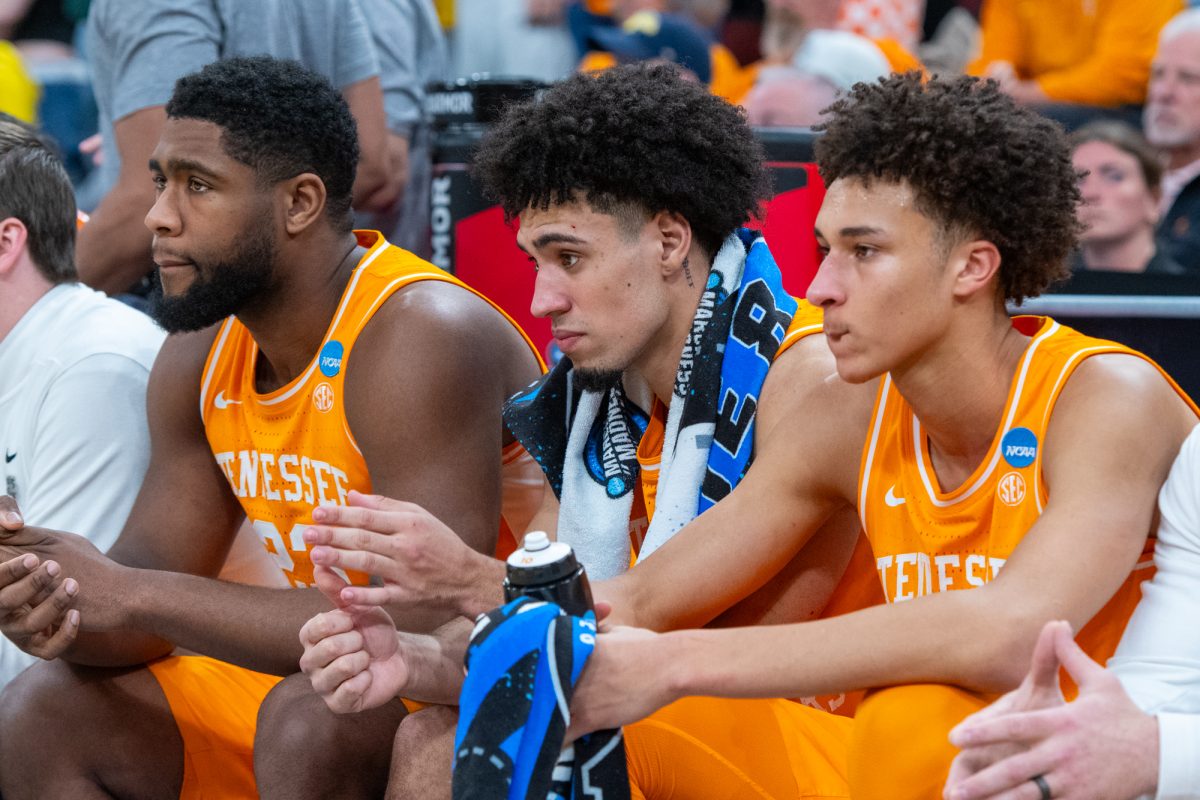
Tennessee could not wait to turn the page of their calendar.
In their eight February contests, the Volunteers added only one tally to their win column and currently find themselves in the midst of a five-game losing streak.
Donnie Tyndall, however, is not questioning the effort of his team during this recent slide that has turned their once-possible NIT bid into less of a likelihood and more of an aspiration.
“I went back and watched the first South Carolina game where we won on the road and I don’t think our team has lost any intensity,” the first-year head coach said. “I think the biggest thing is that we have lost some detail and a large part of that is that in the last month we probably have only been able to have two really grinding practices because of our limited depth.
“When you don’t have your grinding, tough practices then you lose some of it.”
The absence of those practices has seemingly had the greatest effect on the defensive end, where the Vols have allowed their opponents to shoot 48.7 percent from the floor during this five-game drought.
Those defensive struggles have given Tyndall no other option than to revert back to the old practice schedule, even if it means wearing down UT for their final two contests of the regular season.
“We are going to do our three core drills of being physical and on paper it is scheduled to last 45 or 50 minutes,” Tyndall said. “It may end up being longer. We won’t do any scrimmaging or anything outside those three core drills, but we have to get some detail in guarding the dribble back in our team.
“Those three drills will help. They are mostly all defending and rebounding stuff in particular off the bounce.”
Shot clock shunning: The NCAA is looking to switch things up, and the experimentation has already been put into place.
During the NIT and CBI tournaments — postseason destinations that may include Tennessee come March — the team’s in those fields will compete using experimental rules, including a 30-second shot clock and a four-foot restricted area.
Currently, the shot clock is 35 seconds and has been that way since the 1993-94 season, but the NCAA is looking into whether or not the five-second change will have an effect on the “pace of play and scoring” of the game.
Tyndall, however, is not a proponent of the potential change that could be discussed following the Men’s Basketball Rules Committee’s initial findings, which are expected by the time the 2015 Final Four rolls around on April 4-6.
“It is probably a good opportunity for college basketball to take a look if that is the right answer to help basketball offensively,” Tyndall said. “I don’t think that is the right answer. I think you will see even more bad shots and even worse offenses as opposed to giving teams a chance to run offense the way it is now.”